Given that I recently joined a leatherworking Discord comprised of individuals pretty much the exact opposite of my demographic, I believe this is just plain wrong.
My guess would be near half, probably a 60/40 split.
Equivocating speech and crime as both being "violence" (of similar class, deserving similar response) is a fallacy that lets people justify murder in response to disagreement as long as it's deemed serious enough.
Yes it's not violence, but it's not speech either. Donating money is performing material harm. That might be an unfortunate reality, but it's undeniable. It's a different thing from just saying something.
Also, you can absolutely be fired for just saying something and that's been the case forever. As a CEO, you are essentially marketing your company. Marketing it poorly and losing customers can, and will, get you fired - in every company, ever.
Really? Having an opinion endorsed by the mainstream doctrine of several world religions with billions of adherents is the same as robbing a bank?
That being said, I disagree with Eich and it probably made sense for the org to let him go given how his views might impact public perception of Mozilla.
As someone who became vegetarian after reading a Glenn Greenwald article I found on HN about how the pork industry does awful things and gets the government to prosecute people trying to expose it, the key I've found is to look to world cuisine.
Many cultures around the world have awesome food that's easily convertible to vegetarian or is vegetarian already, where meat might be a luxury.
Central America and the Caribbean have tons of dishes with rice, beans, plantains, and flavorful sauces with flatbreads. Or a million ways to prepare corn. West Africa has peanut stew that's amazing. Across the rest of the continent jollof rice and githeri are good solid bases for a meal. Misir wot is a spicy hearty lentil stew. North Africa has a rich vegetarian tradition of soups, stews, and rice dishes. In the middle east there's falafel, hummus, mujadara, shakshuka and about a million ways to combine spices, onions, tomatoes, flatbreads, etc. South Asia obviously has a massive vegetarian cultural tradition, as does Southeast and East Asia.
When I started, I found it hard. I kept thinking "beans and rice... I guess?" Once I started going, "ok, I'm going to pick a small region of the world and see what they eat there and try it" I had WAY more success. The first time I made tteok-bokki or sushi or vareniki I suddenly realized just how much of the world is really already preparing vegetarian meals for many of their meals.
> FBI agents are devoting substantial resources to a multistate hunt for two baby piglets that the bureau believes are named Lucy and Ethel. The two piglets were removed over the summer from the Circle Four Farm in Utah by animal rights activists who had entered the Smithfield Foods-owned factory farm to film the brutal, torturous conditions in which the pigs are bred in order to be slaughtered.
> Rather than leave the two piglets at Circle Four Farm to wait for an imminent and painful death, the DxE activists decided to rescue them. They carried them out of the pens where they had been suffering and took them to an animal sanctuary to be treated and nursed back to health.
ICE is currently shooting peaceful protestors and is gearing up for war with Venezuela; a couple of pigs chasing a couple of pigs is the least of my concerns viz-a-viz tax dollars
Sorta. The animal welfare laws say that getting images out of food production facilities are terrorism. Which suggests that an authoritarian regime could/would deploy a lot more of the state power against them.
And I think "understanding your food sources is terrorism" has impacts too people should be worried about. (To be clear, they ARE less acute than ICE concerns, of course).
Thanks for your response. But I think you've misunderstood.
I'm pretty well aware of the deep well of cuisines offered by various cultures, but my issue is not finding recipes -- it's the time I and effort spend cooking.
My current job takes a lot of time and energy out of me, by the time I get home I'm pretty exhausted. I don't really get any time to cook throughout the week. (Which kinda sucks, I did enjoy cooking)
I rely a lot on quick meals from Trader Joe's or something I can just toss in the microwave. And while Trader Joe's does have some vegan/vegetarian selections like that, it's kinda limited.
I don't know Trader Joe and what they offer but here's some quick preps I found convenient:
- cereals and lentils/beans semolina. Mix with oil, spices and hot water. Cover and wait 5 minutes.
- Cans of beans, lentils, chickpeas mixed with pre-made tabbouleh or another carb. Oil/spice and eat.
- Various marinated tofu: they're delicious own they own and don't need prep: open and bite.
- Instant mashed lentils/slip peas/quinoa (flakes). Oil/spice/water and eat.
- Tempeh: microwave and dip in sauce.
- bread and houmous.
- bread and nuts.
- Vegetable that can be eaten raw: rince and eat. Dip in sauces if you like. Carrots, cauliflower, cucumber, radishes, chicory, small iceberg salads...
- Fruits. rince and eat.
The trick is to have a few different oils and spices, those add taste and nutrients. Also you can add to anything a spoon of brewer's yeast if you're into that (cheese/fermented taste) or of silken tofu for more creamyness.
I don't understand your comment. Is it an attempt at humor? Don't be a dick.
I don't object to eating animals, I object to torturing animals in the process of raising them. You can raise pork without forcing mother pigs to indefinitely share a space with a pile of their rotting children's carcasses.
Ask yourself why it warrants a terrorism charge to smuggle out photos of animal mistreatment.
You're unfairly extrapolating from your own experience here -- everyone's body has different chemistry.
I have to eat breakfast in the morning in order to feel energetic during the day. But specifically, I need a high-protein, high-fiber breakfast. Anything else makes me feel lethargic and tired.
So then lets say a healthy 22-year-old graduates from college at the top of their class. Life's looking up for them. They've already got a job lined up that starts in two weeks and they're excited and energetic about entering the workforce and living on their own as adult.
Then suddenly, some random guy in a mustang doing 150 in a 30 jumps the curb and runs over our optimistic 22-year-old, and continues speeding into the distance. A random onlooker witnesses the event and calls an ambulance, who rushes them to the hospital. Thanks to the hard work ICU doctors and surgeons spanning days, our 22-year-old miraculously lives, but is in bad shape. They're never gonna walk again, and they're gonna need weeks of physical therapy just to retrain the fine motor skills required to write and type.
All of this, for a variety of factors is gonna cost hundreds of thousands of dollars. On top of the massive hospital bill they're about to be saddled with.
I take it that our now not-so-healthy 22-year-old should just go fuck themselves then? They've never paid a dime into the system so why should they be entitled to health care?
>I take it that our now not-so-healthy 22-year-old should just go fuck themselves then? They've never paid a dime into the system so why should they be entitled to health care?
No, no one is entitled to the labor of others, not in this scenario where they are 3rd party to the damages. That doesn't even remotely make sense no matter how bad of a sob story you attach to it.
This isn't actually a sob story, and I'm not saying he's entitled to labor of others. What I am asking is how your proposed system handles a case such as this.
And while it may be an edge case, these are large, broad systems that directly impact the lives of millions of living, breathing people. Such systems must be robust and well-examined.
And I'd also like to ask what a society would look like, that invests so heavily in the education of it's young generation, and relies on them to bring innovations and new ideas to the table, only to cut them down the moment they need any sort of assistance. It certainly seems to me like a huge waste of resources.
What if healthcare was just an investment in our society? Our young 22-year-old gets healthcare covered not because he's entitled to it but because society is invested in his well-being in order to continue existing and improve itself. Because the ROI of the young being kept healthy and able to work and pay into the system is greater than the cost of the ICU doctors and surgeons and wheelchairs and physical therapy.
The voluntary way of capturing future ROI with present investment is loans (or if you don't care about ROI, donation). Now I'm not saying that is necessarily the only option but it's the one you're gunning for based upon your economic argument.
Based on your criteria it's the most textbook case for an individual loan imaginable, your argument is the 22 y/o needs a loan for some healthcare, that he can more than pay it back, and that both parties will benefit. In the absence of charity, some kind of trade, family or friend assistance, then in any rational market (US market is regulated to hell so no guarantee it works there unless you free that market) it's a no brainer and as sure as an apple will fall from a tree, someone would be happy to make that trade although the kinetics and packaging might be up for debate.
I don't see how you can possibly presuppose a requirement for public assistance, in that scenario, in order for the health care to happen. Public assistance is only economically necessary to complete the health care if there is negative ROI and all donation or voluntary options are exhausted.
>No, no one is entitled to the labor of others, not in this scenario where they are 3rd party to the damages. That doesn't even remotely make sense no matter how bad of a sob story you attach to it.
Absolutely! We should just Brian Kilmeade[0] those folks too, since they're just a burden on society, right?
It's interesting to me you jumped right past charity, loans, work-trade, or any other variety of options and instead went straight to your preferred method of doing things -- either violence (tax man with guns) and if not that you question if they should be executed.
I'm just advocating putting the violent methods aside.
If no one is entitled to the labor of others, why would we engage in charity?
Work-trade when it's someone's health is slavery, so we're going to go ahead and pull that off the table.
Loans are, more or less, how we've gotten into the awful state we are currently in in the US with unpayable medical debt.
I propose an alternate approach: medical care is a civil service that you can voluntarily provide, like fire prevention or undrafted military service. If you do, you are paid the rate the society agrees to for the work. We all pay for it with taxes. If we want more of it, we raise taxes and incentives. This removes several perverse market effects and sets up a minimum standard of care divorced from individual circumstance to level out the effect of bad luck a bit.
This is, more or less, a model that many countries are currently enjoying.
>If no one is entitled to the labor of others, why would we engage in charity?
Because some people want to help others beyond what they're forced to do. There is a long history of charitable health services in the US and worldwide, you might rightly ascertain they can't possibly provide all of medical care, nonetheless it's non-zero enough to dispel the notion it can't be provided in the absence of an entitlement.
> medical care is a civil service that you can voluntarily provide,
Civil services are funded by people working to pay their taxes. Work-trade when it's someone health is slavery, so work-trade when it's to not have to go in a tiny cage dragged away by an IRS agent has to be slavery too, especially when you consider the health implications of that.
Therefore the public / civil service options are tossed out by your own criteria.
Loans, again, if those aren't allowed you can toss out any government option because that's a huge part of how the government is funding itself.
Using your own criteria only charity or cash payments would be allowed. Not sure I agree with that one, but that's what you're leaving us with.
I think if you're arguing "taxes are slavery" you are coming from a vantage point that is far too libertarian to have a constructive conversation. We can probably just short-circuit that by saying "The only way people in the US get jailed for taxes is by committing fraud; we correctly left debtor's prison in the past" and be done with that, yes?
Taxes aren't slavery; they're how we operate modern, functional, post-feudal societies (and whether they are actually "paying for" services or are "redistributing supply and demand more equitably by curtailing the spending power of the ones who have too much so that the ones who have too little can have access to resources at all" is an implementation detail for macroeconomists and operators of fiat currencies).
You do raise the interesting question of funding it by buying bonds though. I don't see an issue with that; the argument against loans is a practical one, not a theoretical one ("the private debt incurred upon patients is, in essence, an involuntary one-sided loan granted to them, and we've seen that lead to massively unfair outcomes"). Voluntarily loaning the government money seems to work great and is miles distant from involuntarily-accrued (or accrued under duress; "sure, that procedure is optional because you always have the option to die") medical debt.
>"The only way people in the US get jailed for taxes is by committing fraud; we correctly left debtor's prison in the past" and be done with that, yes?
False. You can be jailed for "tax evasion" which could be as simple as simply saying "yes I owe taxes, no I won't bother calculating and I have put all my money in bitcoins and I'll never give them to you." That needn't be fraud -- everything about that could be 100% accurate and true with no intend to defraud yet still criminal. (btw we still have debtor's prison -- you can be jailed for not paying child support debts and the absurd argument often used you're jailed for violating the court order to pay the debt rather than owing the debt is little more than a legal parlor trick).
>Taxes aren't slavery
They are by your definition, where I need to trade work to pay for them to improve my health (get thrown into a prison, a den of disease and mental health problems). Of course, we could get into a semantic debate about slavery, but it's clear you've already defined slavery not to be literal chattel slavery, i.e. as black people in chains working the cotton fields, rather you appear to be referring to being forced to work under threat of violence which in this case you take the violence to be a threat to your health.
>You do raise the interesting question of funding it by buying bonds though. I don't see an issue with that; the argument against loans is a practical one, not a theoretical one ("the private debt incurred upon patients is, in essence, an involuntary one-sided loan granted to them, and we've seen that lead to massively unfair outcomes"). Voluntarily loaning the government money seems to work great and is miles distant from involuntarily-accrued (or accrued under duress; "sure, that procedure is optional because you always have the option to die") medical debt.
I also find this to be one of the most interesting solutions. Hypothetically if a 22 year old were to have some illness, it's totally conceivable that a bunch of lenders could bid for a race to the bottom so the 22 year old could get a loan low enough that it would easily be both a net positive for him and for the people who helped loan the money that saves him. Of course, if charity or some other option is available instead, all the better.
In any case, the biggest enemy for both of us is overregulation of the health system. Once medical licensing is eliminating and medical regulations eliminated, fights over how to pay become much lower stakes.
Not even remotely related. Yes, if you fail to bother to calculate your taxes you can be liable. If you do calculate them and you can't pay them, the government works out a payment plan. These trains of thought more or less died with Thoreau arguing why he shouldn't pay taxes (while living on borrowed property owned by his rich neighbor).
> Once medical licensing is eliminating and medical regulations eliminated
Independent issue to paying for medicine. If I understand correctly, your thought is that we have artificial scarcity on medical care because we don't license doctors we could. Those regulations are paid for in blood (or in this case, snake-oil); agree to disagree that lowering the constraints wouldn't just return us to the bad practices that required the constraints in the first place.
> If I understand correctly, your thought is that we have artificial scarcity on medical care because we don't license doctors we could. Those regulations are paid for in blood (or in this case, snake-oil); agree to disagree that lowering the constraints wouldn't just return us to the bad practices that required the constraints in the first place.
The "agree to disagree" isn't necessary because it isn't relevant.
People can argue that quacks used to show up to rip people off and then skip town before people caught on that snake oil is snake oil, but they couldn't really do that anymore because now we have the internet which allows your past victims to notify your future victims even if they live in a different city.
But that argument is boring. It doesn't matter if it's true or not, because the laws that really make medicine expensive aren't the ones that require you to register as a doctor so they can more easily investigate quacks. They're the ones that e.g. the AMA has lobbied for to limit the supply of doctors. And we could get rid of those regardless of whether we also get rid of the other ones.
The train of thought didn't die with Thoreau. It lived on in the minds of those such as Murray Rothbard, and to the extent as it applies to universal healthcare, also known fringe character (and nobel economist) Milton Friedman. Of course Locke himself (a major inspiration for the US constitution, which very narrowly constrains what the federal government can spend money on), I suppose too old as he's the oldest of all of them, only justified taxes so far as they allowed the government to enforce negative rights, that is rights for one person not to molest another rather than positive rights like an entitlement to get something from another such as care.
>your thought is that we have artificial scarcity on medical care because we don't license doctors we could
Really all the above. Probably even more so due to stuff like the intertwining of the insurance and pharmaceutical and medical industries with regulatory apparatus creating all the worst regulatory capture incentives to rent-seek patients with the free market destroyed.
Of course not. At scale you basically need to remove the government from the situation, they're the one regulating health care into a gigantic blimp. Once health care is completely deregulated and the costs drop you won't need to spending anything close to "all [future] money."
Now if you offered me a deal, I could substitute all my taxes, or even everyone's taxes, for charity, yes I would take that in a heartbeat. In all likelihood I think I would probably donate about 10% of my income to charity if there were no taxes, but the government is so terribly ineffectual it might actually beat the 20-30% I pay now.
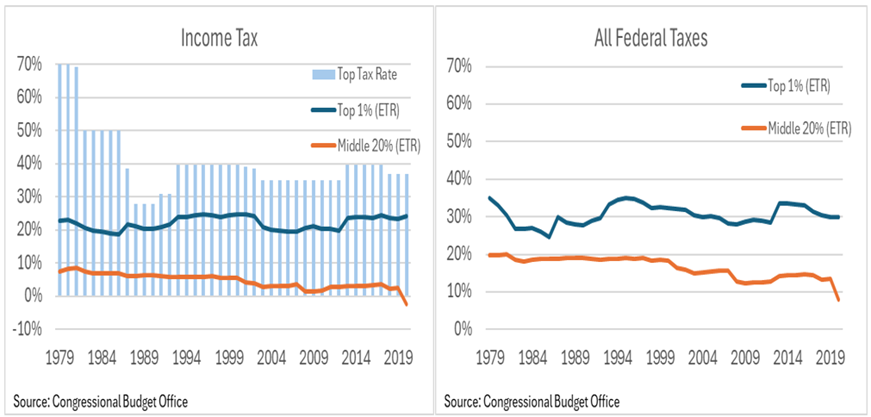
Look like the effective tax rate has went up rather than down since I started working in 2010, most of which I was closer to the top 1% than the middle 20%. []
There is no savings I can identify there, nor in my tax records, which have only increased in % as I've made more money. And all well above the 10% of the income I would pledge to donate to charity if taxes are eliminated. But yes I have donated to charity on occasion (sometimes formally, sometimes directly in cash to people that needed it), despite the fact I keep getting taxed harder every year and despite the fact the government robs me of ~20-30% of my income under its own bloated forcible charity scheme.
Or are you just spouting ridiculous tropes? Charity? Work-Trade? Loans? Paid by whom in that scenario?
I'd expect you're more in line with Kilmeade than McCain. Why don't you just admit it? It's all out in the open now, no need to hide any more. You'll be broadly lauded for your economic smarts!
Your thesis is that people so broadly support additional tax money going to fix the 22 year old that it could be legitimate law, but somehow so few support it that charity or other alternatives (if the very people that support it weren't forced by law) would be a ridiculous trope?
No. My thesis is that we can reduce total healthcare spending by having a single-payer system that covers everyone.
It's not additional tax money, it's money that doesn't need to go to corporate jets and huge pay packages for the C-Suite and large dividends for the shareholders of insurance companies, healthcare providers, pharmaceutical companies and medical equipment manufacturers.
And the tens to hundreds of billions we save on that can pay for that 22 year old.
But we can't have that, now can we? Better to Brian Kilmeade 'em, eh?
> corporate jets and huge pay packages for the C-Suite and large dividends for the shareholders of insurance companies
And armies and armies of middle-folk who are adjudicating from afar whether a given medical procedure is justified or not.
The way the US practices paying for medicine is, counter-intuitively, very expensive because we pay a lot of people to find reasons to justify not paying for it. If we took their salaries and put them into actual service provision, and cut down the vast web of categories and sub-categories to salami-slice the nickels and dimes, we'd spend far less on employment of arbiters and on paperwork and we'd have more money to pay for more services (and no a priori reason to believe the system would oversaturate).
But you just said it's a ridiculous trope that people would want to charitably donate to the healthcare of others. How would you get the majority to support a single payer system when electing to help others is such a ridiculous trope that you flippantly dismiss it?
> But you just said it's a ridiculous trope that people would want to charitably donate to the healthcare of others. How would you get the majority to support a single payer system when electing to help others is such a ridiculous trope that you flippantly dismiss it?
A lot of people have a broken sense of fairness where they're only willing to help someone else if everyone else is required to do it too. It's one of the things causing the world to burn.
Some of this is even learned behavior. A lot of the dumbest econ 101 classes teach people that giving to charity is irrational. (It's not irrational. It's something you do because you want to do it, like eating cake or buying a fast car. Once your basic needs are met, the purpose of having money is to use it for the things you want to use it for. It's not irrational to want to do something good instead of something insalubrious.)
>But you just said it's a ridiculous trope that people would want to charitably donate to the healthcare of others. How would you get the majority to support a single payer system when electing to help others is such a ridiculous trope that you flippantly dismiss it?
Are you really that ignorant of the issue, or are you just being deliberately obtuse?
We as a society already pay way more than we would with a rational single-payer system. That's not hyperbole either.
What's more, not having employers and employees pay insurance premiums would more than offset any additional taxes.
But you knew that already, because we've known this to be the case for most, if not all, of your life.
I'm done explaining the facts of life to you. Perhaps you should ask your dad.
I was trying to port Cap'n Proto to modern C# as a side project when I was unemployed, since the current implementation years old and new C# features have been released that would make it much nicer to use.
I love the no-copy serialization and object capabilities, but wow, the RPC protocol is incredibly complex, it took me a while to wrap my head around it, and I often had to refer to the C++ implementation to really get it.
I don't see the value in making it even harder to build software. I want to make things. Downloading a dependency manually and then cursing at the compiler because "it's right there! why won't it load!!" is just gonna make me want to build software less.
Anyone I want to work with on a project is going to have to have the same frustration and want to work on the project less. Only even more because you see they downloaded version 2.7.3-2 but the version I use is 2.7.3-1.
From what I've seen. The Odin has three package collections: `base`, `core` and `vendor`.
`base` is intrinsically necessary to port Odin. `core` seems to be its standard library, your `libc`, `xml`, etc.
And `vendor` is everything else. So you basically get the Python's '`core` is where packages go to die' approach iff they take backwards compatibility seriously. Otherwise, they have breaking changes mid-language version change.
EDIT: Package collections not packages per gingerBill.
> And we will take backwards compatibility seriously when we hit 1.0, and only "break" on major versions.
I'm talking about post 1.0 language choices:
- Choose backwards compatibility. Packages frozen in time, you get "Packages go to std to die."
- Choose to break backwards compatibility. The ecosystem is split, some choose to go Odin 2 some are Odin 3.
I don't think it will matter. There will be things people want that Odin won't have in the vendor package list.
Then those people will have to manage dependencies, which is a hell on its own. Which will cause problems. Because people are super lazy so they will automate it. In the end only thing no package manager gets you is multiple package managers to juggle.
Many languages started without package managers and eventually got them - Java, JavaScript, Python, C, C++
Again, I am not against third party packages, and manual management of dependencies just slows down your progression to hell. There is no "solution" to this problem, only trade-offs.
I know people are lazy and will automate hell. That's the entire point of the article: not everything that can be automated ought to be automated.
And the argument about multiple package managers to juggle is only the case IFF there are multiple competing ones, which with Odin, I honestly doubt it would happen if we enforced what a package is in the language. I just don't want to officially endorse one ever because I do view them to be evil.
And I don't care many languages started without them, I am not going to give in.
> I honestly doubt it would happen if we enforced what a package is in the language. I just don't want to officially endorse one ever because I do view them to be evil.
I don't see how changing package definition is going to help. JS had no concept of package and it was bolted on with NPM. If Odin becomes big enough, the community will override the will of the author.
Plus I don't see huge benefits to not having a package manager other than saving disk space.
Security isn't that much meaningfully better than NPM.
Trust problem exists regardless of package manager.
And people aren't far to trusting, but far too lazy. And importing packages gets job done quickly.
> If Odin becomes big enough, the community will override the will of the author.
Dunno, hanging out in the Odin discord, it definitely attracts a crowd that thinks similarly to Bill. All the "automate everything" crowd have definitely gone to Zig, where you can create automated monstrosities with the comptime stuff and build.zig files. And the crowd that likes NPM gravitates to Rust. So Odin is just fine IMO. People on the discord share libraries that actually do things, versus an entire dependency to write a few basic procedures.
And speaking of JavaScript, nowadays ES6 does have an idea of what packages/modules/libraries are and it's so much better. All my JS dependencies for my Rails projects are just .esm.js files. I choose modules carefully, don't pull in obfuscated files, read the source, so I have 2 JS dependencies in one project and a single one in another, I write the rest myself in vanilla JS and life is great.
> Dunno, hanging out in the Odin discord, it definitely attracts a crowd that thinks similarly to Bill.
Sure, hence the big enough part. If you get big enough, you'll get people who are using it as a day job language, not their special darling. Having used JS and Java without package managers in a professional setting, they sucked to use.
You import a package, run the main program, see compiler/browser errors then search local repo or th Net for the missing library. Essentially you're the package manager. Which does little for bloat. You can still have a folder and import stuff en masse.
If that's what happens, I think in the following claim:
> Odin's compiler knows what a package is and will compile it into your program automatically.
...the word "automatically" should be dropped. Of course compilers compile any supplied dependency "automatically", but it is so obvious that we don't often use the adverb just for that.
> Of course compilers compile any supplied dependency "automatically", but it is so obvious that we don't often use the adverb just for that.
They often don't though. Rust, C, C++ need either long command line invocations or a build system for anything beyond hello world. Zig needs a build file for anything beyond hello world.
With Odin, you just invoke "odin build ." and all your dependencies are taken in without needing a build system, build file, make file, etc...
We call that a build system. It is not like that there is no build system; you have an integrated build system that is optimized for typical situations. Which is great by its own, but other languages and toolings would have optimized other metrics (for example, you can't ignore Cargo when talking about Rust's build system) so it is not a fair comparison.
It is a build system in the technical sense but it's hard to explain to people because they expect it to be separate from the language entirely. If I said Odin had a build system, they'd be expecting an external build script. And when you say you don't need that, they usually get really confused.
So how do you explain such a system to someone? This is a genuine question I am not sure how to answer.
I mean, is a "build system" even real? Or does it just exist because of a shortcoming with a compiler? All "compilers" have multiple steps usually invoking other programs at some point: parsing, actual code transformation, linking, etc..., some also find packages, some rely on an external tool or long command line invocations.
But yes, Odin builds it into their compiler. Rust doesn't but does have Cargo. Both are easy, as far as typical usage goes. Rust automates dependency management, Odin doesn't automate it per se but does make it easy. Which is what the whole discussion is about. A bunch of HNers whining that Odin makes it too hard, even though everyone sane uses Git anyway, and you can add dependencies using Git, and Odin will compile them without a build tool.
So for a Rust project you use Cargo + Git, for an Odin project you use Odin + Git, for a C/C++ project you use Meson (or something else if you hate life) + Git. In the end it's mostly the same, Bill just doesn't seem to want to deal with an NPM or Crates.io situation (and fair enough!).
> All "compilers" have multiple steps usually invoking other programs at some point: parsing, actual code transformation, linking, etc..., some also find packages, some rely on an external tool or long command line invocations.
There is no technical reason the compiler can do the job of build system, but they are typically separated because of separation of concerns. Rustc needs not be tightly coupled with Cargo---it just has to understand enough of package concepts (`--extern`) for the actual compilation, so they can be independently managed and evolve. Odin's would be the polar oppsite, while Zig's approach is somewhere in the middle (compiler-as-a-library).
This seems like a loss of separation of concerns. As a result Odin's compiler is full of completely unrelated stuff because it takes on this far larger role supervising everything about a project not just being a compiler.
Both Zig and Rust supply all of what you needed in the box, so all that Odin is doing here is commingling these features inside a single executable - there's no end user benefit that I can see.
?? Zig's compiler does way more, from automatically generating bindings to C files to including the entire C toolchain in its executable to running Zig build files (which allow you to do stuff like fetch files from the Internet) and being a compiler.
Odin's compiler does more than rustc or clang, about the same as javac and less than Zig or Go's executables.
Some distos might try to support multiple versions of a library. That could require installing it to different prefixes instead of the default. Thus, the build system will have to comprehend that.
Not everything in the world revolves around Linux. Distros terrible choices around shared library architecture has nothing to do with build systems for most languages.
Literally all code I write runs on Windows, macOS, Android, and Linux. In roughly that order of priority. No I do not and will not use WSL2, it’s an abomination.


I'm not a SWE because I like money. I'm an SWE because I love programming.