Maybe it's not about gaining something, but rather about not losing anything. Signal seems to operate from a kind of activism mindset, prioritizing privacy, security, and ethical responsibility, right? By warning about agentic AI, they’re not necessarily seeking a direct benefit. Or maybe the benefit is appearing more genuine and principled, which already attracted their userbase in the first place.
Exactly, if the masses cease to have "computers" any more (deterministic boxes solely under the user's control), then it matters little how bulletproof signal's ratchet protocol is, sadly.
The premise is off. These aren’t "everyone else’s problems", NATO, the UN, trade stability, and foreign aid exist because they serve US interests too: security, markets, alliances, and predictability. The US isn’t benevolently carrying the world; it’s investing in systems that reduce the cost of conflict and instability later.
The question isn’t whether the US is allowed to stop spending, but what it wants the world to look like if it does.
It's just the case that some people at the top don't seem to understand that.
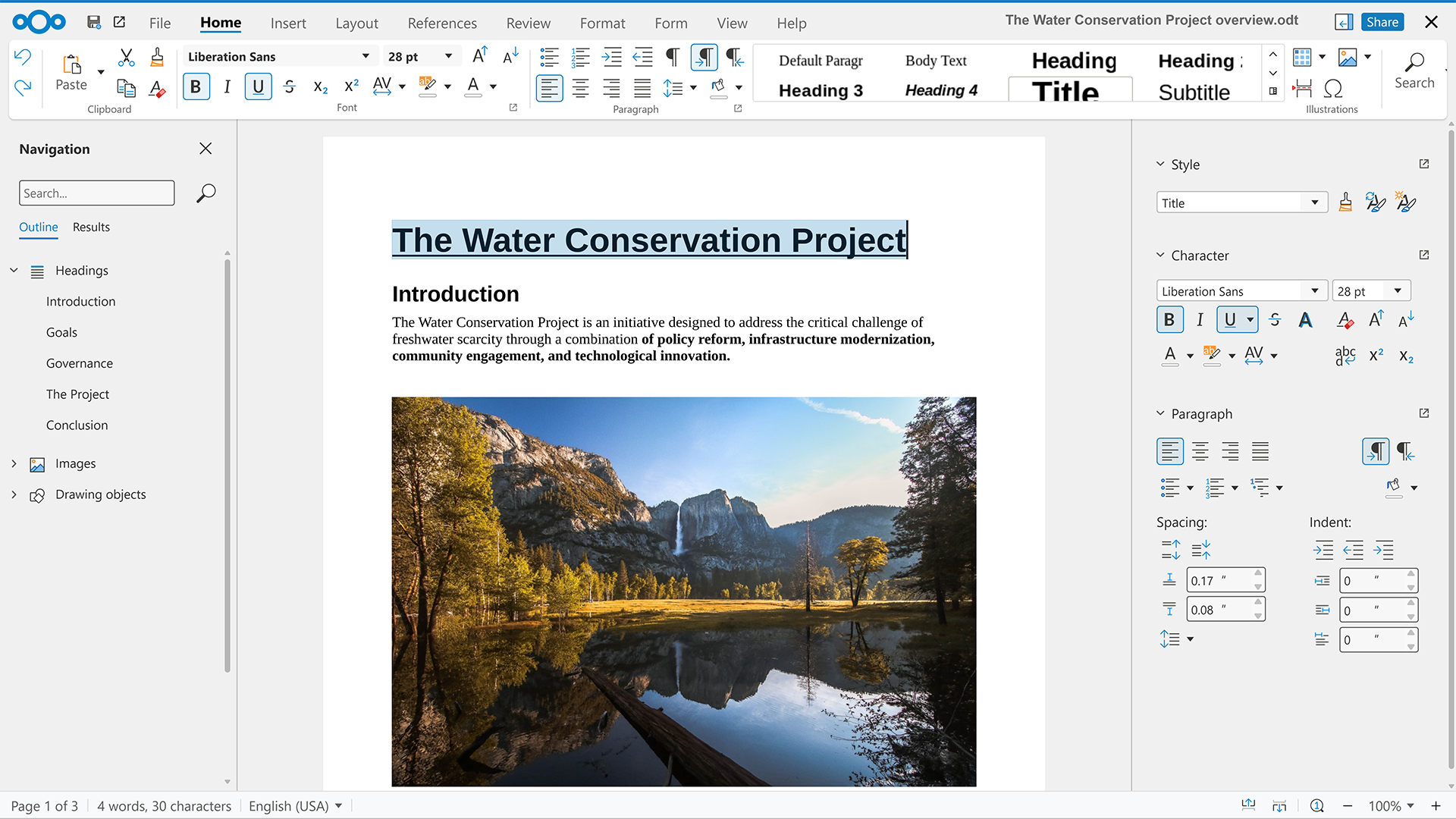
We used to have a self-hosted Nextcloud and everyone hated the docs in it. We're a design company, with everyone on Macs, so something this ugly, clunky and hard to use [0] is never going to get traction.
Ok but that clearly competes with microsoft Office. I would assume majority of office users prefer that look and feature set.
Even google docs are not really pretty. Maybe it's opportunity to get something like Craft, Outline or Notion and thus leaving that docs requirement as part of the suite.
Same here. I really want to stop peddling Microsoft stuff and support m365. Don't know where to go from here though. But if there's a will there's a way right?
And that's across a park. Let me tell you about gregarious flowering of certain bamboo species, which are synchronised all over the world. They bloom at the same time. Nature is a deeply commited eccentric :)
You are downvoted, but correct. Fascism is one possible failure mode of capitalism. It is capitalism stripped of brakes, guardrails, and ethics. A kind of panic-driven hyper-authoritarian capitalism that pretends unity can solve material contradictions.
> Fascism is one possible failure mode of capitalism. It is capitalism stripped of brakes, guardrails, and ethics.
This is not a useful definition of fascism, if that is what you mean. Fascism can exist entirely independently of capitalism, and has done.
Is it possible for fascism to thrive in a regulation-free capitalist world? Apparently yes. But they are not necessarily coupled.
It's a common misperception that fascism necessarily involves a merger of state and corporate power. Rather in a fascist regime, companies have no more choice in whether they further the state's aims and align with its goals than individual citizens have; they just have more devastating impacts.
As to whether Meta is aligning with the administration's goals, I don't know whether it is happening, consciously or unconsciously, in this case, but we know for certain there has been deliberate and conscious alignment elsewhere, because Zuckerberg made a big deal out of it.
Fascism is a reaction against capitalism-the-system in much the same way (but a different direction) than communism (it is "capitalist" in that, like most systems, including pre-capitalist ones, and including most claiming to be "Communist", it has a narrow self-perpetuating class controlling society by means including control of the means of production, but it does not feature the particular structure and features that defines capitalism as a system rather than a feature of other systems; fascist corporatism looks a lot, in practice, like the state capitalism that vanguardist "Communist" regimes tend to get stuck in.)
> but it does not feature the particular structure and features that defines capitalism as a system rather than a feature of other systems;
What do you mean? The defining feature of capitalism is private/corporate ownership of the means of production which is a core part of fascism as well.
No, the defining feature of capitalism-as-a-system (as opposed to capitalism-as-a-feature of systems including those which predate capitalism-as-system) is the set and preeminence of property rights, which are very different under fascism, because fascist corporatism subordinates all interests (not least of all property interest) to central authority.
Fascist corporatism is as radically opposed to capitalism as Leninist “democratic centralism” is (and, arguably, despite the opposing rhetorical stance, in very much the same substantive direction in practice.)
So where are your definition of capitalism and fascism from? Because seems to me you just made up your own definitions. To me your definition of fascism resembles much more a difinition of general authoritarianism or totalitarianism.
Maybe we should take the definition from the mouth of an expert on fascism, Mussolini, "Fascism should more properly be called corporatism because it is the merger of state and corporate power."
This attribution leads to a truly fundamentally broken reduction of what Mussolini actually thought fascism was (though his own definition of it was largely pseudointellectual drivel).
But even then, "corporatism" doesn't mean "capitalism" at all.
Companies are not helpless dames in a fascist takeover. History has proven that the people on top of the capitalist hierarchy generally actively welcome fascist elements in government.
It’s a lot easier to juice the profits of your megacorp when the power of government is vested in a single, friendly individual. Of course ten seconds of thinking exposes the fragility of such a system (they may turn on you, they may be replaced, they may destroy the entire country, etc). But Capitalism itself encourages short term, winner-takes-all all thinking. If you don’t cozy up to the wanna be autocrat and help them attain more power, you will be outcompeted by someone who does.
The path of a greedy corporate executive is practically pre-ordained in such a situation. The only question is whether the wanna be autocrat succeeds to become the real deal.
"Fascism should more properly be called corporatism, since it is the merger of state and corporate power"
I have news: this is bullshit.
This quote is literally falsely attributed to Mussolini. There is no evidence whatsoever that he said it. It's also somewhat at odds with things he did say (though most of that was pseudointellectual gibberish) and the way he ruled.
It's central to the 21st century misunderstanding of Fascism and it is the convenient misattribution that will not die. (Also what I was referring to up thread)
And what "corporatism" means, in a Fascist context, is not what western readers think it might mean. It is a term talking about collective organisation, not capitalism.
It's part of why the word "fascist" is so completely blunted to the point of uselessness in US debate.
It went off the rails with Game of Thrones. Before that hyperviolence was found mostly in horror movies, and that's fine imo, it's a specific genre. But nowadays it's in so many shows and movies.
All the american action movies we watched in the 80s and 90s with Rambo and Schwarzenegger etc were all about violence? Most American movies seem to work guns into them somehow too.
American TV has always been violent. It may have been less gory in the past, but there has always been gun fights and fist fights and violence of many kinds.


reply