While I agree wholeheartedly with the closing part, and things are much different and insular than 30 or 20 years ago, I do not necessarily think this affects Japan economically seriously. We've been hearing about the coming collapse of this or that in Japan and the aging Japanese society apocalypse consistently, but I shudder at the comparison between our living standards and the other so-called developed nations on every trip overseas or to Europe. And more so now than I did 20 years ago.
> but I shudder at the comparison between our living standards and the other so-called developed nations on every trip overseas or to Europe. And more so now than I did 20 years ago.
What do you mean by that? That the living standards in Japan became comparably higher? I can only speak about the comparison to Germany, but the only thing that comes to mind are japanese toilets. Other than that they are pretty similar in my experience, with a few small advantages for one country or the other in different areas.
E.g. Germany has way better building heating and isolation standards than most of what I have seen in Japan. On the other hand nearly every building in Japan has AC. This comes from the situation that Germany needs heating for about 6 months a year, no cooling for about 5 months and cooling only for about 1 month. Kansai region on the other hand only needs heating for about 4 months, but cooling for about 6.
I don't dispute any comparison with Germany in particular as I have been there only for brief periods, and not for at least a decade. But I just can't see any country I've visited or lived in, whether in Western Europe or North America, getting anywhere close to the combined levels of public safety, quality affordable healthcare, excellent ubiquitous transportation, education, technology, extremely reasonable cost of living ( much as economists fear and malign deflation, much as foreigners keep falsely claiming Tokyo is expensive.. ), lack of social unrest, lack of inequality, lack of terrorism, lack of unemployment, etc.
Japan is not perfect, and has massive social problems, for sure. Pervasive and severe alcoholism, karoshi, women are second-class citizens, et al. A quake, a typhoon, or a volcano might wreck lives every so often. Not everything is cheerful and rosy.
But leave the economy and aging society out of it. For thirty years I've been listening to the aging problem and the stagnating economy. And every single year I see our lives and the lives of those around us not getting worse at the very least, and mostly improving, if ever so slightly.
I can't say the same for anyone I know in the States or Europe, especially from 2008 until now.
From my personal experience in the last five months in Japan, I mostly agree with you. By your metrics Germany is probably on par and a few other countries lack the economic power and/or the political will (e.g. the US could afford all that, but chooses not to).
> education
The general education seems to be good apart from the tendency of karoshi, already beginning with stuff like prep-schools. But as has been noted in the comments here (also by me) the English education really lacks behind. Surprisingly, I personally met more elderly with conversational English skills than students at one of the imperial universities.
> extremely reasonable cost of living (much as foreigners keep falsely claiming Tokyo is expensive.. )
Toyko is expensive. It's not a false claim. Yes it's affordable and the rent might be reasonable, if you lower your standards to accomodate for that. The average living space per person in Japan is 22.3m² and below 20m² in big cities [1]. In contrast to that the average living space per person in Germany is 43.8m². Nearly twice as much. On the other hand a 15m² flat 30min away from Toyko station costs about 45000 Yen per month [3]. That's 3000 Yen or 24€ per m². A 1-2 person flat 20min from Munich center (one of the most, if not the most, expensive city by rent in Germany) costs ~15€ per m². So I'm living closer and get 60% more space for the same money. Now consider that foreigners expect more space (see [1] vs [2]) and Toyko really is expensive for foreigners.
The comparison you come up with makes sense if you consider Tokyo a city, which it is not, it is a bunch of cities, some quite large on their own, from the 23 central "wards" to another couple dozen outer ones, etc. And in a very specific circumstance in your example, needing to be close to Tokyo Station. It is not comparable to a European capital like Munich.
If you live and work in Edogawa City, or Katsushika, or Nerima, it all falls down quickly and becomes quite cheaper. And why wouldn't you ? You don't go to get your birth certificate at Tokyo Metropolitan Government, you go to Nerima City Hall. The scales in your example don't match.
Same as if going the opposite way, say you live in Edogawa but need to go to work every morning to Akiruno and back to Edogawa. It's all Tokyo, but then commute gets crazy expensive and you can argue that way too.
Edit : And I haven't seen the variety and prices eating out anywhere else either. See if you can get a salaryman to take you around on a tour of not-so-secret 500en per meal shops.
Edit 2 : Regarding rent, I've always argued it's all in searching long and hard, which most foreigners have no time ( or interest ) in doing. The market is there. Heck, many towns are giving whole houses basically for free if you fix them, because it's cheaper for them than the cost of demolition and also fights depopulation in some areas -- yes, even in Tokyo. There are problems specific to renting to foreigners and the lack of anti-discrimination laws, but other than that, it's fine.
> If you live and work in Edogawa City, or Katsushika, or Nerima
I only used the data I found in the referenced article. I used the "budget" option that is "located outiside central Tokyo and about a 30- to 45-min train ride to a major Tokyo station." Edogawa city is even closer than that estimation (about 25minutes to Toyko station and less than 20 minutes to a major station). So if the numbers in the article are correct, the 45000en example I cited would be more fitting to something like Funabashi. For the places you mentioned the article claims 70000en/20m², so 3500en instead of 3000en per m².
You might be correct though that you have less reason in Tokyo to go to the city center compared to a German city, e.g. for work, entertainment and night-live.
Edit: Your abandoned houses example is very interesting though. I also had the feeling owning property a bit outside of the centers isn't that hard/expensive here. Especially as the houses are rather simple wood constructions.
> And I haven't seen the variety and prices eating out anywhere else either. See if you can get a salaryman to take you around on a tour of not-so-secret 500en per meal shops.
Oh yes. Food prices were one of the most surprising differences for me. Eating out can be surprisingly cheap in Japan (e.g. at these 500en shops or supermarket excellent bento area). It's amazing. In fact I haven't cooked a single time for myself while being here. On the other hand, prices in supermarkets are way more expensive than in Germany. I pay 50% to 100% extra compared to prices at Aldi or Lidl in Germany. Especially fruits (and anything fruit related), Jogurt (granted, not really a domestic product), bottled water and drinks in general. Even rice is about 100% more expensive (about 120en/kg for the cheap one in German supermarkets)!
This results in the funny situation that for me eating out at cheap shops in Japan is maybe 20-30% more expensive than cooking for myself, while in Germany eating out at cheap shops is 2 to 4 times more expensive than cooking for myself. In the end I can manage with ~900en per day in Germany, but have to cook myself 6 times a week, while I spend 1500en per day in Japan and eat out 7 days a week.
Edit2: Eating out foreign food in Japan (e.g. pizza) is extremely expensive though. While eating international cousine in Germany (including a lot of available Japanese sushi and Ramen restaurants) has absolutely no price difference to the domestic restaurants. Actually Chinese, Italian and Burgers are regularly cheaper than German restaurants.
Edit3: Bottled water is also an interesting one. The cheapest bottled water in Japan is about 8 times more expensive than the cheapest one in Germany. Yes the tap water has a good quality and is drinkable, but I'm a "water snob" and can't stand even a slight taste of chlorine and some other usual suspects. The only tap water I found acceptable was in Nagano.
That's what I mean with some countries being better in one area, while the others are better in another area. It's not that easily comparable and your expectations in another country are heavily influenced from what you are used at your home country.
> You might be correct though that you have less reason in Tokyo to go to the city center compared to a German city, e.g. for work, entertainment and night-live.
This is the misunderstanding most foreigners fall into.
There is no Tokyo City, there hasn't been for decades. You're travelling between cities, in Tokyo Metropolis, which is vast, think of it as a prefecture if that helps, since administratively speaking is closer to that. You can change cities by going from one train station in Taito to one in Chiyoda in a few minutes. Or spend 2-3 hours from Edogawa to Akiruno.
People do commute of course, millions of them from Saitama, Kanagawa or Chiba Prefecture into Tokyo. But it is equally normal for many other millions, and certainly desirable, to live and work in your city, which is one of many in Tokyo. So I take issue with "Tokyo is expensive"...
There are a myriad different offerings in living space in cities in Tokyo.
Setagaya, only one of the 23 central "wards" ( = cities, each with a City Hall and a Mayor ) has a million people. You can live, work, shop, go out and anything else you can think of without even leaving Setagaya.
To your point of foreign food in Japan, I find it to be of better quality than foreign food in Europe, where for instance 90% of Japanese restaurants are run by Chinese, and not that great, and Chinese restaurants have little or nothing to do with actual and good Chinese food. When in Japan you go to a pizzeria or trattoria where the owner / cook is Italian, or a Spanish tapas bar with a Basque owner, and they bring ingredients from Europe, that obviously is something you pay for.
Edit : I forgot to agree before on the very poor English skills of most Japanese.
I hope I'm not annoying you with my replies. I'm enjoying the friendly discussion.
> To your point of foreign food in Japan, I find it to be of better quality than foreign food in Europe.
That's mostly an illusion based on your expectation bias. Foreign food in Europe as well as in Japan is made to mostly cater for the local population. Pizza in Japan is twice the price and half the taste of most Pizza in Germany (in my small sample size of 2 pizzerias here, because I didn't like paying that much for something I don't like. Pizza is my favorite food though and I'm also very good in making it myself). But you probably like it more, because it uses less spices and Japanese food in general uses less spices. That's not an issue of quality, but of different expectation of taste.
I have been in Japan for 5 months and traveled for a month through 6 cities and to Okinawa, eating Ramen in every city at least once, but the best Ramen I had was still in Munich (by a Japanese chef). Not because the quality is better there, but because they added more species and more meat and that fits my taste. The sushi you get in German running sushi is mostly inside-out maki, with less nori and a higher amount of fish inside. I actually prefer it, but I would never say it's better quality than original Japanese sushi (I'm actually pretty sure the quality of the fish used is worse). Although I never liked miso soup before coming to Japan and I really like it here.
> Chinese restaurants have little or nothing to do with actual and good Chinese food.
Yes that's true and the same reason. Case in point, I personally strongly prefer German Chinese food over real Chinese food. Interestingly though "Chinese" food between Ireland and Germany have basically nothing in common but the name.
Well, this has gone off-topic quickly, but I certainly appreciate the notes comparing living standards and cultural differences. Whatever that may have to do with Recruit taking over the world, which I don't think is likely to happen at at all.
Certainly food talk is tricky, as it can be extremely subjective.
If you haven't yet, I recommend trying the local okonomiyaki in Hiroshima, cooked in front of you.
The Hiroshima Peace Memorial should also be a mandatory trip for every school or university in the world.
Ah from my experience on HN derailing topics is acceptable as long as it stays constructive and new things are said. Also no one is forced to read a thread that already starts at ~3 levels deep, if he doesn't like the topic. It's really easy to just collapse that. I often really enjoy some threads that have derailed heavily, but tell me knew interesting things in a well written way.
I have seen the peace memorial. The children memorial close by left the most lasting impression. Ringing the peace bell was also a very special moment.
I only had Okonomiyaki in Osaka. Not cooked in front of me, but served on a hot plate built into the table and finished at the table with what I think was mayonnaise and dried tuna. It was good, but I will have no chance to visit Hiroshima again to compare.
Regarding water, I started drinking it bottled during the Fukushima accident in 2011, when in Katsushika City ( East of Tokyo ) they recommended not to give tap water to babies or young children for a few days when radiation readings briefly spiked. It took a few hours for bottled water to disappear that day... That one was scary.
I'm having a little trouble following and replying the comments on multiple levels. Been a reader of HN for a couple of years, but a contributing user for only a few days.
> This results in the funny situation that for me eating out at cheap shops in Japan is maybe 20-30% more expensive than cooking for myself, while in Germany eating out at cheap shops is 2 to 4 times more expensive than cooking for myself. In the end I can manage with ~900en per day in Germany, but have to cook myself 6 times a week, while I spend 1500en per day in Japan and eat out 7 days a week.
I think the above explains most of my shock with food prices in Europe. Number 1, eating out is so much more expensive that it is ridiculous. And 2, I am used to all kinds of bento and so-called prepared meals in supermarkets in Japan, that simply do not exist in the West. I can buy ingredients in a Western supermarket and cook myself, or I can eat out, but I have no middle ( and for me the usual ) option to eat a cheap, but delicious and already prepared bento or similar meal.
But there's one more thing related to the above. All these fresh, short-lived meals in supermarkets and shops in Japan, start to get discounts in the afternoon, anywhere from 10% all the way to 70% as they get close to shutting down the store, because it's food that will be thrown away after that. ( Yes, it's a great and serious food waste issue. )
This system does not exist in the West. We've saved incredible amounts of money on high quality food going to shop at supermarkets and food stalls as late as possible over the years. A few of my favourite shops I have never been to before 19:00, ever ! Why pay 3,000 JPY for a sushi tray made at 7 AM and bought at 10 AM, when I can pay 1,200 JPY at 20:00 for the same sushi tray that was prepared at 18:00 and they will throw away at 21:00 ?
I would say when alone, I'm hovering myself between 1,400 and 1,800 yen daily for food, and very rarely cooking, because for one thing, I'd end up making the same exact food I buy ( or more appropriately, I should say the same meal ) and won't be as tasty, plus it'll take a time shopping and cooking that it's simply not worth the few extra hundred yen. Even 'junk food' ( by which I mean something like wakame onigiri or negitoro for instance ) is relatively healthy and dirt cheap. I wouldn't even know what to do with a 15 million yen salary, honestly. Crazy money.
> going to shop at supermarkets and food stalls as late as possible
Yes I do the same multiple days per week. It works surprisingly well here though. Rarely more than 3-4 boxes left on the shelf that has over a hundred around noon. Sometimes it was even fully sold out.
> I wouldn't even know what to do with a 15 million yen salary, honestly. Crazy money.
With higher salary easily come higher living standards. Bigger house, not looking at food prices so much, more expensive vacations.
I got by with 1.5million yen the last years, but could barely afford the 600million to 1 billion yen family house I would like to have one day (Munich, not SF!) even with a 10mil yen salary (6mil post tax) and no increase in living standards from the 1.5mil.
> With higher salary easily come higher living standards. Bigger house, not looking at food prices so much, more expensive vacations.
While I kind of understand it, I also see a difference in general between Japan and not just the West, but also many other places in Asia, notably Chinese cultures ( as referenced before, no discussions of salary for instance in Japan, and no showing-off of means even if you have them ) when it comes to contentment. To reach a point where you don't have to think about getting something better, and that's a decision to make, because there is always something better. As I also mention I keep hearing about 'stagnated economy' but I look around and I see me and everyone I care about being paid, living well. I don't care for 15 million as opposed to 4 in that sense.
お金持ち is easily thrown around slightly offensively in Japan, while in Taiwan callling you rich would be high praise.
I've downsized in many respects over the years. I could spend more on food now, but I don't need to. Used to live in a house 4 times bigger than now, and I wouldn't go back to it for anything now. I earned three times more 20 years ago ( and spent as much as I earned ), but as I also mentioned before, no money in the world is getting me into corporate Japan to die of karoshi or spend 90% of my time stressed, abused, and exhausted.
The only thing money could help with or improve in certain circumstances is health, which in the end is the only thing that really matters in life.
Living standards in Japan? You mean the minuscule apartments? The notoriously bad heating system (lack of isolation)? Overpriced food in general in supermarkets (with products made using 10x the levels of pesticides/fertilizers compared to other countries)? The fact that Japan rejected nuclear and now used coal and petrol to power its electrical grid (hence aerial pollution)?
Don't get me wrong, there are positive aspects to living in Japan, but there's a lot of trade-offs as well and level of life wise it's far from being all rosy in Japan.
With the exception of the ( usual, but not everywhere ) bad isolation, I can't quite agree at all. Maybe we don't go to the same supermarkets. I'm baffled by how expensive food is in Europe when I can buy the same products for less in Tokyo despite being imported ( Italian olive oil for instance ) and even niche ( the organic kind ) so there you go.
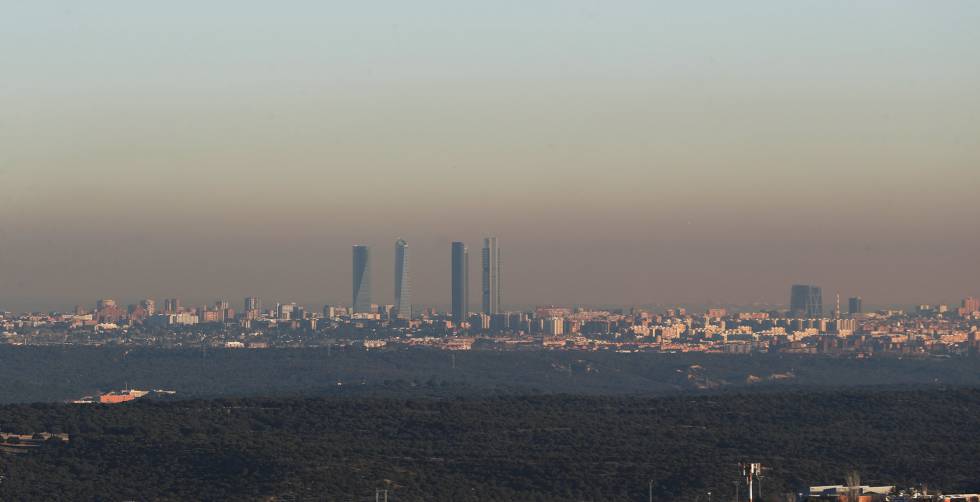
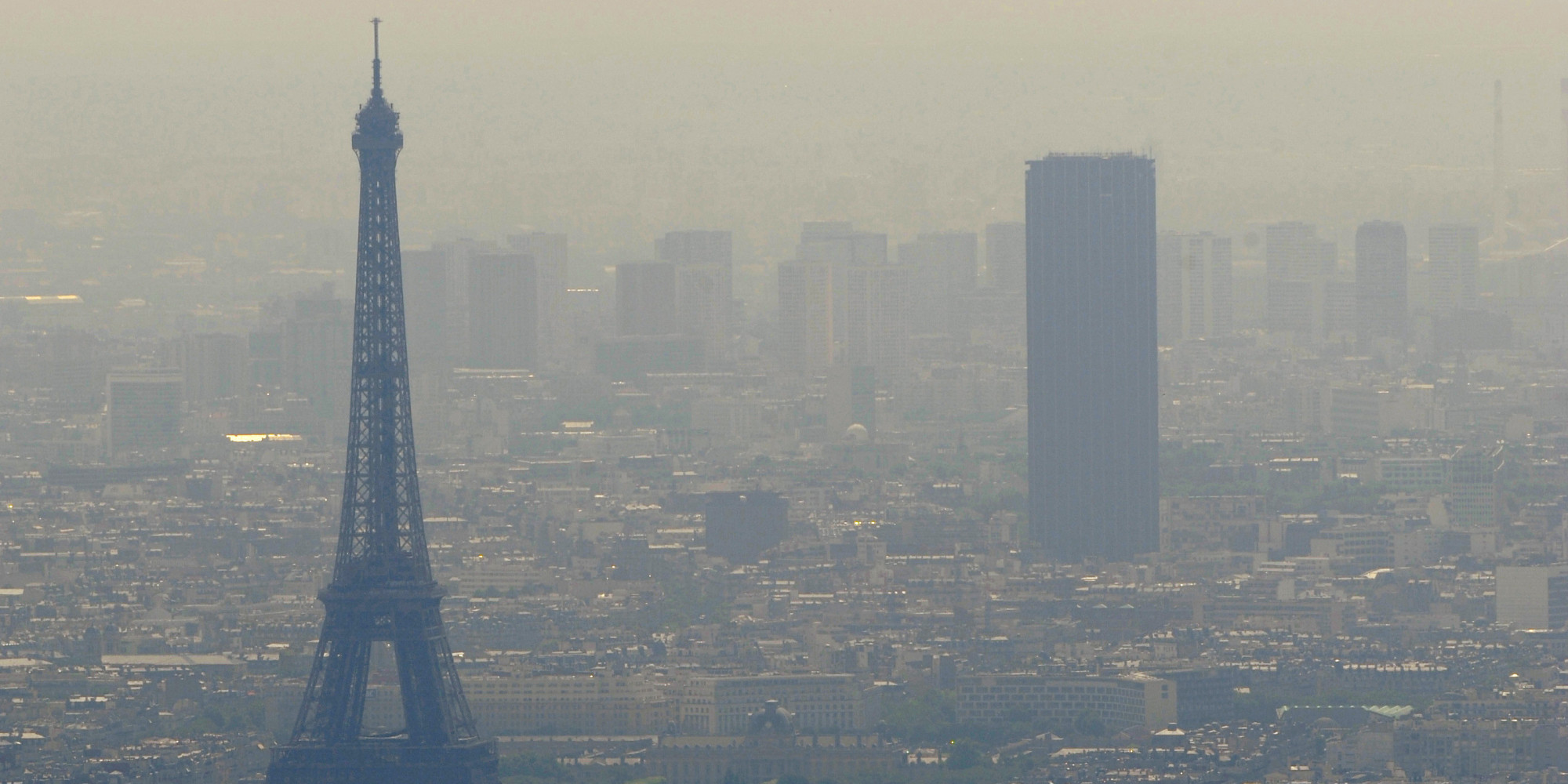
Agreed they compensated the closing of nuclear plants with coal and gas, as I already pointed out myself in another thread. But I'll take Tokyo's air any day over that of a European capital. Have you seen the grey mushrooms over them ? It's a world of cars and smog, not of trains.
> Not to mention the fact that in many Western capitals you literally walk on garbage.
The discipline Japanese have in regards to garbage is astonishing. Especially if you consider how much plastic wrap they use. I was so surprised seeing basically no garbage on the streets, but also basically no public trash bins!
> I'm baffled by how expensive food is in Europe when I can buy the same products for less in Tokyo despite being imported ( Italian olive oil for instance )
I would be genuinely curious what part of Europe you are talking about here and what's the prices for what kind of quality of olive oil are in Toyko. I can imagine that for the UK or Ireland the prices are similar. Italian olive oil is imported and shipped to an island to the UK/Ireland as much as it is to Japan and the distance actually has a non-significant impact on shipping costs in that case.
Olive oil also ranges vastly in quality levels. I can buy the mid level for about 150en per 700ml, while I have to pay 600en per 500ml for "native oilive oil extra". The difference in taste is worth the four times price increase though.
In general I found Japanese supermarkets be way more expensive and eating out way less expensive than compared to Germany (can't speak for other European countries) as I have also pointed out here [1]. E.g. rice can be vastly more expensive, with rice in Germany being available in 1kg sizes for 120en/kg (even cheaper in larger sizes), while in Japan rice in 5kg or 10kg bags for 200en/kg is a bargain. Average rice prices are even cited at 466en/kg here [2] and foreign rice at 295en/kg cited as 20% cheaper and a good deal here [3].
Well, I really wish I knew more about Germany. Last time I was there was 2005-6 I think ?
My most recent trips have been to France and Italy for work and have spent many months in both. I can't get into specifics as well as you do with brands or prices, but I certainly found everything expensive, I do get that consumer taxes are over 20% ( as opposed to the 5% we were used to in Japan until the recent hike to 8% and the next that's coming to 10% ) but even taking that into account. Incredibly dirty, people in general very rude, and a general air of conflict and hostility everywhere that makes me wonder how Paris or Rome can be such popular tourist destinations.
Edit : Not to mention the ubiquitous soldiers everywhere with weapons deployed in the streets. Something else you don't see in Japan.