Yup... there's a very good analogy to being a programmer in the games industry vs. the rest of the software industry.
In short, the games industry treats people like crap because there's a large supply of talented programmers, artists, and testers who want to work on games.
In other words, because they can.
Maybe this has changed in 15 years, but my first job was at EA, and I was part of the infamous (at the time) "EA Spouse" class action lawsuit. It was pretty bad back then.
Luckily I didn't care as much about games as some of my coworkers, so I moved onto friendlier parts of the industry. More people should vote with their feet. (And I think that has happened, especially with the ability to self-publish, which really did not exist 15 years ago.)
I realize that some people may have been "swindled" by romantic ideas about academia from decades ago, and it's hard to get off that path. But yes I would agree this issue is well known by now, and most people should stop.
It's good that more people are writing about it though, just like it was good that EA Spouse wrote about the games industry.
Self publishing is certainly a way out, working in other fields another
No dream, especially those where you're working mostly for other people, is worth your health or sanity.
I might have worked in more boring areas, and there might have been some crunch time, but nothing like I couldn't leave under threat of firing or taking me to the limit.
Pretty sad too because the adjunct teachers were actually the best teachers I ever had in college! They were good because they had real world experience and were there because they actually wanted to teach. I would even say to completely avoid any tenured teachers unless they have a really good rating on rate my professor.
I've nearly completed a PhD in engineering. A while back I decided that academia is likely a dead end unless you win the lottery. If the adjunct situation won't improve until people stop taking those jobs, I'll do my part. I'd like to periodically teach a class or two, but I would never adjunct as my sole source of income.
Yeah. There are good jobs in academia. Get tenure at an elite university and it's a pretty good life. (Although not as rosy as it probably seems from the outside with politics, pursuing grants, etc.) But that's a pretty tiny proportion of the positions PhDs hope to fill.
People don't understand how hard it is to get tenure. You have to win grants from the NIH to get tenure. Why? Because for every grant the NIH gives to scientist, the Universities tack on indirect costs (whatever that means) allowing them collect upwards of 50% of the grant for the University. Research grants are a cast cow, and it's really f* up
Indirect costs are everything that you need to do research that can't be directly allocated to the research. So you use research funds to pay a researcher, buy chemicals or equipment, etc. Indirect funds cover everything else: real estate costs, power, water, sewer, trash collection, Internet, WiFi and phone, building maintenance, HVAC, etc. When we build buildings to house researchers, all of the costs related to those buildings and space are covered by indirect funds.
It also covers a bunch of human costs, such as the staff handling payroll, grant reporting and other compliance costs around the grant, the campus fire protection and police departments, etc. etc.
Well, for those of us in the Physical Sciences, winning NIH grants isn't quite what we aimed for ... but your point is valid. For any of the granting agencies, NSF, NIH, DOE, DOD, etc. your grant is loaded with overhead/indirect costs.
I’m absolutely not defending academia as an industry. I did my time there, and I would never go back.
To say that the overhead goes to flashy buildings and fat admin paychecks is a bit of a misrepresentation. Those buildings almost always have a major donor and a substantial endowment component. The academic (especially physical and biological science) divisions do actually need to pay for office space, lab space, heat, staff to run it, clean it, make the computers go, etc. If you think my salary was ballooning while building and running everyone’s HPC clusters, I can assure you it wasn’t in any sense other than perhaps slowly deflating over time. Compared to whatever the football coach and president are being paid, there are thousands of people on staff who aren’t getting those fat paychecks.
I took my Ph.D. and joined industry rather than try tenure track lotto.
Back when I was thinking on pathways, I was a fresh faced noob with a few papers to my name competing against senior scientists with decades of publications from the former soviet union. This made the decision much easier.
It depends. If you are single and doing it without massive financial risk (if you get good support or if you have independent wealth) then I would say absolutely. I was extremely lucky and landed a assistants job at a small uni and this allowed me to scrape by (actually it was ok, just not long term sustainable).
If you have a partner that could be good or bad depending. Your relationship will be stressed, I have seen several relationships flounder due to the process and pressure, but also I've seen several come through ok, and a couple blossom. Alot of these observations correlate with normal tracks for romantic relationships, life is full of surprises and challenges, but the big fact is that people who have lost lovers and spouses during Ph.D's often blame the Ph.D (in my experience).
If you have (young) kids I strongly recommend that you think really carefully. The difference here is that no matter what happens you have dependants, and you will have to be very lucky not to get compromised by this relationship and the Ph.D process. Something will have to give, and this might mean that your work is devalued or derailed.
Always remember that a Ph.D is a gamble and an indulgence. No one needs one, and no one is guaranteed success. On the other hand it gives you skills and training that I think are very hard to get any other way and for me it was one of the best periods of my life (one of!)
I just don't get it. Where does the money go? Students pay ridiculous amounts for tuition, while schools try to get away with being as cheap as possible by hiring adjuncts, using ridiculously cheap food vendors, giving less and less aid, etc. For regular corporations I'd cite shareholders and profitability, but nominally, schools don't have that. Some people cite administration, but I'm not entirely sure of that either. Even the president gets paid maybe 4 million tops, which is 100 students tuition. And schools did just fine 50 years ago with less than a quarter of the tuition.
My current theory is that administrators have figured out a way to get money out of the school in some form and are squeezing it like cash cows. Or they're just horribly mismanaging schools.
Nowadays mostly to pay for a huge class of administrators that mainly manage other administrators and monitor the violation of rules whose creation they themselves promote.
This is repeated often, and it's mostly true. But people imagine clerks sitting in a circle and filing forms to each other.
Administrators are filtering applications, organizing the events, marketing the brand, enabling recreation, looking for better food, etc.
I'm actually ok with a barebones education, but that's obviously not what people want to see when they're going on campus tours. They judge the value of schools directly by the work of its admin, rather than the teaching staff who they only meet on the first day of class.
I studied for a year in a US university before transferring back to a government run university back in India. My tuition for the latter was about $100/year.
The amount of bloat I saw in US universities was unreal. Software that no one used apart from a couple of features, services that served no one in particular, classes that no one wants, and so on.
Of course, the infrastructure was markedly better. But I can't say that for quality. Most of my classes were taught by TAs, while my classes in my university back home were often taught by associate or even full professors, several of whom had PhDs from top US/UK universities.
And this was at a cheap public university. I can't imagine the kind of bloat a large private US school would have
I too have this fundamental question. One person I've asked who has some insight into these figures (though it isn't his expertise) claims the difference is quality of life for students.
Colleges didn't have excellent athletic facilities (for non-athletes especially), study spaces, counselors, job guidance, tutoring services, academic mentors (the list goes on) 50-100 years ago.
A lot of colleges 50-100 years ago look like what (some) community colleges look like now. Minimal services not dedicated to their cause. The only difference is the cause is different- education vs. research.
Yea, it's not only that schools are spending more to attract students, but that there are some greater market forces at play: More people go to college now than ever, the state subsidizes colleges per student less than ever, and the state will subsidize college in a way that lowers price sensitivity. Finally, there is the Baomol Effect, which says that education will continue to rise in cost w/o productivity gains. https://en.wikipedia.org/wiki/Baumol%27s_cost_disease
It's sort of this perfect storm that is shifting the increasing cost of expanding education on to 18yos. The upside: college degree holders have a 50% plus wage premium, the downside, in 2026, 18 years after the great recession, there will be a 15-20% drop in enrollment of full pay college students which might just burst the bubble. (Fingers crossed here)
I don't know the answer, but one thing to consider is endowments which are pretty amazing in size, bigger than the GDP of many African and Central American nations. (I know that is an apple to oranges comparison, but still.. a lot of $)
Patients get charged $1000 for an ibuprofen based on a particular hospital's calculation at distributing costs across a variety of procedures, staff, and settings. However they distribute those costs, the costs must bear the expenses of physicians (who had to figure out whether you needed an ibuprofen or a cardiac catheterization for that "chest pain" and whose complexity of decision-making and time-cost is not diminished because the answer turned out to be muscle pain rather than cardiac), nurses (who administer the drug, and who aren't one cent cheaper because they were giving you ibuprofen rather than rituximab), attributed cost of auxiliary staff, and facility maintenance costs (it's a lot more expensive per square foot to get your ibuprofen in an emergency room than in a primary care center.) The result is that line-item billing usually looks wonky. That we offer line-item billing is a weirdness from our fee-for-service structure, not an actual recounting of the cost of giving someone ibuprofen. If the ibuprofen was listed as a buck, the 999$ would still have to be shifted onto another line-item. The costs have to be attributed somewhere.
And you know what? Everyone should kind of know this already. If you didn't think it required the urgency, staff, equipment etc. of an emergency room, you should've gone to a primary care physician. They would've gotten you that ibuprofen for pennies. That you go to an emergency room indicates there's something else you're paying for besides the ibuprofen.
(( On top of that, the expensive price is usually a chargemaster price for negotiating with insurers, not a price intended for human beings to actually pay. The uninsured get fucked by being input into a system that takes for granted that they are a highly uncommon component. ))
In my experience, people in academia were motivated by power. Money can be used for prestige things (such as a football team), or for vanity spending, etc. Sometimes, equipment is bought with no real use cases, sometimes purchases are duplicated because the people using it don't get along well, etc.
> There are 346 Division I schools. Of them, 123 are classified as members of the Football Bowl Subdivision, the top tier of sports competition. These are colleges and universities that are eligible to compete in bowl games and have average attendance of at least 15,000 at their home games. [...] "A total of 20 athletics programs in the FBS reported positive net revenues for the 2013 fiscal year."
It's not mismanagement, its basically competition for students by increasing features the only way you can: by lower faculty/student ratio (higher more teachers, not always better), and making the facilities as nice and new as possible. The next problem driving up costs, is that states have lowered funding for higher ed since the great recession, since schools can raise tuition to cover the gap. Overall, it's all these problems combined, plus some demographic on coming demographic shifts, that are driving up the cost of higher ed. It's definitely not mismanagement!
Many years ago my neighbor was a woman in debt up to her eyeballs with a sociology degree, who dreamed of working in the nonprofit sector. She got a series of (unpaid) internships with nonprofits around Boston but could never land a permanent position. She wound up taking a job at a local sandwich shop.
Domino's Pizza managers make over $40,000 and don't require a college degree.[0] They also have benefits. In 2007 when I worked at Dominos the manager was salaried and worked about 50 hours a week, but he was an ex-convict and really enjoyed his job. He was a super nice guy who made us excited to work there.
There is no need to pay $200,000 for a worthless degree to make minimum wages as you are overworked and stressing yourself to death. If that was me, I'd go back to Dominos, it was a pretty fun place to work.
> There is no need to pay $200,000 for a worthless degree
In general, and certainly in my field (mathematics), Ph.D. students don't pay tuition, and they get a modest stipend (around 20K) in exchange for being teaching assistants.
Ph.D. students outside top tier programmes in the humanities and social sciences often get admitted without funding and enrol as students. They might get a teaching assistantship or they might go into enormous debt. Then if they graduate they’re competing for jobs against people from graduate programmes in their field that are well known and respected. Most of those people don’t get tenure track jobs. The ones from no name programmes are just screwed.
Fredrik deBoer got a Ph.D. in English (Rhetoric) from Purdue, applied to more than 300 tenure track jobs and gave up, eventually becoming an administrator at NYU. Unfortunately he’s deleted the essay along with most of his blog but he said that the tenure track job hunt was the worst thing that ever happened to him and he’s an orphan.
That’s someone with statistical and programming skills graduating from one of the top programmes in Rhetoric.
I did the whole PhD gig, few years as a post-doc and then obtained a tenured position only to quit it and go to industry. While I don't regret all of it, I wish I had quit for industry sooner.
Industry is far, far nicer than academia. The amount of time one puts in for massive amounts of bullshit meetings and form filling and constant justification of how what you are doing is beneficial for society is insane. What I realized was that, in many ways, academia is not that different from the glamour world. Young, naive people see superstars at the top, receiving adulation and sex, and see no reason why they can't be one of them. The superstars are relatively accessible and you meet them and they tell you all you need is talent, hard work, and all of this could be yours too. Grad school, at least in fields like Physics, Math, etc is cheap as long as you don't have family or other dependents. It is an artificial environment with its own rules, and you get sucked in hard. It actively encourages you to not care for yourself or anyone else around you and just focus on research (read, what gets your advisor publications and awards). Over the span of my PhD I saw two suicides, almost every person who was married divorced, and practically everyone was on anti-depressants.
This doesn't end after getting your PhD. Since academic jobs could be anywhere and because the typical post doc grants come for 2-4 years, you can't really settle down and start a family. There is crippling uncertainty about everything. While your peers at this time have had kids, you are still wondering _whether_ your academic career will happen. The senior folks who got their PhDs in the golden period in 70s and 80s are at best oblivious to how things are now, or actively feed you lies because you continuing to work in this system for as long as possible is in their best interests.
When I walked away from the tenured position after going through all that, everyone was like who does that. But, personally, it was a huge relief to me. My first salary in the corporate world was 4x what I was offered in academia (am a physicist, transitioned to AI/ML). Ironically, I have more time to read research papers and actually think about research now.
> She had a number of ailments that bothered her—her asthma, her heart—and the rigors of being an adjunct added to them.
> Two deaths occurred back to back. First, Cooper, her companion. Then, a few months later, her mother, Grace.
> If Thea had a tenure-track job and access to proper health insurance to be appropriately diagnosed, she might still be alive, they said.
The factors in her death -- work stress, health issues, life tragedies, and a lack of health insurance -- don't seem more strongly linked to the job of adjunct professor than to any other low-status job.
I have a friend who was an adjunct professor for a number of years, and I would describe him as barely above homeless most of the time. He never knew whether he would have a job in the fall, and the pay was barely above minimum wage. He was planning to give up and move back to his hometown before this year when he was hired as a full-time professor.
I learned a lot about modern higher education from him, and I would absolutely describe adjunct professor as a low-status job.
Adjuncts aren’t university professors. They’re part time teaching staff. Anyone who cobbles together enough part time hours to theoretically be working full time is manfully struggling against admitting that they played the academic tournament and they lost. The system spat them out.
Adjuncts bear about the same relation to professors as a doctoral student teaching their own lecture course. No one is going to call them professors.
I know what adjunct professors are, and you seem to forget that second part of the job title.
>The system spat them out.
Adjuncts are 3/4 of the said system. It's a very peculiar definition of "spitting out" that you seem to have.
>they played the academic tournament and they lost
When 3/4 of a system are "losers", we should call that system a pyramid scheme, and refer to those people as "exploited victims".
>No one is going to call them professors.
Their students will.
Although never mind. When academia is a "tournament" where instruction is done by the "losers", at least we should make it clear to the students that it is the case.
Something tells me "75% of your classes are taught by losers!" won't make for a nice marketing slogan though.
At least she had the opportunity. Some people through academia their entire lives without ever getting tenure:
"The gig was ideal: It was tenure-track, it was in her field"
She actually had a tenure track position (that's pretty rare and not something to be thrown away). But she felt insulted because a few people had mistaken her for the janitor (and a few parents called the school to complain about her), so she quit.
We don't really know any of the details to judge that decision. I would imagine it was more than "a few people mistaking her for a janitor." But who knows. We all leave jobs that are burning us out sometimes (hopefully). We also all make mistakes. I don't feel any need to judge her life by one decision we don't know much about.
I don't think anyone that is, has been, or knows someone who got a PhD in the past decade+ and tried for an academic career -- finds her story at all unusual, or thinks from what we've been told that it would likely have been different if _she_ had done something different.
Almost anyone familiar with how it works will find her story familiar and familiarly awful. Almost nobody familiar with how it works will think "if I had been in her place it would have ended up differently." This is how it is.
Agreed. Her story is tragic but it's hard to feel sorry for someone who threw away a tenure track position, didn't want to leave NYC, didn't want to leave academia for the sake of her health. All of her self-imposed requirements were ridiculous, and lack of insight is no excuse.
Adjunct professorships are a real problem but this article is below the Atlantic's usual standard.
I would be a little bit careful Monday Morning quarterbacking this: the story is a reflection a her narrative told to a friend, not the reasons for the decisions as she made them. There's can be a lot lost in translation when communicating the decision process around major life events, and tendency to fit everything into a retrospective narrative: i.e. I'm 'here now', and the last thing didn't work out, because i wanted to be 'here now'
Actually getting tenure can be pretty tough and very political. Presumably she estimated that her political circumstances were bad and it that it would be better to start fresh than try turning things around, which is a rational decision that many assistant professors should make but do not.
The article certainly doesn't make it look that way. She joined in 2004 and left in 2006. Way too short even for a five year tenure clock, especially when she very much needed the health insurance.
Sure, but leaving without securing another tenure-track position? You can't reset the clock, still, leaving early is Not A Good Sign you know how to play the game.
The academic job market was very different in 2006 than even a couple of years later. With the downturn came a flood of people staying on for grad school instead of looking for jobs - and with them came a flood of free labor for the universities.
She probably assumed with her Columbia degree she'd have no trouble landing something quickly, even with her artificial constraints.
I don't understand how someone can get a professorship but not be tenured. Why would an institution give a chair but not be prepared to give tenure? How would you get close to the point of being considered for a chair and not pass through the point of being tenured?
* Colloquially, we use the term "professor" to refer to anyone who teaches at a university, but it's probably not her actual job title. For example, at my alma mater, non-tenure-track instructors typically have the title "Senior Lecturer", but everyone calls them professors.
* There is a difference between "tenure" and "tenure-track". It's possible to not have tenure but still be in line to receive it upon a future promotion. If your position isn't tenure-track, though, then you will never get tenure unless you leave your job and find a tenure-track position elsewhere. As there are few tenure-track positions open, this is harder than it looks.
* For actual professors (i.e. tenure-track jobs with "Professor" in the job title), the entry level position doesn't carry tenure, and it comes with a promotion. They start out as an Assistant Professor, get promoted to Associate Professor, and eventually to full Professor. Tenure is typically granted with the promotion to Associate Professor.
> If Thea had a tenure-track job and access to proper health insurance to be appropriately diagnosed, she might still be alive, they said.
This is a bizarre take-away from this story. What about all the people who weren't fortunate enough to attend Columbia University and live a life of learning? Shouldn't they be able to get a check-up that would have caught fluid build-up in their lungs?
This story could've been written about an Uber or Lyft driver, and the take-away would have been the same: America needs a better health-insurance story for people who aren't poor, but who don't have consistent full-time work. The adjunct angle just adds an ugly layer of classism to that point. ("Oh, this person had a degree from Columbia, she shouldn't have faced the same struggles as an Uber driver.") Everyone should be able to get a regular checkup, regardless of their job. Beyond that, if the market values historians similarly to Uber drivers, well, so be it.
The article is not arguing against universal health care, it is arguing against the terrible state of employment for university teachers. You know, it is possible for more than one thing to be wrong in society at once.
The implicit premise of the article is that university professors shouldn’t be brushing up against the floor of society. That’s odious. The societal baseline must be adequate, and the tragedy here is that it’s not. But nobody is intrinsically entitled to a better life than the baseline just because of their education.
The story is a call for middle class welfare: paying an educated, relatively privileged group more than their market value—and more than what we deem the societal minimum—so they can have a higher standard of living than say food service workers and retail. (Who likely would consider the “inhuman” working conditions of being an adjunct professor quite a step up.) That’s not moral. Nothing about having an advanced degree entitles you to a better life than people without one.
Let me suggest an alternate summary: The story is a call for welfare.
Have you read your Marx?
No society can surely be flourishing and happy, of which the far greater part of the members are poor and miserable. It is but equity, besides, that they who feed, clothe, and lodge the whole body of the people, should have such a share of the produce of their own labour as to be themselves tolerably well fed, clothed, and lodged.
Or:
It may be said that of this hard lot no one has any reason to complain, because it befalls those only who are outstripped by others, from inferiority of energy or of prudence. This, even were it true, would be a very small alleviation of the evil. If some Nero or Domitian were to require a hundred persons to run a race for their lives, on condition that the fifty or twenty who came in hindmost should be put to death, it would not be any diminution of the injustice that the strongest or nimblest would, except through some untoward accident, be certain to escape. The misery and the crime would be that any were put to death at all. So in the economy of society; if there be any who suffer physical privation or moral degradation, whose bodily necessities are either not satisfied or satisfied in a manner which only brutish creatures can be content with, this, though not necessarily the crime of society, is pro tanto a failure of the social arrangements.
Trick question -- Adam Smith and John Stuart Mill, respectively.
Those quotes express the view that there should be a minimum standard that is adequate. Which I agree with. What I disagree with is the idea that being a professor entitles you to something higher than that minimum standard, which is the premise of the article.
Does your minimum standard fall above or below the necessities of life?
I don't see the conditions being described in. the article (or many others of adjunct or even full-time professors) as extraordinary. There's another passage in Smith discussing the constituents of pay I recommend considering.
What do you earn? Is this above that minimum standard?
What of college football coaches? Or VC?
Why should colleges (or any other enterprise) be charities paid for by the sacrifices, and lives, of instructors or workers?
Please keep the 'whataboutism' cliché off HN. At this point it adds no information and is just a form of name-calling, so therefore against the site guidelines.
It's not clear to me what Columbia did wrong. She got a PhD there, likely for free, and after graduation was able to secure a tenure track job at a decent university. She was set up pretty well at that point.
The issues that came after that point seem to have very little to do with Columbia.
More CCNY than Columbia, perhaps, but institutional outsourcing of stress and risk for inadequate pay, security, and healthcare is a huge part of the problem.
And not just for academics, though as a group they have distinctive challenges.
It's pretty simple - the product universities sell ("education") is highly inflated. Thus universities can have someone hardly trained in their field (a current grad student) to instruct it. (Of course if you're being taught by what is an older classmate then how much value are the classes really?)
I feel so much for my colleagues who are in this path.


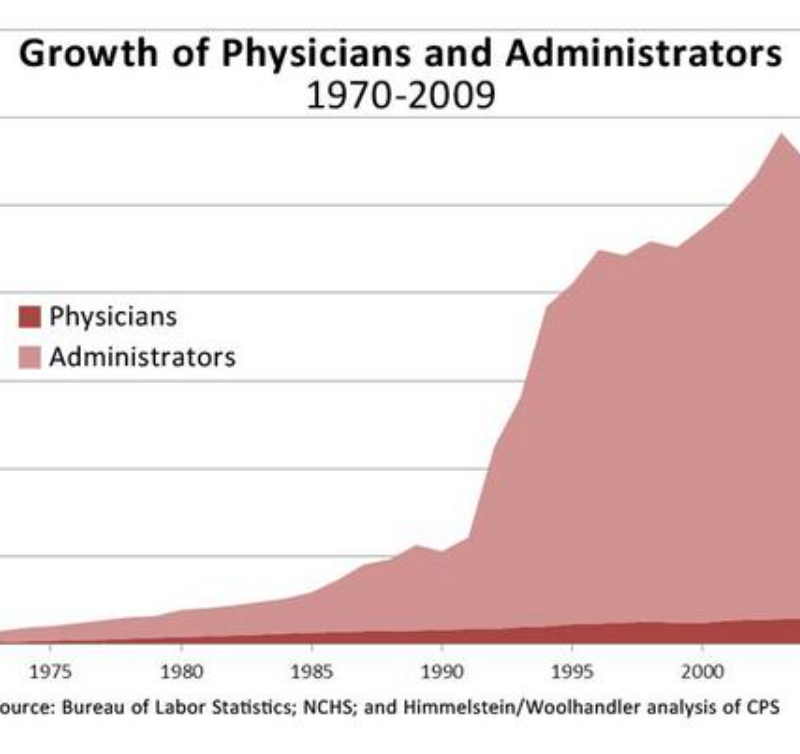
Academia is not a good industry to be in and people should stop trying to go. This is well known and has been for a long time: https://jakeseliger.com/2010/01/21/problems-in-the-academy-l....