And that was recently demonstrated in Ukraine, where a Patriot battery fired 32 missiles against incoming targets[1], but got hit nonetheless. It looks to me like missile defence works well in very unbalanced situations, such as Hezbollah's home-made rockets against Israeli Iron Dome, but is easily saturated when against a roughly equal adversary.
[1] IIRC Ukrainians and US say there were 29 incoming missiles; Russians say there were 6 or may be 9 (unsure). Both numbers are probably made up, and truth is probably in the middle, 12 to 18 or so.
> where a Patriot battery fired 32 missiles against incoming targets, but got hit nonetheless
It also shot down Russian hypersonic missiles [1]. I don't know which variant [2] we sent Kyiv, but this is almost certainly an old PATRIOT battery taking out "cutting edge" Russian hypersonics.
It is hypersonic, but it follows a very predictable high-altitude trajectory, so it's the easiest kind of hypersonic missile to intercept.
I read a good thread about the various kinds of hypersonics a while ago, but can't find it now. Broadly, there are three classes: hypersonic cruise missiles (like Tomahawk but much faster), hypersonic glide vehicles (basically ballistic missile warheads with wings), and classical ballistic missiles. It's the former two which are new and scary. This touches on it, but is rather one-sided: https://www.brookings.edu/blog/order-from-chaos/2023/05/23/u...
Its perhaps worth noting that literal hypersonic “ballistic missile warheads with wings” were developed by the US for ICBMs in the 1970s, and are deployed by many countries on ICBMs or MRBMs (ironically, not the US, whose last MARV-capable missiles were the Pershing II, retired in 1991.)
I think the deal with the Avengard (and the US C-HGB as used on the soon-to-be-deployed LRHW) is bigger wings / lifting body giving it greater maneuvering capacity through a flatter flight phase trading more of its speed for lateral displacement than earlier maneuverable ballistic missile warheads.
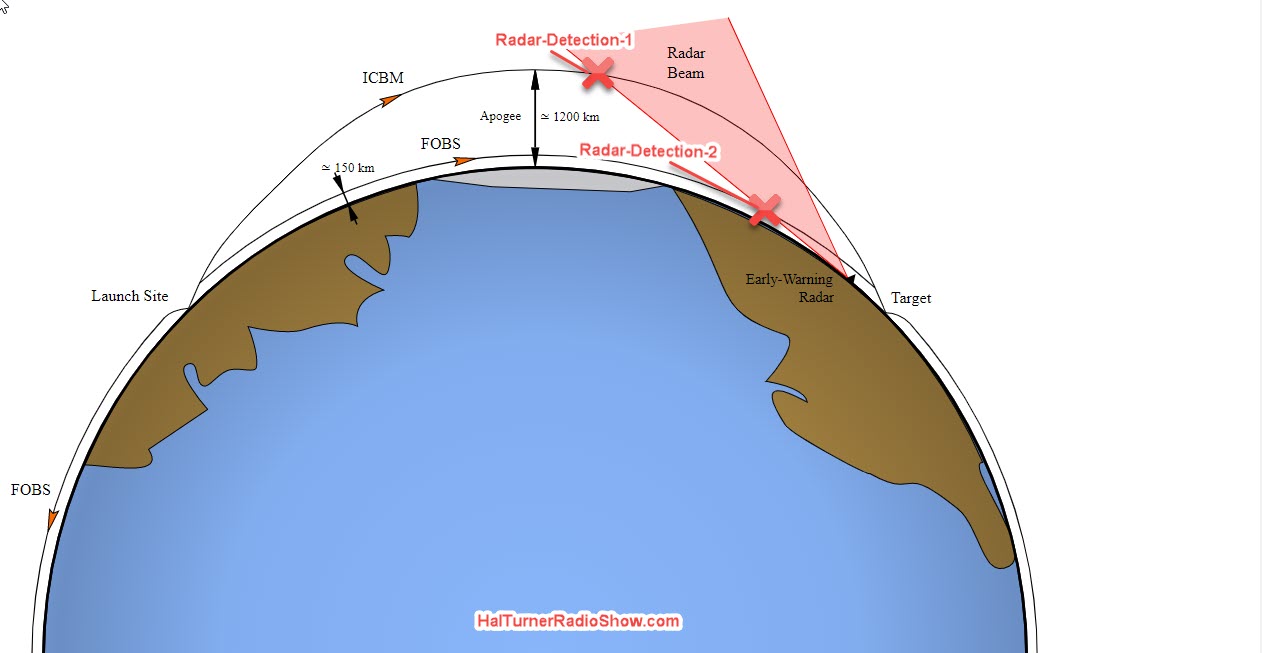
Furthermore, it can in principle come from any direction, which was relevant historically when it was expected that Soviet ICBMs would come over the North Pole.
If they are actually glide vehicles these are exactly the hypersonic glide weapons discussed above, if thy “glide” part is an exaggeration, they are just classic ballistic missiles with maneuverable attack vehicles (MARVs), which are widely used, they aren’t, in any case, outside of the three categories presented.
It was unveiled in 2018 by Putin alongside the Zircon anti-ship and Avangard glide vehicle [1]. Within the context of Russian hypersonic ballistic missiles, Kinzhal is the flagship.
You're absolutely correct, by the way. And that's the author's point. (Which I've been partial towards for a long time.) Hypersonic missiles are not the game changer they're claimed to be, and to the degree they open new tactical ground, the United States is well set to at the very least match adversaries' capabilities.
The thing with Kinzhal is that it is not maneuvering, but the Russian agitprop muddies the waters by focusing on the "hypersonic" part. However, as the article points out, an actual maneuvering hypersonic missile - which is something that all major players are working on - is indeed a major threat. It's just unlikely that Russia would have that any time soon, given the overall state of their technological development demonstrated during the war so far.
> an actual maneuvering hypersonic missile - which is something that all major players are working on - is indeed a major threat
I've heard Avangard lacks propulsive glide. That means it's ballistic in space, and only maneuverable (at the expense of range and speed) at the terminal phase. This is solvable because it's old tech–basically MIRVs.
It's interesting how the propaganda story about "intercepted" Kinzhals is being spread together with the official US confirmation of "minor" damage to the Patriot system. Also we have videos which show explosions happening on the ground level (https://www.bitchute.com/video/paRpPOE15Gx4/ 0:33 and 0:42). Even if you believe in the debris story, it means that a rocket got in the range of ~100 meters of the system, which is already can be read as an interception failure for a Patriot-like system.
Of course, the Russian story of "destroying" the Patriot battery is also clearly exaggerated. It's quite probable that the most visible and easily targeted radar module got destroyed, while the rest of the system is fully intact or got hit lightly by debris.
If you destroy a ballistic missile, the debris will mostly remain on a ballistic trajectory, raining down on what would have been the target.
There's no reason to believe that the radar got destroyed at all. The explosions on the ground were confirmed to be hits on the airport terminal (aftermath pictures are available). Obviously, no part of a Patriot system likely to be inside a building.
Last I heard though, those hits were caused by normal Kalibr cruise missiles. It is a bit concerning that those got through, hopefully they learn from it. But not surprising, because it is challenging for a radar to search for objects both above it and at ground level around it simultaneously.
There are zero such missiles. It's all marketing BS. They have air launched ballistic missiles. These are not "hypersonic missiles" by any accepted definition.
(If the Russian definition is valid, then the V2 was a "hypersonic missile").
In fact hypersonic missiles are pretty common. Every rocket that leaves Earth’s orbit is ‘hypersonic’. There is nothing inherently special about being ‘hypersonic’ in general. In space everything achieves hypersonic speed quite easily(ICBM’s and space rockets) are all hypersonic when they enter space. The trick of hypersonic missiles is to do that within the constraints of earth’s atmosphere. The US has them:
It's unclear whether they have any in operational service right now, but the Zircon is certainly a true hypersonic maneuvering cruise missile, rather than merely a ballistic missile or even glide vehicle.
given russia's long history of dishonesty in their claims (e.g. 'we won't attack Ukraine, that's just western propaganda', 'we are the victims and not the aggressors', 'we aren't raping children in Ukraine'), the truth is, by default, most likely to be the opposite of what russia says (but of course, subject to dispute if russia actually has reliable verified evidence of their claims)
it's simply the bayesian prior at this point; the null hypothesis
The Ukraine has its own rich history of dishonesty.
The first day of war: Ukraine says that Russian warship killed with missiles all Ukranian border guards on the Zmeiniy island. Everyone is shocked by this senseless cruelty.
Russian MoD says that guards are taken prisoners. Nobody believes.
Two weeks later: Ukrainian Defence Minister gives medals to the border guards safely returned to Kiev.
maybe, maybe not. Two things are for sure, though:
1. there is no such thing as "The Ukraine" anymore, only Ukraine, as in the independent country with internationally recognized borders [including Crimea]
2. given russia's long history of dishonesty in their claims (e.g. 'we won't attack Ukraine, that's just western propaganda', 'we are the victims and not the aggressors', 'we aren't raping children in Ukraine'), the truth is, by default, most likely to be the opposite of what russia says (but of course, subject to dispute if russia actually has reliable verified evidence of their claims)
again, it's simply the bayesian prior at this point; the null hypothesis
It means what you say might be true, or it might be false, but either way it has no bearing on russia's long history of dishonesty, and thus has no bearing on my comment
indeed, whataboutism itself is a form of dishonest debate which was invented, and is used to distract from russia's long history of dishonesty (here for example).
So you don't bother to google and check if the Ukraine has a habit of lying too, and prefer to believe anything coming from Kiev only because Russia says the opposite.
The word 'whataboutism' is a form of dishonest debate and used to distract from critique of double standards.
"guess who invented it? russia, of course."
I'd say it was invented during Cold War by some American in search of rhetorical device to distract from their double standards.
Theres no evidence it hit anything, other then that of the Russian government who has shown itself in this conflict that it is incapable of doing anything but lying. In fact people found where it was doing deployed and theres not even any scorch marks, everything points to the thousandeth Russian lie in this war more then anything else.
> Even the US says there was 'minimal damage'. [0]
Yes, minimal damage from flying debris from something, but it's clear from that satellite imagery nothing hit any part of an actual patriot.
> There is no evidence to the number of Kinzhals launched and to the number of Kinzhals intercepted.
Exactly, no evidence of anything but minimal damage to a patriot either. Kinda pathetic given the size of the attack that Russia cannot even take out one air defense system that they clear know where is.
the flaw in your logic is that things (!russia) does don't affect the high probability that russia is lying, which is, again, the bayesian prior
only the changing behavior of russia can change russia's history of behavior, and it can choose to change in a more honest direction anytime (but has not done so)
you're thinking about it wrong, they don't have any effect on each other, even if you think you can use one to reason about the other
if russia says A, we can assume !A due to russia's history of dishonesty, literally with no other information necessary
someone else being dishonest, even if true, doesn't make russia more honest, so we can still assume !A
indeed, because russia's history of dishonesty is so long and strong, we can stop right there, unless russia proves its probable lies are actually truthful (such is the fate of a liar)
if they don't like it, they can start being honest and keep it up for a few decades to show they've changed
- The Patriot system is modular, there are pictures of the different parts on Wikipedia[0]. When Russia says they've destroyed a Patriot, what exactly have they hit? The radar? A launcher? Hitting one component of the system is not exactly the same as destroying the whole thing.
- Decoys are used during these attacks. Both Russia[1] and Ukraine[2] use them. Even if no one lies, I assume that the number of targets seen by the defenders will always be higher than the number of missiles launched.
Apparently the Patriot system that got hit only suffered minor damage and is repaired and back up and running now. I wonder if it was perhaps hit by some debris? But it is hard to speculate through the fog of war.
> Patriot battery fired 32 missiles against incoming targets[1], but got hit nonetheless
This phrasing suggests that the only objective that Patriot had was to defend itself, which it failed. However, Patriot system in question was also tasked with defending a lot of critical objects in Kiyv, all of which have not been hit.
Any system can be saturated and overrun. To make an honest assessment, we need to know exactly how many Patriot systems were on the ground, and how many targets were they tasked to protect.
The Patriot certainly is defending some potential target, however it also requires systems to protect the Patriot itself from various kinds of weapons. Air defence is extremely complex and layered when you have to be able to intercept 15000$ drones flying at 150km/h, subsonic cruise missiles, ballistic missiles and gliding bombs of various types and speed, and super/hypersonic cruise missiles.
We really don’t know enough about that incident to draw any conclusions from it. Russians said the Patriot was destroyed by their missile, US said it was minor damage from debris and was operational again within 24 hours. I’m sure at some point we’ll know what happened, but not for quite a while.
Unless the Ukrainians deployed everything in the same area and very close together, I don't see how one or two missiles could destroy a Patriot. Unlike planes or tanks, the system is modular and made of different parts (launchers, radars, etc) that - as far as I understand - are supposed to be spread around.
A bit of a tangential point, but the problem with Ukrainian situation - is that Ukraine doesn’t fire back to where these rockets came from. Any engagement I can imagine involving NATO would not be constrained to such ridiculous, sad, and unfair asymmetry.
> A bit of a tangential point, but the problem with Ukrainian situation - is that Ukraine doesn’t fire back to where these rockets came from.
The lack of adequate deep strike weapons (and possibly political constraints on the use of some of what they have that is externally sourced) is a real problem for Ukraine, to be sure. Given how badly Russia has been underperforming for its on-paper advantages other areas, I’m tempted to say that the deep strike asymmetry is the main reason Russia is able to continue the war at all.
Ukraine has been using what they have to hit Black Sea Fleet ships and fairly deep bomber bases, but their capacity to do either is limited.
> Any engagement I can imagine involving NATO would not be constrained to such ridiculous, sad, and unfair asymmetry.
Well, the launch locations aren't static/fixed sites. The Kalibr is generally launched by Russian vessels in the Black Sea, and the Kinzhals are launched by MIG-31s. You could try to strike their airbases, or ports, but that's a non-trivial exercise, even for a major power.
The Gorshkov class frigates are a much tougher nut to crack than the Moskva was. A well orchestrated Harpoon attack might be able to, but Ukraine lacks enough launch platforms (and no aircraft that can safely reach it).
You probably meant Hamas. Hezbollah has much more advanced rocket capabilities and has just much more of them. While Hamas (and Islamic Jihad) rockets can usually be stopped by the Iron Dome, Hezbollah has orders of magnitude more of them and many of them are precise.
These were short range ballistic and cruise missiles, which are an entirely different category of threats compared to ICBM delivery vehicles. The difference between Mach 5 and Mach 23 is significant for interceptors, obviously. Patriot is not able to intercept ICBM warheads for that reason.


[1] IIRC Ukrainians and US say there were 29 incoming missiles; Russians say there were 6 or may be 9 (unsure). Both numbers are probably made up, and truth is probably in the middle, 12 to 18 or so.