There is a lot riding on V3. SpaceX cannot afford to take too many launches to get V3 solid. If 2026 is another 2025 (3 V2 failures in a row followed by 2 V3 successes), then they can forget about landing on the moon before 2030.
My hope is that Flight 12 goes nearly flawlessly (at least gets to soft splashdown) and they can start testing in-space refueling in July/August.
If they can demonstrate in-space refueling by the end of 2026, then they have a shot at a lunar-landing demo in 2027 and a crewed-landing in 2028. But a lot has to go right for that to happen. Here's hoping it does.
> then they can forget about landing on the moon before 2030.
A crewed Moon landing before 30 is really implausible. Everyone is late, but the latest NASA OIG report put the Axiom suits very late (somewhere ~2031 if everything holds, but it notes it might not hold).
Were any of them actually failures? My understanding is they push limits and create intentional weak points to see where it fails, and something failing isn't a mission failure but rather part of the research process.
The goals of the V2 flights were to test the improved heat shield and to test satellite deployment. The first three V2 flights did not make it far enough to test either of those goals. It wasn't until Flight 10 that they could actually test that, and that was 9 months later.
Effectively, SpaceX lost 9 months due to problems with V2.
Sure, one could argue that it's still research (no customer was affected), and there was no way to know V2 would fail until it was tested.
But watching the stream, it was clear that the SpaceX team was very disappointed with the outcome. I remember watching Flight 1, which nearly destroyed the launch pad and didn't make it to SECO, but still SpaceX was ecstatic with the results.
2025 was supposed to be the year SpaceX tested in-space refueling. The V2 failures delayed that, and whether or not a different company could have done better (my guess is no), SpaceX still felt like they failed.
Your standards of success are unrealistic and don't reflect the history of spaceflight. Designing and building rockets is incredibly difficult and has always been marred by a high failure rate. The early years of the US space program had an abysmal mission failure rate. Vanguard (1957-1959) was a disaster with 9 failures out of 12 attempts. A 25% success rate. Ranger (1961–1965) had 6 failures in a row out of 9 missions. By Apollo the US cleaned up its act, but had multiple high-profile failures (Apollo 1, 6, and 13).
The Soviets were not better, the Luna program failed 11 missions in a row out of 12 missions. The N1 rocket went 0 for 4 and its failure ended the Soviet lunar program.
SpaceX Falcon 1 failed three of its first five launches, which nearly bankrupt the company. The rocket's successor, the Falcon 9, ended up becoming the most reliable rocket ever produced.
The fact that Starship even functions with so few test flights is an engineering marvel.
Absolutely--space is hard, and Starship is the most ambitious rocket ever, and SpaceX is, pretty obviously, the most talented and capable space company today (and maybe ever). I'm not arguing anything different.
I'm just saying that SpaceX themselves expected V2 to work better than it did. I don't think they would disagree that the first three launches of V2 were failures relative to their expectations.
But none of that contradicts your point that, even with failures, Starship is an engineering marvel. I do agree with you on that.
Assumption not required. US ITAR regulations mean you're federally "encouraged" to be tight lipped. Add in the fact SpaceX is ahead of pretty much everyone else...
That's a fair point. I'm just projecting my own hopes. If it takes them too long to get V3 reliable they will not be able to land on the moon by 2028. I don't think SpaceX wants to feel responsible for China beating the US to the moon.
There's not going to be a moon landing any time soon, regardless. Nobody knows how to do in-space refueling; it's a research project. And they're damn well not going to do it a dozen times in the next year.
Furthermore they don't have a lander. Landing on the moon is hard. So hard that almost everybody who tries it fails, especially if the lander is top-heavy. And the SpaceX lander idea is very top-heavy.
Finally, the NASA budget has been hollowed out. Even if the two big show stoppers above were easy, the lack of money would stop the project.
I suspect Space X has a pretty strong inkling about how to do in-space refueling. They know how to dock in orbit, they have conducted internal propellant transfer tests, they know how to offload payload from ship in orbit and keep control of it, they know how to make autonomous quick connect/disconnect couplings for propellant transfer.
They haven't strung everything together yet and it's clearly much more complex than that. Still, pieces are coming together. Why couldn't they do it a dozen times in the next year? They could have an orbital ship launched in Q3 (flight 14), test a tanker and refueling in Q4, and start fueling in the next 3 months.
That implies all the test flights go well which is a pretty long shot, but not out of the realm of possibility. Although I think it will ship reuse that will be the problem keeping them from that within a year, rather than in-orbit refueling which I suspect won't take them more than a couple of tries to get right. Reentry still looks like a beast of a problem. It's one thing to have enough of your vehicle hanging together to land it, quite another thing again to have it back in a condition you'd be able to start fueling it up again ready for the next launch and reentry to do it all again, even in days or weeks instead of hours like Space X are aiming for.
All Starship test launches are suborbital so if anything goes wrong, the ship and debris fall back to Earth.
Even if it was put in orbit, debris are not an issue because orbital decay at Low Earth Orbit (LEO) is significant. A satellite orbiting below 250km will fall back to earth within a few hours, and at 400km within a year. LEO below 500-600km has enough atmospheric drag to be self-cleaning.
Orbital debris are more significant issue at higher orbits 800km and above.
Keeping the orbits low enough, and/or intentionally going suborbital after docking/before starting the fuel transfer, will make the chances of that being possible very low.
It's also worth considering that they have demonstrated cryo propellant pumping between two tanks within a ship, so, AFAIK, transfer between two ships is more about testing the docking systems, than it is about the pumps. They could probably rig the system to first pump some inert gas to verify the quality of the docking, then try to pump propellants.
Liquid handling in microgravity has always been weird. Big gas bubbles in the fluid, surface tension effects causing liquid to float in balls in the ullage, stuff like that. Turbopumps break if they ingest a larger bubble.
There could be some odd failure modes I would think. Failure to pump the liquid, broken pumps, who really knows? My guess would be that a failure mode would be a big spill, a failure to pump, only partially refilling, or broken turbopumps before an explosion.
For something like a transfer between Starships you can resolve a lot of those problems by (very) gently spinning the 2 craft. It won't take much force for the liquids to settle at the bottom of their respective tanks where you would presumably put the intakes.
Because there’s a much, much simpler and easier way:
1. Connect the two ships
2. Connect the liquid valves from both cryo tanks together.
3. Spin the ships about the short axis
4. Open the vent valve for the cryo tank to receive liquid.
5. Lock closed the vent valve for the cryo tank to supple liquid.
Steps 2, 4 and 5 are how you normally transfer cryo fluids between dewars on earth. You just to create pseudo gravity / acceleration in the body frame of the ships to make it work in space.
NASA has used tanks with a bladder. Pressurizing gas on one side of the bladder, all fluid inside. Cold liquids (methane in SoaceX case) means materials are crucial. A big piston is heavy and could jam.
I mean I might be a hardware guy myself depending on your definition. I've never dealt with rocket engineers.. Are they "hardware guys" according to you? If so it seems you are using that term incredibly broadly.
But SpaceX went out of their way to define themselves against the old school defence-focussed companies.
So some rocket engineers might very well have made a positive choice to "work at SpaceX to get humans to Mars" rather than to "work at Lockheed to build missiles".
Anyone in that group is likely feeling rather disillusioned right now, which will inevitably lead into demotivation.
To me the coolest thing about rocket engines from an engineering perspective is the tyranny of efficiency that the physics mandate.
Because weight is so critical, there's no luxury of "another component". If something can be repurposed, it is!
And the power opportunities afforded by continually dumping that much fuel through are mind boggling. Even regenerative cooling with combustive fuel blows my mind.
> The two modified satellites will test hardware planned for Starlink V3 and will attempt to scan Starship’s heat shield and transmit imagery down to operators to test methods of analyzing Starship’s heat shield readiness for return to launch site on future missions
Hope we get to see those images. Would be awesome to see a 3rd person view of starship in space.
These are always exciting, even if it's more of the same. I love that we live in a time where we can regularly watch huge rockets launch into space with intentional issues just to see what might go wrong and how best to monitor/solve them.
Congratulations, everyone, at being alive at the best point in human history so far!
Dang, they aren't catching the booster this time, but I guess V3 is practically a new vehicle and validating the next Starship launch is probably too critical to risk damage to the launch site for now.
They're already highly confident that if they have sufficient control over the booster trajectory they can execute the chopstick catch, so they don't particularly need to demonstrate that part more. Executing a pseudo-landing at sea lets them validate their booster flight controls perfectly fine without risking the launch tower and associated hardware. They can also do stuff like stretch the trajectory and control mechanisms to their limits to see how much they can handle, and not too big a deal if something goes wrong. Presumably any actual landings will be well within the known safe limits on all parameters.
I bet this first booster also has a lot of minor weird things associated with shaking out the manufacturing process, and they don't entirely mind testing to destruction the first one to get rid of it permanently and use the ones coming from a more proven manufacturing process for important work.
The booster catch is a useful trick but when the focus is just getting SS3 into orbit without incident, you can drop a few of the boosters in the ocean with the intent to fix at a later point.
Oh hey, you're right! Somehow I read "water landing" and interpreted it as landing on one of the barges (ocisly or jrti) any clue why that isn't the case? Is super heavy just too big for the barges maybe?
They won't use barges because the booster has no landing legs (to save weight), and because the booster is massive compared to Falcon 9. Also Starship is meant for rapid reusability, and it can take days to return a barge to port and unload the booster. Getting barge landings to work would be a distraction from the goal of Starship, and SpaceX already has Falcon 9 for current payloads.
And they won't attempt a catch with the first V3 booster because it's not worth the risk. They can build a new booster every couple of months. It takes much longer to build the launch/catch tower, and they don't have any spare towers yet. A catastrophe during a booster/ship catch would set them back a year, so they'll only attempt a catch if they're confident it will succeed.
So 200-280 tons. A standard barge can support 1500-3000 tons of cargo. Even with the added weight of a catch tower and a healthy factor of safety thrust isn't gonna sink the barge. Far more likely the major hurdle would be stability issues with how tall it is.
It's not 280 tons... it's a falling object with kinetic energy so that rocket thrust is going to be very problematic for that boat especially if it' hitting unevenly.
That and there's no way for it to stand without a catch tower.
Hypothetically, what's the effect of that much thrust close to a water surface?
I.e. if they cut a hole in the middle of a barge and it was burning at touchdown "against" the ocean
I imagine water doesn't have the kinetic problems that chunks of concrete do, but also that's a LOT of energy for even water, so maybe there'd be steam issues?
The percentage isn't the percent of it occurring but the area affected. So 51% of thunderstorms means 51% of that town/county/etc. will experience thunderstorms.
That's not how it works. Probability of precipitation means exactly what it sounds like: the probability that precipitation will fall in a specific forecast area.
Interesting. The way I explained it was how it was explained to me by a group of weather forecasters. For instance, here [0], is an explanation from a random weatherman that is in-line with how I was told.
the real question is what is our probability of Launch Commit Criteria Violation at T-0. i've seen them be no go at t-10 with a 10% chance of go and watched it lift off on time.
They have really invested focus in creating mass market content lately - like, actually having someone spend some time creating the text on this page. Didn't really see that earlier.
And a number of long form videos (like "Test Like You Fly").
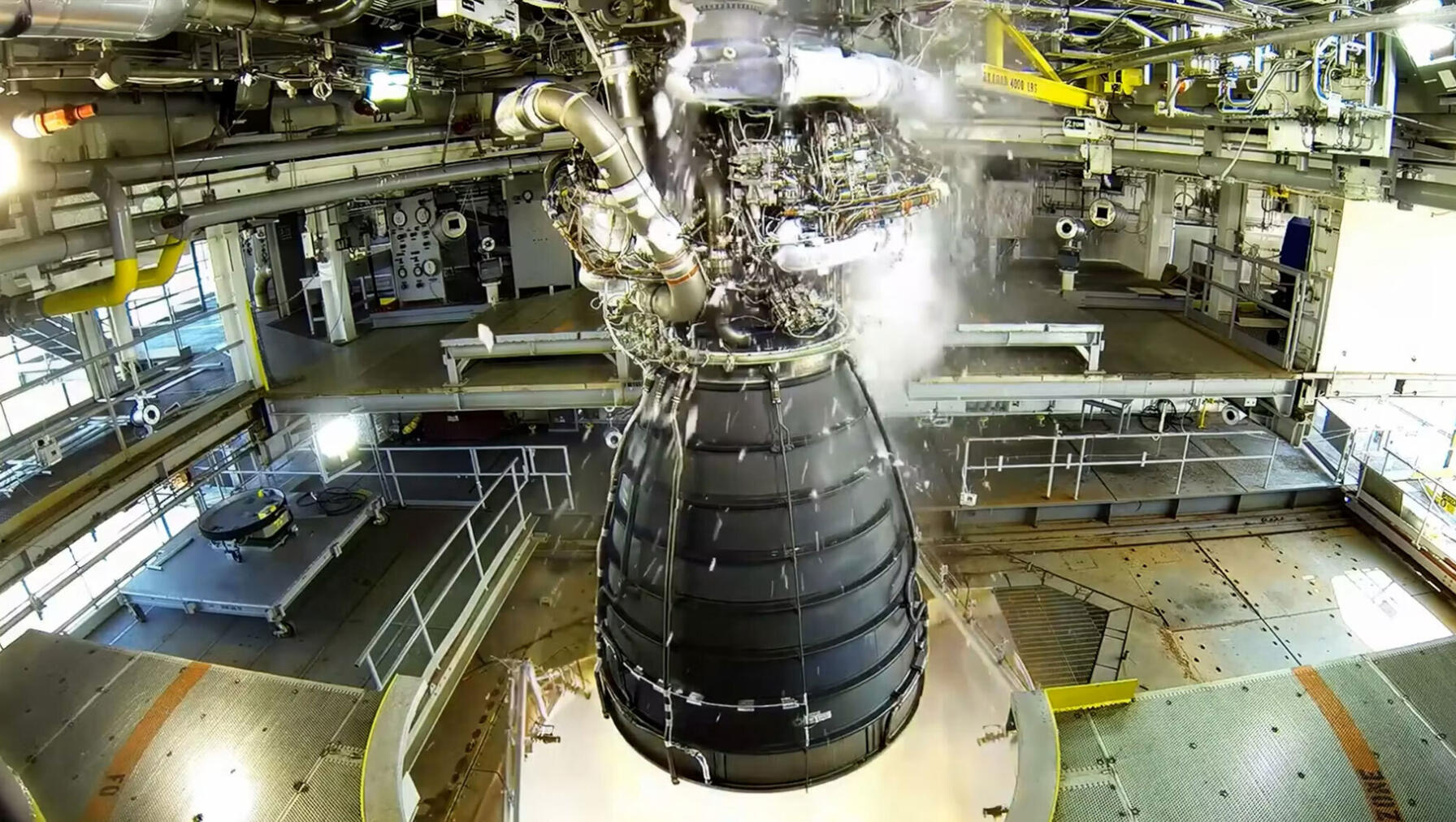
These new Space X engines look so minimalist that the CEO of another orbital rocket company mistook them for being incomplete. This is despite them being the most technologically advanced rocket engines ever made.
It's probably not that other companies necessarily would be incapable of doing similar (previous iterations of this same Space X engine architecture looked similar to the "traditional" engine category). But I think the cost structure for other rocket engines never supported a significant push to optimize for manufacturing and unit costs, hard tooling, cost optimization, etc.
I wonder what's holding them back from attempting to land...on land (as opposed to another splashdown in the ocean). They must have their reasons but there have got to be engineers dying to get their hands on a returned vehicle to see exactly how the tiles held up and if there's any other damage that doesn't show up so easily on the video feed.
Will be interesting to see how the market reacts in real-time to flight tests going forward post-IPO. Usually big events (either good or bad) are announced pre- or post-market but launch windows don't care about market hours.
I am a big space and tech fan, I have a crazy amount of hours in KSP and realism overhaul. I used to follow starship very closely, finally a rocket that's actually better than Saturn 5!
But I cant separate space-x from elon. He is, for want of a better word, evil; supporting trump, supporting extreme right party in Germany, DOGE illegally and irresponsibly causing chaos, flouting the law at every turn. He is a tech-fascist. If we want democracy and egality its imperative that people like him are stopped.
I want everything elon does to fail more than I want starship to succeed. It's fine, the rocket tech genie is out of the bottle now, someone else will make a good rocket.
I don't know why they aren't doing more booster catches. Kind of a bit disappointed they keep skipping. Either they can land them or they can't. If it's not consistent then they're avoiding the possible failure so their stock price (launching soon) stays up, otherwise just prove it's solid and actually works.
They can build new boosters pretty quickly. New launch/catch towers take a lot longer, and they don't have any redundancy yet. Also they weren't going to reuse their V2 boosters once V3 was ready, so they could learn more by testing things like intentionally disabling an engine during the landing burn or flying at a higher angle of attack.
V3 booster has a lot of changes, including a brand new downcomer, an integrated hot-staging ring, and 3 instead of 4 grid fins. Chances of a RUD are not 0.
If Flight 12 blows up in space, they've already got Flight 13 almost assembled. It might delay them a month, maybe. But if a returning booster destroys the launch pad, it would delay them much longer--maybe a year.
With those stakes, it makes sense to not try a booster catch until they're sure it's going to work.
Wake me up for the launch of the v7 engines. SpaceX is like an incompetent AI agent, blundering their way to convergence, one painful launch at a time.
I am watching Elon give a long speech about the launch, scarily delivered at high speed, without pause. Including a Bitcoin marathon promotional informercial complete with an on-screen scan code. "That QR code is your boarding pass." He just repeated several paragraphs verbatim from a few minutes ago.
He occasionally mentions the aspirational 100x reduction in launch costs.
AI slop. Yuck, Youtube. Surely Google could have AI moderators catching this crap.
My very first exposure to "AI spam" was trying to watch one of the Starship test launches, the second one if I remember correctly.
That was around the time that Elon bought Twitter, so he removed all publicity video streams from third-party platforms like YouTube and moved them to Twitter's streaming service.
I wanted to watch this on my big TV, so I was hunting through YouTube for the stream. I found the most likely looking one and watched as Elon got up on a stage, started waffling on about how this is the "future of humanity" and then with 40 seconds to go before the launch the (entirely realistic) AI voice was dubbed over and started offering "double your Bitcoin if you transfer to this account", with the obligatory QR code in the corner.
I was actually impressed by the audacity!
The really frustrating thing was that YouTube then promptly blocked all content even vaguely related to the launch! It was impossible to keyword search for anything that said "starship", "spacex", etc.
It was a scary preview of instant corporate censorship.
I'm sure the person (or bot!) at YouTube "meant well", but sheesh... they just erased the online presence of dozens of legitimate space-fan channels like NASA Space Flight. And NASA. And SpaceX's official channel too!
Ironically this meant that the only remaining matches were 100% scams.
The problem with ads is that practically 90% of the cost of a scam is user acquisition costs and the remaining 10% are the labor needed to execute the scam.
When you consider how lucrative scams are, you will realise that the advertising budget of scams is high enough to outbid legitimate ads and since the ad platform only cares about money, they'll deliver said to you.
That's a fake youtube channel that is somehow allowed to squat the SpaceX channel name. It's been going on for years, including the crypto scam. Baffling. Maybe a big middle finger from Google to Elon.
The incredible thing to me is that I've reported one of these videos to YouTube and got an answer back via email saying "we checked the video and it's fine for us". This should be enough to sue Google on the basis that they made an active choice to keep it up.



My hope is that Flight 12 goes nearly flawlessly (at least gets to soft splashdown) and they can start testing in-space refueling in July/August.
If they can demonstrate in-space refueling by the end of 2026, then they have a shot at a lunar-landing demo in 2027 and a crewed-landing in 2028. But a lot has to go right for that to happen. Here's hoping it does.