I have AkademikerPension as my pension fund through work and this move suits me quite well. They've already excluded Tesla as well as a variety of companies that profit of weapon production, fossil fuel production or are suspected for human rights violations.
In Norway the oil fund are actively arguing against boycotting these kinds of companies saying, and I paraphrase: "but our job is to earn money and we can't do that if you hippies keep standing in the way with your morals"
For some context, this Norwegian cartoon by a group that used to make satire for the government run news agency is a pretty decent summary of how things were discussed: https://www.youtube.com/watch?v=9mkuP6kQwNs.
The old man is a caricature of Jens Stoltenberg (who seems to be running the Norwegian economic machine rather well nowadays, controversial or not)
I don't know the AUM of this pension fund but if the managers were doing their jobs they should have had at least a tiny bit of exposure to SpaceX years ago.
ESG is supposed to be about valuations, long-term. People conventiently tend to forget that when it doesn't suit them. It has been shown over and over again that it is a working predictor of valuation, in which it is not alone of course. Economy students regularly invent such predictors. And the dirty little secret about ESG is that it is probably G that is doing the heavy lifting. Companies without good governance seldom survive the first change of leadership.
No one in the green movement ever spoke about "ESG" as if that was a thing. It is an investor thing. Invented by bank economists, to sell financial products. It's not like your local environmentally concious hippie type figure would suddenly start investing in Shell, just because they improved their ESG score.
Does it work as a predictor for company valuation? It seems so. But it would probably have worked better if you separated E and G, because they have nothing to do with one another. Will it work in the future? No one knows. Once you start gaming these things, all initial bets are off by a lot.
Just don't say "valuation, not ESG". It does not make sense. If you mean "short term valuation, not long term", then just say so.
The sovereign fund of Norway also researches a lot of the state of the companies and then invests into the whole market vs the ones they dont consider good according to some metric. Sounds like this Danish example.
Both are asking for money to extract oil (and hopefully sell it for more money). I don't see why the oil well being already drilled or not should make a difference if I don't want to invest in CO2-producing endeavours.
The point is that in the secondary market, the oil will be extracted regardless. By you not participating, you actually increase the return on equity for others, making it more profitable. Buying the stock does not add money into the business.
The area for disincentivizing oil production is the political sphere, not the financial sphere. Refusing to participate in secondary market ownership does almost less than nothing to disincentivize the extraction. At least with ownership, you get a say in the firms harm mitigation.
To be clear, I was answering your second paragraph, about "funding oil extraction that is happening anyway". I understood this as "buying shares directly from the extracting company".
I agree that buying on the secondary market doesn't directly give money to the company. However, it increases demand (and therefore price) of shares in petrol companies, which might help them raise more money per share for new projects.
The earnings coming from such shares also comes from actively encouraging CO2 producing activities. Some people don't want to earn money that way, because they think it is morally wrong.
>Some people don't want to earn money that way, because they think it is morally wrong.
I mean that's fair, but it's also why I brought up the three major schools of ethics. The consequentialist likely won't care if it's going to happen anyway. The virtue ethicist will.
By increasing the return for other investors I'm increasing the cost of capital for the oil exploration companies. So: Yes, not buying shares in existing oil companies will (ever so marginally) decrease oil exploration.
That’s exactly what you would want your money manager to say. It’s their job to turn a profit.
In turn you also want democratically elected politicians above that saying “yes, but the people want their money made ethically, so you can’t do that”.
> That’s exactly what you would want your money manager to say. It’s their job to turn a profit.
The job of the police is arresting people who break the law, but similarly to your money manager, you really don't want them to do this regardless of anything else, there is more things to consider than just "do everything you can to arrest people", and hopefully the same for your money manager. But also, I might be too European to understand the true value of "money grow regardless of society cost at large".
The point is that it's the job of the democratic legislature to codify what you just stated here into law, so that all money managers have to abide by this standard, not just those that have a personal conviction for it. That's the essence of rule of law.
There is room for both. Not every aspect of morality needs to made law, as significant portions are subjective and debated. Law should be a least common denominator.
This leaves room for individuals to act in accordance with their morals above and beyond the law.
It's maddening how quickly ESG and similar programmes have been thrown in the dumpster once the political climate in the US swung back to "anti-woke".
> "but our job is to earn money and we can't do that if you hippies keep standing in the way with your morals"
What these clowns conveniently forget is that their job is not just "to make money" but to make money over a span of decades and centuries in the case of the sovereign funds. A long term investment fund that optimizes for the next quarter at the expense of the long term is a bad fund.
And so the ESG and woke "hippie bullshit" is nothing more than the basic capitalism of maximizing your gains by 2100 by not destroying the one planet all your companies are on.
Long term funds do not have the luxury of being passive owners. If they take no role in management, that role will instead by taken by whatever short-term owner walks in next. They don't care about the value by 2100, they just want the company to tear the copper out of it's own walls so they can sell with a profit by next quarter, retail even sooner.
How is Tesla destroying the planet? In my mind, Tesla is one of the most important companies in transition to clean energy. Yet it got dropped from the S&P ESG index.
ESG is just another phony way for someone to manipulate stock prices, because it's decided by some committee with arbitrary and opaque ways. And that's why no one takes it seriously any more.
> How is Tesla destroying the planet? In my mind, Tesla is one of the most important companies in transition to clean energy. Yet it got dropped from the S&P ESG index.
ESG is more than just the environment. In Tesla's case, Elon Musk's governance is a serious risk to the corporation.
> ESG is just another phony way for someone to manipulate stock prices, because it's decided by some committee with arbitrary and opaque ways.
Right now as we speak, a bunch of "arbitrary opaque committees" are deciding to rush SpaceX, Anthropic, and OpenAI into the major stock indexes.
Even completely passive investment leaves one at the whims of said committees.
Pensioners should get the same amount regardless of investments, as long as there is enough funding, which it seems there is for the moment.
Of course, if someone wants to risk their own money, they can invest in whatever they want. They can even sell their pension for a cash lump sum and invest that.
SpaceX is headed by a person who is a strong ally of a politician who openly challenges Denmark's sovereignty over Greenland. Guess you wouldn't mind selling your organs to the same group of powerful people for a few bucks because you're not virtue signalling?
Right, you could disagree on which things to prioritize over dollar profits. My main point is that these preferences are not irrational like was asserted. At the scale of a sovereign wealth fund or pensions, you need to care about externalities; in the case of Denmark vs SpaceX you have something relatively concrete, in other cases we need to keep in mind that the goal of these funds are to improve the welfare of who they serve, and see past the dollar signs to take into account the consequences of the investments.
> Norway is the 5th largest weapons and defense manufacturer
Any evidence for this? Norway shows as 13th on the list of arms exporters, and is 1/42 of US exports [1]. If counting total manufacturing, Norway is 1/100th to 1/150th of US volume, based on how you count. [2]
> while the so called Oil Fund doesn't directly invest in them, Kongsberg is 50% state owned.
Kongsberg is a conglomerate with non-defense businesses [3]. The volume of defense-related product is not called out but Norway's total is just around $2.5B [4] compared to US at $334B [5] or about 1/133. Your point does stand as hypocrisy at the state level; though management decisions are likely separate between the two entities and not coordinated at the state level.
> Glad Norway's oil fund has some sense and is above the virtue signaling of the Danes.
That is two claims: that the Danish fund lacks judgment, and that its policy is performative. Any evidence?
> so called Oil Fund
'Oil fund' is fair shorthand - it's funded by petro wealth. 'so called Oil Fund' seems to be a sneer. Combined with 'some sense' and 'virtue signaling,' it reads less like argument and more like contempt.
It’s not about virtue signaling. It’s that SpaceX (or xAi like it should be called because that’s most of the company) is a shitty deal where they changed the rules just to make large funds bail out Elon.
> Glad Norway's oil fund has some sense and is above the virtue signaling of the Danes.
How would you know if they are doing those moves because it's what they believe in, vs it's just a position they'd like to broadcast publicly?
In my mind, a symbolic gesture would be to speak against Tesla and SpaceX without actually doing something, that'd be "virtue signaling" in my mind, but since they're actually doing something, a practical action to not just speak but also not invest into those companies, doesn't it stop being "virtue signaling" at that point?
Based on any rational indicator SpaceX is extremely overvalued though.
Of course it does not mean that its stock price will crash after the IPO, stock markets in the US especially are not exactly behaving rationally.
> Norway is the 5th largest weapons and defense manufacturer
What's the issue with that? Unilateral disarmament would be an exceptionally stupid idea for any country and then you do need need someone to produce weapons for your military and those of your allies.
I've always wondered, do people who complain about virtue signaling just simply not believe in the concept of virtues or integrity at all? Human nature is pure vice mediated by violence and contract law, that's it.
I get the cynicism about performative acts vs. authentic values but where's the line? Putting your money where your mouth is has to count for something.
You have a point. I'd hope most of us actually do care about virtues and integrity, but 90% of the time it doesn't need to be said. It's how we were raised. Now, true virtue signalling is saying X to change the perception but yet doing 100 evil things in the background.
The fossil fuel part doesn't seem like a rational decision to me.
Why are we pretending that fossil fuels dont provide an immense amount of value for humanity, and that its horrible to invest or support building out any fossil fuel production whatsoever.
Lets not do produce it ourselves, lets just instead outsource it to the gulfs and Russia…
Nobody is pretending fossil fuels are not producing value, if they did not nobody would bother using them in the first place. The argument is about the fact that they produce relatively short term value for the person using them, at the externalized expense of polluting the atmosphere and causing long-term environmental instability and destruction for every subsequent generation for the foreseeable future. Coastal regions (and whole islands like the Maldives) disapppearing under the ocean is immense and ongoing value loss for humanity. Ocean acidification destroying marine ecosystems is an immense and ongoing value loss for humanity. More frequent and more extreme hurricanes is an an immense and ongoing value loss for humanity. And on and on...
I think a lot of people actually dont realize the value it gives humanity. Lots of people think we would have been better of in an alternate universe where we never discovered oil & gas.
How is this short therm value for people using them? They are drivers of the most fundamental stuff in our day to day lives. Either enabling billions of people cheap efficient transport, efficient agriculture producing cheap food, cheap and efficient global shipping of goods, a great portable and ajustable source of electricity.
I think as of now its a question on how much you are willing to sacrifice human welfare over preserving current nature/environment. Extreme weather has largely been solved for humans, the trend is still less death and starvation caused by extreme weather, we are immensely adaptable and resilient.
Im not sure our current pace of reducing emissions is that horrible. There are reasons to why it takes time. I might be too optimistic, but I think we will largely solve human issues. Nature as you point out, im worried about, although I know less about. And its hard to quantify what the value is for us.
If oil and gas would not exist, then liquid fuel would be produced from coal. With the latest processes the cost of production is like 80 dollars per barrel, but with processes that Germans developed during WWII it was probably like twice of that in modern money.
In alternative universe that would be cheaper due to massive scale, but the era of very cheap liquid fuel would never happen. So electrical cars on big scale will happen much earlier. And given that coal is much more evenly distributed on Earth, one can speculate that there would be much less reasons for conflicts.
I dont think this makes sense, given how insanely much more polluting coal is. You have to burn massive amounts of coal to power the liquid refinery, 50% of the energy lost essentially in the conversion process. In addition to that liquid coal has double the emissions of regular oil. Air quality would have been a disaster.
EVs in scale would have maybe happened sooner, but they would have give us much less value, and I think in the end reaching current EV tech would most likely have taken longer than it did with oil and gas, just due to industrialization and technological innovation would progress much slower without oil and gas...
I think advanced green tech in general would have taken much longer time to develop also on an industrial scale when limited by coal only. Not to speak of human welfare would also have improved much slower.
What do you mean would have been? It was a disaster. Perhaps you are too young or insufficiently well travelled to have experienced the effects of burning coal in, say the UK in the 1950s and 1960s or in China even in the last few decades.
Without oil the push to solar and wind would also have been accelerated, probably.
What is it about oil and as that you think made it accelerate semiconductor R&D?
Yeah, my point was that it would have been even worse without oil and gas.
solar, wind and semiconductors all require a very advanced petrochemical supply chain. You simply couldn't produce any of this without products derived from oil and gas.
> You simply couldn't produce any of this without products derived from oil and gas.
That is simply untrue. Everything that is made from oil or gas can also be made from organic feedstock. I don't mean to say that it would be easy and it would certainly be slower to start with but it is certainly not impossible. Remember that the first plastics were made before the age of oil.
One currently used plastic that does not use oil or gas as a feedstock is cellophane [1], another is rayon [2].
In 1920 in Berlin there were more electrical taxes than gasoline one. But cheap gasoline killed electrical car industry.
Without that electrical cars would proceed to develop and batteries with high capacity would happen much sooner.
As for pollution it would not be that bad. Fuel would be expensive and cars with combustion engines would not happen on massive scale. There would be much more freight by trains and nuclear energy would be developed on much bigger scale.
You are talking as if oil and gas delayed the future, which I dont think makes sense at all.
I think we are underestimating all the derivatives we use from oil and gas here.
I think this is all very optimistic. I think not having oil and gas would have been a major setback to global progress I dont think it would have made us more advanced within batteries or electrical cars than we are today. And especially not even close to overall general global progress we have reached today.
> I think a lot of people actually dont realize the value it gives humanity. Lots of people think we would have been better of in an alternate universe where we never discovered oil & gas. How is this short therm value for people using them? They are drivers of the most fundamental stuff in our day to day lives. Either enabling billions of people cheap efficient transport, efficient agriculture producing cheap food, cheap and efficient global shipping of goods, a great portable and ajustable source of electricity.
People who oppose the fossil fuel industry do not suggest we return to the 17th century tomorrow. They suggest being less wasteful with the resources we have (nobody would die from eating lentils instead of beef, even though this would cause 98% reduced CO2 emissions) and investing in alternative solutions that achieve similar outcomes but cause less harm to the environment. Some things being more expensive or less convenient would not be a global humanitarian catastrophe, and since you strongly believe humans are immensely adaptable and resilient I think you would agree we could adapt to this as well if working together.
> I think as of now its a question on how much you are willing to sacrifice human welfare over preserving current nature/environment.
No, it's about how much you are willing to sacrifice the quality of life of the current generation to preserve the quality of live of subsequent generations. The worry about causing instability in the environment is not an aesthetic concern about the purity of nature being lost, the worry is that such instability will cause real and tangible death and suffering for real humans and have long term negative consequences for future generations.
> Extreme weather has largely been solved for humans, the trend is still less death and starvation caused by extreme weather, we are immensely adaptable and resilient.
You will have to provide some better source than your gut feeling and a cheerful attitude for me to believe you on this over the countless of people who have done actual analysis and vehemently disagree with you. Just a single example to get you started:
"This report’s projections of morbidity and mortality from climate-intensified natural disasters, cumulatively close to 15 million deaths, more than two billion healthy life years lost, and $12.5 trillion in economic losses by 2050 bring into focus the dimensions of the crisis. The risk from global warming threatens to destabilize both the healthcare ecosystems and the planet. [1]"
You claim to be against irrational decisions, but seem to base your "rational" view on very simplistic analysis about economic value always being good and the 17th century being bad, combined with a scoopful of wishful thinking.
Man, come on.. There are even at least two comments from people in this thread arguing this exact point. Ill promise you its frequency is even higher in the real world than on HN.
You must not be very much exposed to the environmental movement, or be much online, if you havent seen this.
The fossil fuel industry is both the most subsidized industry worldwide (https://en.wikipedia.org/wiki/Fossil_fuel_subsidies) and the second most expensive source of energy (at least for electricity production). The only energy source that is more expensive is nuclear (!).
The second most expensive source of energy is misleading in terms of whole picture. They are using a theoretical cost per kwh generated. You have to account for the much higher infrastructure and systemic cost of electricity generation you can not control (wind/solar). You cant simply use wind or solar without pairing it with an controllable source like hydro, gas, coal or batteries. Which is why the world is still very much using gas and coal (and still building more). Renewables are a cheap and good supplement to these sources, you just cant replace them cheaply (yet).
Regarding "the most subsidized industry worldwide", this wikipedia article does not mention any tax revenue and taxation of these companies. Which are stil very often government cash cows and often pays much more taxes than other corporations. The subsidies are straight to citizen's gas tanks and heating bills.
"Subsidies are mainly on consumption,[3] such as a lower sales tax on natural gas for residential heating; or subsidies on production, such as tax breaks on exploration for oil."
In my country Norway for example, we have tax breaks on exploration to incentivize investment in exploration, but you have to take into account that these companies have an 80 corporate tax rate! In many petro states they are straight up nationalized companies.
The oil companies pull out oil from the ground, a non sustainable resource which also creates direct damage to our own planet due to it being consumed/burned.
This is a subsidie.
Wind and solar are cheaper than fossil fuels this is absolutly true. Plenty of people around me have solar panels on the roof, a heatpump and energy storage. They are independent of any oil company like shell (who earned great thanks to the oil shortage?!).
Your argument regarding cost was borderline a few years ago and it might still be borderline in countries were oil is very cheap and we still ignore any ecological impact and responsiblity but overall no oil is more expensive.
Btw. just that you are aware of: A Heatpump can make out of 1 energy unit gas more energy. A EV engine has an efficency ov 95-99%.
So everyone who just burns gas directly (ICE or heating at home) is wasting energy.
It would be more efficient if you would make that oil/gas into energy, use the process heat of it for remote heating and use the elictricty directly in an EV or for a heatpump.
It is a tricky situation isn't it? We wouldn't have gotten where we are without fossil fuels, but now we realize they are not sustainable to be dependent on and we cannot continue this level of growth. I don't think it is actually possible using current means to power what we have come to know as a "first-world lifestyle" for the majority of the planet.
Thats not true. We don't know if we would be able to be were we at.
There is also no value in this. If we owuldn't known about progress through oil and gas, who would say that we would be unable to get to the same point just a 100 years later?
No own would be hurt if we would have achieved this 100 years later but healthier.
It was also ignored on purpose. Oil companies knew very well, researchers knew. Apparently there were big demonstrations here in germany in the 70ties so our parents knew too.
Life came inbetween apparently.
And from a pure calculation point of view: Its actually very easy to switch over to renewable. As of today, we do have everything we need.
How would we do the whole industrial revolution thing on whale oil and lumber? Whales would most certainly be extinct by now, thats for sure.
100 years later is an immense amount of extra human suffering, not to say that reaching current level would most certainly take much much longer than 100 extra years.
Im sorry but this whole tirade is just delusional. Its cheaper and better to replace all use of fossil fuels with renewables? Why are we not doing it? Waiting to here your grand conspiracy as of why people are not "doing it".
Why did china build over 50(78GW) new large scale coal plants last year when they could get so much cheaper renewable?
Would you say the same thing about human suffering if the bronze age was 100 years later? And what about all the suffering and deaths from the pollution? Or the massive global wars fossil fuels enabled? Because without massive oil and gas reserves both WWI and WWII would have been far harder to sustain or commit to in the first place.
With such a massive shift in politics and technology with a lack of fossil fuels I think it is near impossible to compare the modern world to a world without those.
Because people didn't care that oil and gas is breaking our planet 100 years ago. Or didn't knew and capitalism made the people in power very very rich very fast.
At that time we still lived and heated normally. For sure the brits destroyed a lot of their trees but you know? They could.
What do you think would have happened if we had a small population collaps at that time and HAD to consume sustainable? We would be less people for sure, but we wouldn't have killed the missing people, they would have not been created in the first place.
We created the first solar panel 1883. The first EV in 1884.
China is still using coal because they are in the same dilemma as we all are: we ignored the impact and keep the status quo. But China build a lot of coal plants for renewing aging ones and they are massivle building out solar.
So why are my neighbours not doing it? Man i talked to sooooo many people about this, are you ready? Because people don't care. Or they don't like new things. Or they don't understand why it would be better.
Yes thats the conspiricy. People can't do the math, don't care about climate change or just don't want something to change.
Everyone i know who has solar panels on the roof, a small battery and heat pump literlay saving money and would never switch back. Every single one of them.
The Industrial Revolution started in 1760-1800 and was driven by coal, completely replacing wood as the primary industrial fuel. We almost exterminated whales and deforested the entirety of Europe before discovering fossil fuels, which both bounced back after.
The first EV an the first solar panel are second order effects and only possible because of the industrial revolution driving massive human innovation and growth. Good luck reaching the levels of industrialization and tech required to mass produce solar panels by using wood. Producing 1 ton of charcoal from wood, requires 4-7 tons of wood. To smelt a single ton of iron you then again need multiple tons of coal. Good luck industrializing without turning the whole planet into woodchopping and wood planting farm. It was all made possible by fossil coal, oil and gas.
Everything is essentially downstream of industrialization enabled by coal and subsequently the superior oil and gas.
And saying that oil and gas was breaking our planet doesn't make sense, if anything these are great replacements of coal.
You are also diminishing the brutal life of pre-industrialization times. Staggering high child-mortality rates, low life expectancy, and an high amounts of deaths caused by starvation and extreme weather events, like droughts and floods.
Solar plus battery takes many years to be paid back. If this setup is actually cheaper, industrial scale solar+battery would be huge. Solar on its own is a great cheap pairing with stable energy sources like hydro, gas and coal, which is partly why china is doing this.
People do actually adopt green tech when it makes financially sense, just look at the huge boom of adoption of AC and heatpumps around the world. Because it massively reduces electricity cost of heating and cooling.
The revolution could still have happened differently and slower.
I didn't say it would have been possible without ANY coal but you do understand that the amount of co2 we put into our atmosphere is not from 1760? All of that big huge co2 output happend in the last 100 year...
Solar plus batterie is currently winning. In germany the problem again is NOT the economy, its literaly the energy provider companies being slow as hell. This critisim is circling the media now for the last few years.
China is doing hydro, gas and coal because China is gigantic and they don't mind that coal still exists and we do not know yet at all how their end energy mix will look like but they are pushing very hard for renewable.
No as i told you, a lot of people around me literlaly don't want to do reneable for the reasons i told you. A L'ot of people DO NOT CARE about climate change.
Germany is trying to push for heatpumps in the old government, the new/current one is paddling back, AGAIN. This is happening under our noses. The discussion of the new heating law (from the prev government) created A LOT of controversy.
The main reason why the renewable energy transformation is happening at the current speed and not in the possible speed, is people not math. not economy.
We have protests against wind mills because they 'look ugly'. My neighbours hate my solar panel on the balcony but can't say something against it because the old government created a law for this.
Work collegues of mine hate EVs and don't want to switch over but my company only allows EVs since this year. Multily of them complained that an EV is not usable as a daily car while i own an EV for 4.5 years now and it is usable as a daily driver.
The transition in China is significanlty faster than in Europe.
The first coal powered steam machines were very inefficient. They only made sense at all being sited in an actual coal mine where coal was being extracted for thermal heating, so the fuel was abundant and cheap. Yet they were still barely worth it. From that they were iterated on, but it still took time for them to be made efficiently enough to work economically outside of the mine the fuel came from.
This points to the industrial revolution not being clear progress but requiring specific starting conditions. Steam machines had been around as a curiosity for a long time. And there's no guarantee there would have been slower progress to similar electrical technology without coal/steam because those things also accelerated the development of metallurgy and precision manufacturing specifically. Coal powered machines got efficiency with better precision made iron and steel, coincidentally things that required coal to make.
So I doubt we'd be where we are without coal, it might go further as without coal and the specific circumstances of coal access and necessity on the home island of a nation that has become an economic powerhouse by conquest.
But we can't run the world again. Hopefully we can bounce up to the next level and drop the majority of fossil fuel dependence. We've been pretty dumb about it imo in that we know there are potentially massive downsides too continuing to use it like we are, and we know there are areas like air transport that might have no alternative, so smart would be to transition everything as fast as possible to preserve the niche uses.
How much extra investment to you think green tech companies get for pension funds excluding investment in this sector? They also only invest in publicly listed companies, not green startups. To me it seems like the exclusion is based on them viewing it immoral to invest in these companies..
I think the right way to go about this is to tax consumption of fossil fuels in countries where we can afford it and use the money to subsidize green tech/industry.
The slavery part doesn't seem like a rational decision to me.
Why are we pretending that slavery doesn't provide an immense amount of value for humanity, and that it's horrible to invest or support building out any slavery production whatsoever?
Lets not do produce it ourselves, lets just instead outsource it to Africa...
___________________________________
Snide comparisons aside, I'd just say that we can accept that fossil fuels played a gigantic and important role in getting us to where we are, and also acknowledge that we'll continue to need fossil fuels in the near future, but that does *not* mean that we need to accept that investment in even more expansion of the fossil fuel industry is a good idea.
Slavery is evil. Fossil fuels is actually still a net good for humanity. E.g. the consequences of removing access to these energy sources, would be overwhelmingly more negative for humanity right now, than the consequence of global warming.
The transition is moving ahead, it just takes time, and we need more technological breakthroughs and innovation. Trying to attack production instead of solving demand, can cause serious consequences, in which the poorest countries in the world would suffer the most.
Oh sorry, I forgot to look at my D&D alignment charts before making my comment, I didnt realize that slavery was evil and thus impermissible. I guess there's no possible comparison to be made with other economic practices that cause massive harm to some people, but benefit others in the short term.
For the sake of argument though, what if we lived in a situation where a very large portion of our agriculture, and other vital forms of economic activity were reliant on slavery? What if there were alternatives, but they weren't quite as economically entrenched, and an overnight banning of slavery would cause an economic collapse that'd cause large scale suffering.
In this hypothetical scenario, would we say that slavery is a net good for humanity? Wouldn't it be okay for our pension funds to invest in more slave production?
I just find it so funny how this person is willing to use completely different ethical frameworks in the same sentence when talking about slavery, versus when talking about fossil fuels.
With fossil fuels, we go and start talking about 'net benefits', and we're willing to accept some catastrophically bad effects in order to reap some benefits, but then when the conversation is about slavery suddenly we switch to toddler ethics of "that's evil." without any consideration for weighing the positives and negatives.
Doesn’t one major fund reducing investment in fossil fuels and increasing investment in renewable energy precisely migrate towards the notion of helping solve demand and encourage technological breakthroughs and innovation?
I think the right way to go about this is to tax consumption. The most efficient one would just be a co2 tax, to not favoritize some emission over others. This is mostly fine in western rich countries, and we already do this to some extent by putting extra taxes and fees on petrol, carbon emissions and stuff.
Becoming reliant on countries you dont want to be reliant on, and pretending we dont desperately need this to get the wheels turning is a strategic blunder.
Higher global fossil fuels costs have strong negative effects on peoples welfare, especially in poorer countries. Whenever we get high oil/gas prices, we get price jumps on artificial fertilizer, food, transport and energy. Everything gets more expensive. Its straight up national emergency when something threatens supply of oil and gas in many of these countries when we get events like closing of the hormuz strait.
> I think the right way to go about this is to tax consumption. The most efficient one would just be a co2 tax, to not favoritize some emission over others.
I too thought this for a long time. But after watching taxes on consumption basically be a non-starter in the US for a long time, I’m not so sure anymore. Gas taxes are also regressive, which means the people who feel it the most are the ones least able to pay it. Raising the gas tax while retaining one’s elected position is challenging in the US to say the least. In most places in the US, driving is not a luxury.
To be clear, I think we need to move off of fossil fuels to the greatest extent possible as soon as possible. For those with means, it is a great moral failing to continue to drive a gas guzzler and heat one’s home with fossil fuels when there are better affordable alternatives. I’ve been driving an EV for nearly four years; it is now not just more affordable than a gas powered vehicle, it is more convenient. For me, the cherry on the top is that I also do not pay for electricity, because I took advantage of the pre-Trump II era solar tax subsidy and built a massive one.
The tax break was good for me, and it’s a shame that is gone (I paid off that panel in 5 MONTHS with the help of the subsidy), but tax breaks really only help the relatively wealthy. We need an investment in infrastructure for the masses to break their dependence on fossil fuels. I’m not really sure what that is.
I think Europe happily buys from the Gulf currently, and reluctantly buys from Russia if they have to.
Its more about being self sufficient. This is something that can easily be weaponized against us. E.g. Russia using Europes own money to finance their invasion of Ukraine.
Given the Russian threat to Europe and the fact that we are actively sending arms to Ukraine, investing in manufacturing arms doesn't seem like an imoral thing to do. Quite the opposite.
The new asymmetric reality is mostly short/medium range drones, ECMs and hypersonic missles. Loitering munitions are going to make tanks mostly obsolete and Jets are too expensive to risk over enemy territory that still has working radar/anti-air except for large shock&awe actions.
A lot of this stuff is hard to stop and too cheap to effectively stop economically anyhow, the best solution is distance and preemptive strikes at staging areas.
we have seen .005 radar ap is the most important because drones aren't long range enough in a real war. Ukraine and Russia should be looked at as a local conflict and not indicative how a real "war" would be fought now.
We can discuss if a society should have a certain amount of GDP invested into defense and i'm not necessarily against it.
I would think educating people properly is good, I also think the swizz model is good in sense of everyone learns to handle a gun and can have it at home (as long as high security standards are set and its taken very serious).
It could be used as a tool to strengthen societies responsibility, communication and combined with what the THW is doing (technical help org).
But my statment is still true:
We do not have to catch up. We are absolutly capable of defending ourselfs against the current biggest threat which is Russia.
While I support the individual right to keep and bear arms, it's ludicrous to think that a few assault rifles in private hands could ever be effective against drones. There has been a revolution in military affairs in just the last few years. The game has fundamentally changed.
I think that's less true than the media would have you believe.
We're undergoing a lot of propaganda about how effective Ukraine is against Russia, but that's despite most European countries practically immolating their own stockpiles of defence capability, and they're doing so somewhat unoformily (while Russia does everything they can to weaken the European homogeneity; see their funding into brexit and anti-EU seniment spreading bot farms on social media).
It's definitely not a given that we can stand up to Russia with our current capability, and it's also the case that we'd be throwing human capital at the problem because we failed to adequately invest.
I spoke to one person from Ukraine who was enlisted, he mentioned he was waiting for something from the UK, I asked how long does it normally take.. he told me that he doesn't measure time in weeks, but how many of his friends he he will lose.
.. that hit me hard, and it made me consider who incredibly naive and coddled I was to believe that investing in military or weapons things is a "right wing" or "bad" thing.
War always seems so far away until it's on your door.
Its not propaganda when you can see it. We know what Putin showes in his Military parade and we know the stockpile of tanks they have and had due to satelite images.
My statement still stands, we do not need to increase defence spending to beat russia.
You said something different though: "We need to increase defence spending to have as little as human risk as possible".
I wouldn't call it naive, more optimistic. And even before Ukraine, we do have military. EU has high tec military.
Even before Ukraine, the EU spend more in military than Russia.
And regarding resources for Ukraine: We do fight a proxy war. We are not fighting Russia directly. This means some people don't want to spend money and resources on this, we are nog aligned across europe and it is always very unclear how and how much we help. This would look differently if russia would declare war against the EU.
In nominal terms "we outspend them" is true, but it misses the forest for the trees.
Nominal spend is the wrong yardstick when one side builds at home for a fraction of the cost; Russian labour, steel and energy are far cheaper at the point of use, which is why PPP estimates put their real military output roughly level with the whole of Europe combined.
And spend isn't the binding constraint anyway: it's production. A budget line is not a full magazine, and we've spent years throwing our stockpiles into Ukraine while letting our shell and propellant lines wither instead of refilling them.
"We don't need to catch up" assumes the money on the page is already steel in the field. It isn't.
Russia is 3x poorer than germany and has half of our GDP.
Russia has power because of their nuclear arsenal which is unclear how well it is maintained.
But no we can fill up and build faster and better than russia.
And the war against ukraine is hurting russia now for over 1000 days. Russia even has to go so far to reduce mobile and internet. This alone hurts Russia as a whole.
"We don't need to spend more" isn't an observation, it's a bet. And you're betting with other people's lives.
We’ve already ran this experiment. After Crimea we set ourselves a 2% floor; three countries hit it in 2014, SEVEN by 2022, and we only all cleared it in 2025. A bar we set for ourselves, missed for eleven years. And the moment we finally hit it, what did we do? we admitted it was never going to be enough and moved the target to 3.5%. So spare me "we're already doing enough" by our own standards we've been in deficit for a decade.
that decade isn't free, someone always pays for it. It's why in 2024 ukraine was firing two shells for every ten russia sent back, and dying in the gap, while we sat in rooms talking about "factory capacity". "russia's poorer per capita" means precisely nothing to a man being outgunned five to one by an economy that actually decided to build consistently over decades.
Where we draw the line, fine, ok, that's a hard question and I'll happily argue it all day. From my comfortable computer chair, far away from seeing my home, my family and my friends being gunned down because an expansionist regime decided that they thought we’d be weak enough.
The NATO 2% goal is quite a bit older than the Russian invasion of Crimea, dating back to at least the NATO summit in Riga in 2006. In any case ramping up our production of artillery shells and other munitions needed by Ukraine would definitely be beneficial to us in the rest of Europe. Both in order to end the war faster and get going rebuilding Ukraine, but also to stimulate the somewhat struggling EU economy.
It's not so much a matter of spending levels but what you get for that spending. Since the end of the Cold War, most European countries have treated their militaries as essentially government jobs programs. The money was thrown away to hold down unemployment, and any combat effectiveness was incidental. The current crisis is finally forcing a change in that mentality but it will take years to turn the situation around.
As a Norwegian I envy your ethical pension fund. Our Norwegian pension fund goes by the name the oil fund, and was financed solely by fossil fuel production.
IANAeconomist but may I ask, tongue firmly in cheek, if they also only pour water into the shallow end of swimming pools to avoid contributing drownings?
I'm not a huge fan of Elon Musk but Tesla is a company that produces electric cars (mostly in western countries with half-decent labour laws), it's not associated with any of those things.
I guess one could argue with some merit that the governance is bad enough to exclude it on that basis alone?
Agreed - Tesla has been an insanely good investment. I'm not sure about the next 10 years, but people have continuously underestimated them (and Elon Musk). The Norwegian so called Oil Fund owns more than 1% of Tesla.
has it been an insanely good investment because of changes to profit and loss, or because of other factors? (of course, building a car company of the scale they have is impressive. But by looking at tesla's financials vs stock price, youd conclude basically any other car company ever was a great buy by any reasonable metric)
"Danish pension company Akademikir Pension has announced it will divest from Tesla due to ongoing concerns about labour rights, corporate governance, and Tesla CEO and co-founder, Elon Musk's behaviour."
Tesla has a P/E wildly out of line with the rest of their sector and is facing strong competition with a largely absentee CEO who has a history of making very bad decisions over the objections of more skilled staff (politics, of course, but also things like how the Cybertruck is so expensive to make and own). At some point that bubble is going to pop so I can understand a pension fund being more focused on long term returns passing on them.
Europe is still a democracy and while its apparently not relevant in the US America, Elon Musk as the richest person on the planet directly tried to involve him in europe elections.
In a liberal society governed by laws, increased scrutiny must follow evidence of wrongdoing, not mere association. If European countries have problems with Musk’s conduct (lord knows I do) they should either pass legislation targeting behavior he has engaged in that is not already illegal, or charge him with a crime/bring a civil suit against him if he has violated existing law.
To be clear, this has already happened to some degree. See Paris prosecutors investigating him for the distribution of child pornography. But targeting companies he is affiliated with for his personal behavior violates the principle of the generality of law.
You might want some of those weapons, once our faithless, perfidious country (meaning the USA) decides to leave you to the Russian wolves. Don't depend too much on alliances.
And where would Norway be without fossil fuels, exactly? That's basically the sole source of your nation's wealth.
As for Tesla and other companies led by Elon Musk... well, yeah, F that guy. But don't throw the proverbial baby out with the bathwater.
It's really concerning given how the indexes are changing rules to fast-track SpaceX being forced into index funds. S&P is also working on updates to S&P 500 to force it down everyone's throats quickly and algorithmically.
I'm usually a Boglehead, with some exceptions, and one exception I'd love is some sort of trade that would eliminate my exposure to SpaceX for the next few years. I'm sure there's some combo of options that would do it.
Probably finding an ESG-focused ETF would do it. ESG basically meant "good governance, we follow laws" which translated into better governed public companies that therefore had better returns, as one would expect. Really weird how it was politicized into something entirely different...
There's an ETF for everything out there. (There are more ETF's than stocks). There'll be a large market for "S&P500 without SpaceX" et al, so it's seems likely somebody will fill it. It probably will have to use a worse name because of the S&P trademark.
> I'd love is some sort of trade that would eliminate my exposure to SpaceX
You can just short SpaceX of an amount equivalent to its share of your SP500 holdings. You will have to pay borrowing costs though, but on something that liquid it will be very small.
Yeah. For comparison, SpaceX will be maybe half the size of MSFT. MSFT is 7.4% of the SP500 index, so for a $1,000,000 portfolio if you were to short MSFT you'd pay 0.25% on the value of that 7.4%, or $185/year.
So eliminating SpaceX exposure will cost you $100 per million of your SP500 ETF per year, or so.
We aren’t talking about penny stocks we are talking about a tech giant. At the scales that any ordinary investor is operating at there will be no liquidity issues with shorting it and if it is in your index fund the short and long positions will directly offset if you size it correctly leading you to have net zero exposure to SpaceX.
They're saying if the stock goes up and you get margin-called on the short, you have to sell index shares, you can't just annihilate the Tesla shares with the anti-Tesla shares and walk away.
I think most people trade synthetic, just because it's faster and you don't have to wait for settlements, but maybe that is different if you trade onshore (I am a foreign investor).
Anyway if you are synthetic your margin is most likely shared between shorts and long on the same instrument, so no, you wouldn't be called.
Yeah you're not wrong. I didn't think about it that way because you can't really break something out of an ETF basket, and you also don't control the ETF basket, but if you think those risks are minimal it's probably fine to just compare dollars-to-dollars.
Personally I would still probably go with the long put strategy unless the price difference is exorbitant.
The ETF that seemingly arbitrarily changes its rules? In such a short time frame too? This change is going proposal to implementation in.. what, two weeks total? I don't know about you but I don't keep up on this stuff unless it hits the news like this one.
You are not entering a contract with a long put. You are buying a contract that, if you want, you can just let expire with no obligation to do anything. It's effectively simple insurance (as opposed to a short position, which is an actual liability, which will eat you alive in exceptional circumstances).
Yes you are, and options are complicated. Actually, the mere fact that you think they are "simple insurance" is enough proof to me that you probably don't understand it enough to safely buy one.
> You are buying a contract
Oh right, you've bought a PUT, now the fun part: you have to manage your position/exposure, could you enlighten me how you do that?
Could you explain me why buying a SpaceX PUT in a high IV regime (e.g. soon after IPO) will have it drop 40% when the IV decreases after 1 month, even though price moved in my favor? It should be simple, it's just a simple insurance product right?
Seriously. Someone, likely not super financially literate, ask a simple question about how to neutralize a stock exposure, and your answer is to advise buying options? Just stop.
Look, I think you're missing my point a little bit. Let's simplify it to risk, since that's what kicked off this conversation.
Your pension or whatever holds an ETF that (soon) contains some SpaceX shares. You buy a put option on SpaceX direct. What's the absolute worst thing that could happen?
Your pension or whatever holds an ETF that (soon) contains some SpaceX shares. You short sell a SpaceX share. What's the absolute worst thing that could happen?
Short term gains are hype and fomo, but if you're holding index funds long like I am, then returns have a lot more to do with performance. And given the lack of hype around ESG, it seems like an exceptional time to buy in to it.
That's also the kind of thing that pension funds should be investing in. They shouldn't invest in hypes as they're by definition in for the long haul and eventually hypes always blow.
Sure you can make a lot of money but only if you know when to get out before the crash. And that's something that doesn't gel well with long term investment.
I don't understand the lingo in your comment but my best possible guess is that I disagree vehemently with it.
Long term dollar cost averaging is not about hype and fomo. Overall pricing in equities does vary according to alternative investment routes, which is why I'm diversified into those as well.
Stonks go up. Stonks go down. Averaging over decades, ownership is about owning a share of productive output of a large portion of our entire economy, an amazing restructuring of social relations that presents an amazing opportunity for the common person, unseen throughout the history of humanity.
Interestingly, these are the exact rules they're working to overturn: currently, no matter how many stupid accounting tricks you pull off, you need to actually be profitable to be included in the S&P 500.
This is a fallacy. OpenAI and Anthropic would not continue to make money indefinitely by simply sitting still for the simple fact that their models can easily be distilled by competitors. Their value is contingent on sitting at the top of the leaderboards and staying there such that the marginal value of their AI is better than the mostly Chinese competitors.
And b/c these chinese competitors are open weight, the layer below frontier class AI is totally commoditized.
If there were a recession, the first thing enterprise customers would do is setup Kimi or Deepseek rigs. It would be a race to the bottom and no one would be profitable.
A similar phenomenon happened with rail lines in the 1850s where irrational exuberance led to a massive overbuild of rail lines, followed by a race to the bottom and the bankruptcy of almost all players. In the end, banks ended up absorbing the few companies that survived.
Because they're doing the fancy equivalent of selling $20 bills for $15 and chirping about how high their revenue is. You, me, and everyone else could generate $inf revenue with that strategy, but that doesn't make it a viable business model.
I have no doubt there are a handful of positive examples when we ignore the tens of thousands of failed companies along these lines.
I have no problem with money-furnaces trading publicly. If people want to invest in those, fantastic, power to them. But they absolutely should not be included in vehicles like pensions and indexes.
We don't know which of today's companies will be successful and/or highly-valued in N years' time.
Check Cisco's valuation on March 27, 2000; it was briefly the most valuable publically traded company in the world. Almost everyone believed it was worth it. Then it fell 88% over two years.
Full disclosure: some of us are old enough to have held stocks during the dot-com boom. Fortunately I was still a student and therefore too poor to have had any significant amount of money to lose :)
Really depends on the valuation and P/E they plan to list at, and some estimate of their future revenue story. I love Codex and Claude Code but OpenCode/Kimi is wildly cheaper and 90% as good.
Didn't we have a story just yesterday that Anthropic's run-rate now looks like $49 billion/ year and they might have their first quarterly profit? I would suggest if you have billions of dollars coming in the door and aren't breaking even, maybe you do have a small leak somewhere?
Part of that potential profitability is reportedly coming the fact that they get a discount on compute from SpaceX in May and June. Anthropic and SpaceX signing a contract where Anthropic leases datacenter capacity for the low low price of $1.25 billion per month, except for the first two month when they get some sort of discount.
Anthropics expected profitable quarter just happens to be the quarter were their cost is artificially low?
I buy 50 billion of hardware. Make 45 billion back in year 1. My losses are 5 billion. I Pay of all my creditors by year two. Then spend another 55 billion on hardware in the second half of year two. My profit is at this point zero.
In year three your competitors invest in making a better model and crush your business because you have no moat at all.
The entire business requires massive ongoing investment because getting massive investments is the only thing resembling a competitive advantage that you can get.
The equivalent to anything you can do will be available as an open weight set in six months to a year. Sink or swim.
It's not basic math when the numbers are this big. There's not going to be $50 billion coming in Year 3 if there's a market correction and lenders scale back financing. Borrowed money is how companies are paying for AI, and that's the first thing that disappears in a recession.
You can sidestep this entirely with a total-market fund like VTSAX/VTI, which hold the entire market and should be more resistant to being gamed.
They’re free-float adjusted so entities like SpaceX are valued only by what’s available on public markets. And Vanguard (and its funds) are owned by its investors, which makes it seem implausible that the rules would be rewritten in a way that would damage investors.
It may list fast, but it covers many more securities from what I understand so it’s insulated. I think the fact is that any broad market ETF is gonna own at least some piece of a $1 trillion company.
The additional securities it includes are weighted by market cap though. So a total market fund ends up being 80% S&P 500, and even if they add thousands more companies those all fit in the 20% slot.
well that's the problem, right? There is no justification for a trillion dollar Elon Musk valuation. And he and his investors know this. That's why they're trying to change the rules to dump the stock while it's irrational on every investor in the world. If they really believed in the value of the company, would they be bribing people to scam the index funds?
Indeed, it's like robbing a bank while the bank is holding a party. Except its everyone's portfolios who are invested in the index funds with potential exposure in scope.
High level, it's concerning to observe this unfold while almost every asset class is at its peak and there is no one willing to purchase (office real estate [1] [2], private equity [3], us equities [4], crypto, etc). Late Stage Capital Markets when you've exhausted greater fools available.
Any of the direct indexing providers will let you blacklist individual stocks from the index. The intended use is to exclude stocks you hold elsewhere (or receive as stock grants) to avoid causing wash sales, but it can also be easily used to make a custom "S&P 499".
you can buy S&P 500, and short the component companies you don't like, but caution, this will achieve the solvency you want, but you will likely remain irrational
In addition to covering the IPO in general last week, Matt Levine also wrote about this specific question Tuesday[1]:
> Historically index providers were in the business of making these sorts of quality decisions, so that index funds were not forced to buy stocks they didn’t like.
> These rules create some tension between the idea that an index is a list of all the stocks and the idea that an index is a list of all the good stocks. Historically, it didn’t matter all that much: The point of the stock market is to tell you which stocks are good, so a company with a high stock valuation should be a very good company, so it should get a high weighting in both the Index of Good Companies and the Index of All the Companies.
> But SpaceX — and also maybe OpenAI and Anthropic in their coming IPOs — will probably break that link. SpaceX will probably (1) do all sorts of stuff that index funds hate and that index providers have specifically tried to exclude and also (2) be gigantic, because the market loves it.
The same rules are now affecting other big IPOs. I think Cerebras was confirmed as getting fast listing too even though they’re much smaller. It’s one big act of dumping on retail markets
Almost all of the YoY growth in the S&P500 is in a very small number of tech companies. If one of those fast-growing tech companies isn't in the S&P500, the index as a whole becomes obsolete.
Apparently, the index funds are based on free float and since the number of free floating shares is limited, the total exposure to the index will be very small.
They will only be added to those indexes if they are actually trading at a value that places them in the top 100 or 500 companies in the US. If they fall below that price then they will be kicked out of the index just like any other company.
What exactly is the risk to normal investors if that’s the case? If it’s all a big scam then they will trade lower and they’ll naturally be kicked out of the index.
This is a rule that will apply to all new companies. When Anthropic and OpenAI go public they will also benefit from the rule. Do you think the media/public will be just as outraged when they do it?
The goal of the S&P 500 is to keep the index representative of the US market. They have in fact changed rules in the past when market conditions have changed. These mega IPOs are an entirely new market condition, as private companies have never been this big before listing in history. So large that they immediately fall into the top 100 or 500 largest companies in the country.
There’s also the fact that Nasdaq is a private company and it now has competition from the new Texas exchange. SpaceX is actually dual-listing on TXSE and Nasdaq. Nasdaq needs to keep these giant IPO companies happy because if they don’t they will list on the competitor exchange which would be disastrous for Nasdaq (supercharging their competitor).
These things affect each other as well. Nasdaq wants to make sure they get the IPO on their exchange, so they include them in the Nasdaq 100. S&P 500 doesn’t want to be outdated by missing a trillion dollar company from their index, while other exchanges like the Nasdaq 100 include them.
There’s a real case to be made that this is just self interest on the part of the exchange and the other index providers.
I wanted to see how well Akademikerpension has done wrt. returns. This graph shows average yearly return from the financial crisis 2009 until 2021 and they are actually the best performing among other Danish pension funds [1].
Judging a pension fund by how it performs in a bull market seems wrong. Like their main job is to limit your downside from market crashes (if they're not doing that then they offer nothing compared to an index fund), so its strange to not include 2008 crisis (or .com bubble popping).
Checking this shows that the top 2 performers in this graph lost more money (~8%) in 2008 than the bottom 2 (~2%)
well I agree, my point is that ie 2007-2021 is better than 2009-2021, and with my example I meant to illustrate that the best performers will perform less well and the poor performers perform better if you include 2008, showing that this does in fact matter.
Well, often you don't get to "dump" your pension fund. In Denmark, it is your employer deciding what pension fund to use, and you will then have to use it. It is kinda ridiculous.
AFAIK only pension contributions mentioned in a collective bargaining agreement is mandatory. If you get offered a regular contract offering a salary plus 10% pension you can accept the job, write an email to HR stating that you opt out and get the extra 10% as take home pay. You can the make voluntary pension contributions to whatever pension fund you have a private agreement with. And all the private pension companies are very happy to make such an agreement, though the terms will be worse than an employer plan from the same company. Or you could do a completely self-administered one, e.g. through Nordnet.
I really want a QQQ/VOO replacement that excludes these new rushed IPOs that are just exit liquidity. There are ETFs that exclude harmful industries like gambling, weapons and tobacco. How about an ETF that doesn't include IPOs for six months or until insider lock ups periods are over.
Dimensional runs a bunch of ETFs which are effectively US & world equity index trackers that don’t slavishly follow the indices & can therefore avoid being forced to buy into IPOs or index updates. E.g. DFUS is effectively VTI (IIRC) without the requirement to immediately buy into IPOs that are added to the index:
I don’t think they have a QQQ equivalent but I haven’t looked at their entire ETF list.
(I have no relationship with Dimensional, nor do I invest in these funds - I just saw them mentioned in a YT video on this topic a few months ago: https://www.youtube.com/watch?v=mqIHa6URUPk )
It's important to note, that whether it's intentional (doubt) or genuine mistake, he's misleading viewers when he says that Dimensional has outperformed other funds or indexes. In fact most of the Dimensional funds have underperformed markets, and they do so at higher (albeit approachable) TERs of 0.25.
There's a (rather short for his standards) video made by Paolo Coletti, professor of financial economy at Trento about dimensional performances.
It's in Italian, but both subtitles and Youtube's auto audio translation works fine.
He always includes data and google colabs so people can run tests and verify numbers themselves if they disagree.
Most of the Dimensional ETFs seem to be following some kind of value investment strategy where they take an index but nudge it a bit by some value factor which is claimed to be based on long standing research. It wouldn’t be surprising if this value factor has underperformed in recent years which have been dominated by the rise of growth stocks. The video you link to seems to be talking about these ETFs, although I haven’t dived into the numbers.
As far as I can tell the straightforward US & world equity ETFs I’m referring to above don’t have this value bias.
I think VGT is a good QQQ replacement. It is based [1] on the MSCI US Investable Market Information Technology 25/50 Index which is free-float adjusted [2] [3], meaning that SpaceX will have a lower weight due to its lower free float. Also, VGT has a substantially lower expense ratio (9 bps / year [4]) than QQQ (18 bps / year [5]). You can compare VGT and QQQ's holdings on these pages [6] [7].
No it’s not. When the asset management industry says “information technology” they exclude the technology used for communication. That’s why VGT doesn’t invest in GOOG or META. AMZN is consumer discretionary so it’s also excluded.
That's fantastic. Thanks! I actually use QQQM which has lower fees. Seems like Invesco pulled a trick from marketing and segmented the market to have it both ways. I also need to find leveraged ETFs that have float adjusted weights which is a bit trickier. I might just pull out of TQQQ until the dust settles.
VTI avoids these issues.
It's float adjusted market cap weighted.
More float allows better price discovery.
So a company like spacex has negligible weight.
So are other major index funds. That's not the problem.
The problem is that the NASDAQ 100 and most likely also S&P 500, change their rules to permit SpaceX to be added early without traditional time for price discovery. It happens jsut five trading days before the major index rebalance.
After float adjustment SpaceX could be 1% of NASDAQ and 0.7% of SP500, but after full tranche escalation that takes over 130 days, SpaceX weight can be over 3% of NASDAQ and almost 2% of SP500 if the market cap stays near $1.5T.
(I think the price will decrease, so the weight will be smaller)
This is just a ploy to get exit liqudity as
brikym, said. SpaceX collects enough capital to pay Twitter acquisition loans and then some, but the IPO not major boost for SpaceX finances. The coming merger with Tesla is clearly in the plans (C stocks).
Besides laziness being a tradition among programmers (in a good way), that kind of complex activity is going to generate tax in a lot of jurisdictions.
If you care to explain why, I’m interested. I imagine a situation where large Sum X is in ETF but gets adapted by a few little shorts. It’s still mainly the ETF in the portfolio. (Exactly this is why in my firm some ETFs are deemed too precise, since they are thought to follow the insider knowledge as well.)
You are making a mistake in equating several things here. Not only is this SpaceX IPO that has latched itself onto pensions through accelerated inclusion in the S&P100 and other funds a different and rather unique matter, but excluding harmful industries is really rather stupid of people who oppose those industries.
If, e.g., all those who opposed those industries had instead bought the industry stock, the people with those ideals opposed to those industries could have at the very least profited from the sale of the stock...which the company itself basically does not see direct benefit from (you are not buying the stock from the company or giving the company any money in most case)...and used/committed that money to even greater opposition. If a catalytic number of those had formed, they could have also even made real impact through shareholder initiatives and actions demanding changes by pressuring board members who rely on votes, etc.
It's one of those nonsensical, moralistic and ...sorry... foolish mindsets that common people have, the idea that simply by not participating the King will leave them be. The psychopathic narcissists in control will never leave you be, no matter how much you virtue signal by not buying their stock from someone else that is not the company or no matter how much you ask or how far you run and beg and ask to be left alone.
Frankly, although I am not certain that it was done intentionally, if I were a major mover and more powerful person, I would propose the very kind of moralizing, self-righteous campaign that has shot the commoners in their feet by getting them to simply check out and not participate in things the could have otherwise controlled a lot more.
So instead of people who actually care...but are clearly rather foolish...all/a disproportionate amount of control and power and money is left to those who do not have those qualms. Hence why none of this "excluding harmful industries" has affected anything whatsoever and we now have square mile measured AI data centers and tens of millions of low climate impact people being moved into high climate impact countries, and we have more war and death and addiction than humanity has seen in 90 years.
In case it is not yet clear to some of us, a stock is like if you went to some second hand/thrift store and bought a brand of clothing that was reviled for some reason or another, i.e., use of child sex slave labor, you giving a thrift store money to wear the second hand clothing not only does not benefit the reviled company, but just alone wearing second hand clothing will likely have more a positive impact than guying some other company's clothing that will later turn out to have used regular child labor.
> If a catalytic number of those had formed, they could have also even made real impact through shareholder initiatives and actions demanding changes by pressuring board members who rely on votes, etc.
For SpaceX, from Matt Levine [0]:
> SpaceX will have dual-class stock, with Class B shares getting 10 votes per share. Musk owns 93.6% of the Class B (and 12.3% of the low-vote Class A), for total voting power of 85.1%.[5] Tesla does not have dual-class stock, Musk is a minority owner, and he has worried aloud about the risk of losing control of Tesla’s robot army because he doesn’t have voting control of the company. Not a problem at SpaceX! Build all the robot armies you want!
> Because of Musk’s voting control, SpaceX is a “controlled company” under stock exchange rules, so it doesn’t have to have a majority of independent directors or an independent compensation committee. So the board of directors can be made up of Musk’s buddies, and they can pay him whatever they want.
> Even aside from controlling 85% of the voting stock, Musk gets to appoint a majority of the board of directors himself, without the Class A shareholders even voting.[6]
Does not sound like this is remotely true for SpaceX, then?
While not wrong, your perspective is very simplistic. A company gains massively from strong stock performance - they can issue more shares to raise capital, give handouts, take loans at better rate, pursue M&A with stock payment, ... So anyone who buys stock they ethically disagree with is certainly supporting that company - and inversely not using those funds to the advantage of other companies that they find morally more appealing.
I get your point and it is the reason I said “most of the time”. But frankly, what I think the perspective you espouse here is suffering from, is a kind of grandiosity and self-righteous moralization of the very kind that is self-defeating, because it misses the scope and scale of things. In other words, the perceived/expected and the actual effect are very far divergent.
Someone saying “I’ll show that mean ol’ corporation the business by not buying their product but buying their competitor’s product” or the like, is the very same kind of trap that this fake “democracy” of the western world produces, where effectively everyone who votes with any sense of that being an effective activity, simply does not understand that the whole system is captured and rigged against them. It’s all a managed illusion, a carnival game, a flashing, dinging, blinging, chiming slot machine that makes you think “I’m do close, I can tell…oh, well, better luck next time” when the behavior and signals are all programmed to play on well understood patterns of psychological behaviors of hope and despair.
It’s precisely why the ruling class cheers on and supports democracy so much … because it really is so great for them… and it makes the commoners think it’s great for them at the same time. So rather than the “activists” of the 60s having had billions upon billions in wealth they could have used to prevent wars and corporate evil we see all over the place today (assuming they would have done that, which is a bit of a stretch considering the “boomers” today), they have little more than moralization and virtue signaling.
"... a stock is like if you went to some second hand/thrift store and bought a brand of clothing that was reviled for some reason or another, i.e., use of child sex slave labor, you giving a thrift store money to wear the second hand clothing not only does not benefit the reviled company ..."
This is incorrect and, frankly, ridiculous especially in light of your own scoffing at the "foolishness" of others.
The secondary market value for company stock has a direct impact on current and sustained operations in areas including, but not limited to:
- the ability to sell debt and the interest rates at which it can be sold
- the ability to attract and retain executive "talent" with stock compensation
- the ability to attract - or ward off - takeovers and buyouts from other firms
- the ability to expand operations, or development, through follow-up offerings
Your observation of this basic truth (that company shares purchased by at-large market participants don't yield funds directly to the firm) is, of course, correct.
However it is not as profound a factor as you think it is.
The point of these broad ETFs is that they include everything. Let the market decide. Of course they should own one of the largest public companies in the world. They're changing the rules on inclusion because the ipo is unprecedented and not owning it because [reasons] would be a dereliction of their duties.
You want an ESG fund
Also I dont see how weapons companies are harmful. Unless you're so naive to think defense is not a thing any person or country has to worry about in 2026
I think their point is not the ESG component, but firms with traditionally irrational valuations (à la GameStop) for which index inclusion exceptions have been made to facilitate short term liquidity for IPO participants. Seems as though one should be able to hold the broad market less that component.
> Let the market decide... They're changing the rules on inclusion ...
You have the market deciding and the rules changing in the same paragraph and nothing's bothering you. I genuinely envy your peace of mind, my friend. Some of us are truly blessed.
The rules changed because it's unprecedented. It's not complicated. If your job is to "track the market" and there is this company that is worth $1+ trillion, you're not doing your job if you don't have exposure to this company.
Just be honest with yourself. The only reason you and others have an issue is because of politics. You don't like Musk for whatever reason and now you're very opinionated about the internal workings of index selection, when prior to reading about it in the NYT or something, you had no idea.
You don't care about the arcane byzantine process, you think rocket man is bad. I feel bad for people that get so easy manipulated. It's a hell of a way to live your life, waking up and reading corporate media to tell you what you should be angry about today
Ignoring the moral questions, the issue is that the old waiting period had a purpose. The market *isn't* getting an opportunity to decide here. There's a concern that these are a glorified pump & dump where initial investors extract all the value via the IPO and then the price craters once it's on the open market.
It'd be nice to give the market a period of time to figure out what it *really* values these companies.
I stated that because most of this thread is on that topic and specifically didn't want it involved for this. I'm sorry if you're too biased on the topic to take that into account.
Doesn’t matter that it’s unprecedented by value, Whole point of rules is confirm that value isn’t fake by letting the market stabilize after IPO and then if value is there, it’s added to the index. Yes, some money could be lost if value is there but reverse is true as well.
Hang on, wasn't the market supposed to work it out? How come it's someone's job to fast-track inclusion? Isn't intervening directly in the market a communist policy? Are you a communist by any chance?
> Let the market decide. Of course they should own one of the largest public companies in the world.
The pension fund is the customer here. The market is already deciding. You're free to invest your own money as you see fit. The pension fund's money is not yours to decide what to do with.
Let the market decide what, though? What the market cares about may be different from what you care about, if the average investor has a higher tolerance for risk that you do. For pension funds, long term stability is key. A wide spread of large companies has traditionally been a good way to achieve that, but that isn’t guaranteed.
The Financial Times' Unhedged Podcast covered the SpaceX IPO recently and highlighted the same issues that the Danish pension fund raised concerns about.
I think European countries need to get serious about investing money locally. The UK is a particularly egregious example but it’s taking begging and pleading with the mansion house accord to even convince pensions to try to invest in the UK economy. Every country should make a portion of local (at least within Europe) investment a prerequisite for whatever favourable tax treatment pensions and similar products get.
So much wealth is tied up in pensions and it’s folly to let it all go to supporting the U.S. and eschew local investment altogether.
I partially agree, but if my private pension needed to invest into the underperforming FTSE250 by law, I’d just opt out of that system and put my savings into a US/Emerging-markets index myself.
I’m not patriotic enough to spaff my compound interest opportunity on a bunch of dying tobacco, oil, & mineral extraction companies to put any of it to work in the FTSE250.
I don’t think it needs to be the FTSE and I don’t think it even needs to be all that much in UK funds but if you look at the default allocations of many large pensions it’s single digit UK equity exposure which I think isn’t really acceptable.
I don't think regular people should have a say where their pensions are invested. It should automatically be in what's best long term for the country they live in.
Requiring local investing by pension funds would be rather like pushing on a rope. Until more European countries get serious about a growth agenda and reducing government interference in free markets there won't be many good investment opportunities.
Everyone is serious about it but the problem lies in capital markets and investment funds and the fact that Europe is not a single country (multiple languages, slight difference in some laws). Banks tend to be too conservative and local investment vehicles are much smaller compared to what you can get in US. You are pretty much free to do anything you want otherwise, eg recent defense startups. What is more ageing population does not help and puts “a bit” of strain on the taxation.
It’s obviously a scam. First xai acquires failing Twitter and then SpaceX acquires xai? At a made up valuation number that’s too high? The voting structure of SpaceX prevents Elon from ever being held accountable. Not to mention that the revenue and profits are simply not enough to justify the desired value.
Merging the failling companies into the other ones is the usual Elon thing, Solar City didn't get acqui-merged into Tesla for its great result.
It's not a "scam" in the traditionnal sense, it's riding the bubble while it's there, stock value is "supposed" to be about the company performance and potential but technically it doesn't have to be, it's about what some people are willing to pay for it (the stock, not the product the company sells) and that's all. That's also why tesla has such a valuation.
You can see it in the comments even here and other thread about this IPO, some people read the numbers, and some have just religious sounding comments about it being the biggest revolution ever or making the history book etc ...
And that's also why they need to keep elon as CEO because in the scenario where they remove it and get the best car company CEO and become a great regular car company that works and ships lots of great car ... Their valuation would be reduced a factor of ten
Not parent, but Tesla is currently worth more in the stock market than the ten biggest car seller combined
That's with falling sales, with no new product in sight and their latest release a big dud (despite SpaceX ordering massive amount of it to prop it up), and with a pricing and thus margin that is going to be massively lowered or beaten by Chinese ev. Protectionism by the US can only go so far, the US alone doesn't have a trillion dollar worthy car market.
They're also losing the race in self driving, and the biggest innovation in EV (semi instant charging) is coming from China not from them.
They had a lead and a massively advantageous legal situation and they squandered it, now you add the association of Elon to the brand making it toxic in many places and it's not looking rosy, the brand can be fine but it's valuation at one point or another will have a wake up day.
Tesla's EV is worth about the same as the the EV of the term biggest car companies combined. It is highly speculative, but their current new product is the Semi, which started volume production last month, and they have the robotaxi and Optimus in the pipeline.
One advantage they have over other manufacturers is their willingness to move into (and out of) adjacent verticals to optimize product cost/design/etc.
They could be beaten by EVs from China/etc, but only time will tell.
European truck manufacturers like MAN and Scania have already had electric semi-trucks on the market for years. And they are selling, the Danish transport giant DSV alone has 400 driving around Europe.
They're second in the race to self driving after Waymo, they're making the Cybercab, seems to be working out great as their cars will cost way less than Waymo's
Apologies for the naivety, but, why is SpaceX valued so high? Starlink? Are rockets really a lucrative business? Don’t get me wrong, being able to send objects up into orbit is cool, but is it $1.8T cool?
No. Space is not lucrative or profitable. The SpaceX profit story rests entirely on Starlink. Starlink has a plausible moat servicing ships at sea and extreme remote areas. The big problem for Starlink is that they are trying to grow into a shrinking TAM, as terrestrial wireless expands with ever cheaper equipment ever farther into the countryside that Starlink is counting on for their TAM.
Elon's visions border on self parody. If I told you that humanoid robots were going to be digging tunnels for the Boring Company you'd have to stop and think if I was pulling your leg.
To be clear, I don't support SpaceX specifically, but the amount of resources available to us from beyond our planet are quite literally infinite, only bounded by our ability to move fast enough to get it.
Comets that routinely pass by our planet have rare-earth metals in quantities that we don't even have on the planet at all. Hell, that's where our rare earth metals came from in the first place. Getting access to 100 million tonnes of platinum could totally change how we use the metal, right now it's most effective use is probably within catalytic converters to reduce emissions from cars.
Helium-3 and Deuterium in high quantities can be used as clean fusion fuel, basically clean atomic energy.
I struggle to see how these can't be lucrative in the long term.
I can't improve on how unlikely it is that any of that happens. Space is for exploration and the advancement of science, and to a certain extent engineering, if you don't mind the inefficiency of obtaining those advancements in engineering.
How many decades ago were people hyping space manufacturing? Where are the space factories? Where are the profits?
Because of the Musk reality distortion field. The claim is that all data centers will move into space, and that SpaceX will completely own that market.
The datacenter thing is mostly just a meme that billionaires say because it makes them feel smart and gets them media attention, it doesn't seem to move stock significantly.
The actual distortion field is around Starlink. Which is the main product and the only one that's (nominally) profitable. It's the one all the hype centers around. xAI is barely even notable in the AI space.
This also makes it possible to judge the size of the distortion field, as Starlink is just an ISP, for which we have accurate valuations. And for what it concerns shareholders, a strictly worse one than a conventional ISP. Space infra is much more expenive than putting some glass in the ground, once.
Comcast is a behemoth of a company doing far more than just ISP. Worth a "mere" $90 billion. Charter Communications is a similarly sized "pure" telecom. Worth $20 billion.
Both of the above ISP companies have roughly 30 million subscribers. Starlink has 10 million. Yet they want $2 trillion at IPO.
A 20x to 100x overvaluation. And what do you get beyond an ISP?
* A private aerospace company that's not doing notably better than the space divisions of old aerospace. (Remember: Starlink is already accounted for so doesn't count here)
* An AI company that has so little demand it's currently handing a bunch of compute to Anthropic for such a deep discount the latter has claimed to become profitable.
* Twitter. Which is worth either $33b if you count Elon's internal buyout valuation, or $10b if you count realistic valuations.
While there is some hype around "The future of space!", the reality is that the long term growth for that is fairly dead in the current geopolitical climate. Nobody's saying it out loud yet but US Aerospace is being replaced. Fewer and fewer US launches will be bought. The EU is even building their own Starlink equivalent.
Starship is going to make whole entire industries viable that were not viable previously. It might even take a significant chunk of air freight which is going to be a big deal with rising oil prices.
Is that supposed to be a joke? There is no plausible scenario where SpaceX gets any significant fraction of the air freight market. Even under the most optimistic scenario the costs for suborbital launch are much higher than regular airplanes.
In a few decades there might be a small market for carrying passengers long distances really fast. Initially for the military to insert special ops troops in a crisis, and eventually maybe for wealthy consumers after safety improves.
Starship in its current incomplete form (v3 fully expendable ship and booster) already has the lowest cost to orbit in $/kg of any launch vehicle ever. It's around $400/kg to orbit fully expendable.
Add in booster reuse, which SpaceX has already demonstrated on test flight 9, and the cost to orbit drops to $200/kg.
A fully reusable Starship has a launch cost of around $75m - $90m and the last V3 launch managed 44 tonnes of payload on a sub-orbital flight of not even 200km (Starlink satellites have an orbit of around 550km). That's an optimistic launch cost of $1.700/kg for a rather meaningless altitude and assuming a fully reusable Starship that doesn't keep blowing up.
I have no idea where you pulled your $400/kg number from, but it's complete and utter nonsense. To be economical at all, Starship needs to reach its target capacity of 100 tonnes to orbit, which is simply never going to happen. But even if it somehow does, it's physically impossible for Starship to ever make it further than the moon, at extreme costs, due to the refuelling requirements and fuel boil-off in orbit.
> A fully reusable Starship has a launch cost of around $75m - $90m
No, that's the Starship build cost, i.e. the cost of an expendable Starship. A fully reusable Starship currently does not exist, but reusable launch cost be around $5m/launch (amortized).
> the last V3 launch managed 44 tonnes of payload
Intentional, Starship wasn't fully loaded.
> on a sub-orbital flight
Intentional, test flights are sub-orbital.
> of not even 200km
Intentional, done to target the landing site in the Indian Ocean.
> That's an optimistic launch cost of $1.700/kg
You can do basic math, but you are intentionally using incorrect numbers. Garbage in, garbage out.
> I have no idea where you pulled your $400/kg number from
$80 million / 200 tons = $400/kg to orbit (fully expendable).
This number is already exaggerated, the booster is already proven to be reusable.
If the current Starship is mass produced, this improves to $50 million / 200 tons = $250/kg to orbit (fully expendable).
> To be economical at all, Starship needs to reach its target capacity of 100 tonnes to orbit
You do realize the Starship + Booster stack weighs 5,000 tons, and that a 100 ton payload is only 2% of the rocket mass? And that 2% is an achievable fraction, both Falcon 9 and Falcon Heavy have a payload fraction >4%. The Starship upper stage alone weighs 1,600 tons.
> refueling requirements
In terms of problem difficulty, orbital refueling is a minor engineering challenge to solve.
> fuel boil-off in orbit
I hope you are being facetious at this point. How do you think LNG is transported around the world? You realize this problem was solved decades ago?
That $75-90 million figure is the current cost to launch Starship. It is also the approximate cost to build Starship.
Both of these things are true.
$5 million per launch is an Elon Musk wet dream that's never going to happen. You know like Tesla FSD?
Sure 44 tons to orbit was intentional. You can report back when they intentionally launch 100 tons to orbit. Until then it's just another worthless Musk promise.
The fact that the Falcon 9 and heavy can launch more than 2% of their mass into orbit has no bearing on Starship's capability to do the same.
You're comparing apples with oranges.
Neither of those rockets is fully reusable like Starship. They don't have to carry a return supply of fuel for landing, or a heat shield, landing legs, aerodynamic wings and everything else that's required for full reusability.
And refuelling in orbit is only a minor engineering challenge? That's just hilarious! Try reading something other than Musk's X feed.
I hope you are being facetious at this point.
Please don't tell me that you think Starship is fuelled with LNG propellent.
Fuel boil-off in orbit is real, just like it is on the ground. Except in orbit you don't have a big cryogenically cooled tank of propellant to top it up with sitting only 100m away.
Have you ever watched any rocket launch ever? Serious question.
Ever wondered what those huge clouds of vapour are? You know, the ones streaming out of the rocket while it's sitting on the pad ready for launch?
> The datacenter thing is mostly just a meme that billionaires say because it makes them feel smart and gets them media attention, it doesn't seem to move stock significantly.
A significant portion of their valuation is based on this. The spacex private stock price moved significantly based on this data center narrative.
> And for what it concerns shareholders, a strictly worse one than a conventional ISP.
This is ignorance. There is absolutely zero meaningful competition to Starlink in the maritime, aviation, and remote internet markets. 150mbps down with <80ms latency isn’t impressive in a city but it’s mind blowing on an airplane 1000 miles from land.
> The EU is even building their own Starlink equivalent.
No they aren’t. The only somewhat credible competitor so far is Amazon Kuiper(Leo) and they are still nascent.
> There is absolutely zero meaningful competition to Starlink in the maritime, aviation, and remote internet markets.
There are roughly 100,000 ships at sea. There are roughly 15,000 planes in the sky.
The remote internet markets are remote because either A) exceedingly few people live there, or B) exceedingly poor people live there. (And usually, both at the same time)
This just isn't a big market. That's why the telecom giants haven't bothered. To justify a trillion dollar valuation you're gonna need a billion users. SpaceX would be better off putting fiber into the ground in Africa.
> There are roughly 100,000 ships at sea. There are roughly 15,000 planes in the sky.
That’s pretty great for price range of $500-$2000/mo.
> The remote internet markets are remote because either A) exceedingly few people live there, or B) exceedingly poor people live there. (And usually, both at the same time)
This is incorrect. Its usually just places people live that are difficult to reach with good telecom infrastructure because of lower income and/or lack of a good business infrastructure for internet. This includes the US that was frequently over capacity on Starlink in essentially the entire southeastern US for over a year when I was trying to get it there early on.
I suspect you don’t realize that “cell phone coverage” != “good internet”. You usually only need to go about 10-20 miles out of town before all fiber/DSL/cable evaporates. The cell coverage in an area like that isn’t the good kind you get in the city. You’ll get 5-10mbps down and brutal data caps.
Starlink is popular in the Philippines, Indonesia, New Zealand, Australia, and even Europe for a reason.
> That's why the telecom giants haven't bothered.
Telecom giants can’t bother because their costs don’t scale the right way due to tech limitations. A LEO sat can provide coverage in remote/sparse places AND coverage in denser money making places all in one orbit. A fiber on the other hand can’t serve the Aleutian chain and then the Congo 15 minutes later.
> To justify a trillion dollar valuation you're gonna need a billion users.
No you don’t. I think you ignored the part of my message about a significant portion of the valuation being from datacenters in space (a yet unproven market).
> SpaceX would be better off putting fiber into the ground in Africa.
No they wouldn’t. This doesn’t work. I recommend you look up why this has failed every time so far and why Africa is served by undersea cables to coastal cities.
Fiber is terrible for places with poor infrastructure. If there aren’t people adequately maintaining a power grid, there sure as hell aren’t people to maintain even more delicate fiber and required last mile infrastructure.
IRIS is a 290 sat constellation that doesn’t have any proven sats in orbit or a user terminal. The capacity even if they deliver what they claim on paper is not a Starlink equivalent.
The tyranny of being in MEO/LEO is that your sats are not overhead at least half of the time.
Lower capacity, higher latency, and worse coverage makes it more of a viasat improvement than anything like a starlink equivalent.
They fumbled by not trying to provide global coverage.
I find it amusing to read comments like these, because they remind me of the massive awareness gap between people who understand SpaceX's product line, and those who don't.
In your world, you only see and interpret SpaceX's existing products. You then see SpaceX's eye-watering valuation, and then are confused where this comes from.
Meanwhile, people who understand SpaceX's product line, and the implications these products in five or ten years, can analyze the situation more accurately.
I can tell you are in the unaware group, since you don't mention nor analyze two of SpaceX's world-changing products (Starship and Starlink Mobile).
Rocket launch ex-Starlink is a small $N-billion market; a few dozen flights at $50M per flight. Starship is revolutionary and I can easily believe that it will expand the market by a remarkable order of magnitude. Multiple tens of billions. How does that justify a valuation over $1T?
Starlink Mobile is more significant, but it's still unlikely to double Starlink revenue -- most mobile traffic will always be transited by local cell phone towers.
P.S. I think somebody is going to make a lot of money from Starship. The money in space is not from launch but from the services it enables. Starlink >> Falcon9. But I don't think SpaceX is going to be the ones to find the next Starlink. It's much more likely to be a third party who launches on multiple providers to keep costs down.
I'll mention the ones no one else is talking about.
The Golden Dome buildout will deliver $200-300 billion in revenue to SpaceX through 2040 https://en.wikipedia.org/wiki/Golden_Dome_(missile_defense_s... . Golden Dome is only viable with low-cost Starship, and SpaceX will build the satellites housing the radars, IR detectors, interceptors, and backbone communications network. The interceptors themselves will likely be built by existing players i.e. Lockheed Martin and Raytheon. SpaceX revenue here is astronomical, potentially $500+ billion if a full buildout occurs.
Starlink Mobile is atrociously underestimated, with Starlink V3/V4 satellites and the $17 billion Echostar spectrum, Starlink will deliver 4G speeds direct to cellphone for thousands of customers per cell across the globe. It will never match the bandwidth throughput of terrestrial towers but will be extremely cost competitive in rural areas. A single cellular tower costs ~$250k to build and tens of thousands per year to maintain. It will be far cheaper for mobile operators to partner with SpaceX than do their own costly buildout. Assuming quick adoption, revenue will be $50-100 billion per year by 2040, with high margins.
Not to mention Starship, which in its incomplete form of V3 already has the lowest cost-to-orbit of any launch vehicle ever, will usher in a wave of space exploration. The moat is huge, Starship is 15 years ahead of the competition.
Just to be very clear about Starship: We have a very limited amount of payload we are sending up in space every year.
The biggest jump in payload is starlink itself. Starlink though doesn't scale very well. V2 can only handle a certain amount of customers and has only a lifetime of 5 years.
Space-X has to build Starship to even being able to send v3 up to increase the margin of this setup. But even then, every 5 years that thing has to be replaced and new build.
Every mobile tower, fiber cable etc. underground has a lot higher lifetime than that.
Starlink also has the issue of latency handover. Every few minutes you have to do a handover which leads to package loss. I can't do a Teams Call through Starlink fyi.
And Starlink already exists and is relativly affordable despite that, they only have 9-10 Million customers and they had to increase the price.
And while all of this 'magic no one gets' is happening, Starship hasn't profen non leo orbit with proper payload AND reusability. Without reusability, they will not get the costs down that much anymore. Its already relativly cheap.
And in parallel all of this 'trillion dollar future margin magic' gets opposition by other companies like eutelsat and Amazon.
Ah yes the world changing product of starlink mobile. Which doesn't get booked in the USA, is slow and needs a lot of energy. Whatever you think this is, 500km mobile range is 500km and this on a planet were normal people already have a very very well working mobile setup for at least 10 years by now.
Is space-x some kind of business gap? yes sure. Will they make billions with this? Depending on other companes, yeah sure. Is it a trillion dollar business? No
Yes yes i'm fully unaware of this.
Btw. Musk def sells you the story of Mars and dyson sphere and stuff to keep the magic but while he does all of this, he rents out colossus 1 and 2 to his competitors because he is unable to sell his OWN AI product.
"You just don't understand bro" has been the trite handwaving of criticism for a over decade now. It already wore out when the bitcoin bros kept saying it to all their critics.
> I can tell you are in the unaware group, since you don't mention nor analyze two of SpaceX's world-changing products (Starship and Starlink Mobile).
Just because I did not mention Starship by name does not mean it's not in the reply.
And Starlink Mobile is still an ISP. "It's worth a trillion dollars because it's mobile!" Haven't heard that one since the Dotcom bubble.
But more to the point:
> Meanwhile, people who understand SpaceX's product line, and the implications these products in five or ten years, can analyze the situation more accurately.
They are looking 10 years forwards. I am looking 10 years back.
This exact same "just you wait, in 5 years there'll be a miracle technology that generates infinite profit" rhetoric has been used for those 10 years.
Still waiting on the miracle self-driving that was supposed to justify Tesla's $1.6 trillion.
> They are looking 10 years forwards. I am looking 10 years back.
And that's your flaw. Companies are priced by looking ahead and projecting future revenue and earnings, not by looking 10 years into past. Your analysis is fundamentally flawed for this reason. Neither of SpaceX's major future revenue drivers (Starship and Starlink) existed a decade ago. This explains your confusion regarding SpaceX's valuation.
This sounds amazing until something needs replacement. Until data centers on earth has a 99.99% (or higher) level of autonomous operation with very minimal requirements to maintenance and part replacements, they're not sending anything into orbit...
Why tungsten? In terms of thermal conductivity, It’s way worse than silver and copper and on par with good aluminium alloys. Those are cheaper and much lighter (so again much cheaper to put into orbit).
could it be that those people don't actually believe him and just appreciate the genuine shit-show he puts up enabling them to laugh at people who get sad about what he says, and their eagerness to believe
Where did they say that all data centers will move into space? I thought the claim was that it's going to be more and more feasible and profitable to have DC's in space.
His Scifi ideas are probably a min of 100 years too early.
And while he doesn't even need his own compute (renting out colossus 1 and 2), he thinks we will send server racks full of expensive hardware into space in no time.
Why?
Because his Space-X Trillion evaluation doesn't make sense if he doens't has payload for Starship.
So how much payload do we send to space? Actually not that much, starlink itself is the biggest change by far. So he builds Starship which he needs for starlink v3 but what then? Yeah Datacenter in space...
I doubt it'll be traditional server racks. This will be a paradigm shift, for sure. I think he's probably ahead of his time here, but that's usually how it goes.
One must also consider the proximity between musk and the trump administration, the market pricing this proximity is the market pricing power, access and aligning its interest with the blatant collusion between political power and business in the US.
SpaceX already dominates the global industry, there's barely anything left to grow into at current $/kg, but of course reducing $/kg by 10x means 10x more cargo to launch
According to SpaceX's own documentation more than 80% of their value comes from xAI and their data centers. Starlink is where they are making the money, but they are pouring it into AI.
Big picture: Nice-sounding economic theories claim that stock market valuations are rational, but those theories are mostly bullshit. As soon as the actual humans in the real-world stock market get excited, or scared, or otherwise emotional, they mostly stop caring about all that stupid boring gotta-do-math "rational" stuff.
Yes, eventually, the humans have to sober up, and stock market valuations return to approximately what the economic theories say they should be. But the dangers of betting on that "eventually" are very well known: https://quoteinvestigator.com/2011/08/09/remain-solvent/
Starship makes space access 1000x cheaper than before, with cost-to-orbit under $10 / kilogram. Also much larger payloads become possible. That's an insane economic unlock, because space contains unlimited amounts of resources and energy. Space-based manufacturing, building space hotels, mining asteroids etc. becomes viable. Larger satellites and probes for commercial or scientific use becomes possible.
All this might not make sense in a standard business sense. Real profits might be decades away, who knows. Anyway, people are willing to throw their money at it, because they think it's important.
If they succeed in the long term, it'll easily be the most valuable company on Earth.
The earth is finite, and space, for all intents and purposes, is not, and expansion into it would thus be required to sustain any super linear growth of the economy.
Well, and rockets are cool. Perhaps people would much rather invest in something with the veneer of furthering space exploration (and the promise of infinite riches) than buy into some crypto blockchain startup.
And, its not as if other current valuations are sane.
SpaceX isn't opening space to everyone. They're are preparing for the select few to be able to escape once the earth is no longer sustainable due to their own efforts.
Actually given that the first colonists on Mars will live pretty miserable lives before dying early of radiation poisoning Musk and Co are trying to recruit other people to move there.
Musk, Thiel, Bezos etc. none of these guys have ever said they want to move there.
No they aren't. They're trying to design robots that can build the habit for them before they arrive and pamper them once they are there. Maybe they'll send a few human guinea pigs first to work out the kinks, but they ain't trying to go to Mars, or anywhere, for the good of the human race as a whole.
Musk has repeatedly talked about how he wants to go to Mars.
With schemes like SpaceX, and the general number of large-cap-but-negative-earnings companies trading on the market, I feel like the conventional wisdom of DCA and chill / just passively buy the index will turn into an underperforming strategy vs a slightly more active or opinionated approach.
But isn’t “passively buying the index” still exposed to this, at least if you’re not buying “equal weight” version? Dividend stocks sounds even more appealing to me, I read that as “companies that are generating stable profits now”.
In my understanding some index funds i.e. FTSE Russel ones will include spacex with the weight based on the floated stocks, so in practice the weight in the index will be small enough in All Cap etc indices. So I decided for myself it is not a cause for concern. But I think now it is the time to look for index providers who do not decide to bend the rules for short term gain (i.e. S&P and Nasdaq).
SpaceX is responded to the float issues by having a continuous increase in the unlocked stock available on the market.
And NASDAQ was the first index to promise a quick inclusion of spacex.
It’s based on the total market and not artificially limited to a small number of large companies. Plus it’s free-float adjusted so only the publicly-tradable portion of SpaceX is considered when weighting its inclusion so it will constitute only a small portion of the fund. There is also a (small) mandatory delay period which I don’t recall between it going public and it becoming included in the index which should give time for the SpaceX valuation to stabilize on something notionally realistic.
Thankfully, Vanguard and its member funds are investor-owned so are likely more resilient against someone like Elon trying to change the rules.
NVDA is like 8% of SPY and 6.7% of VTI. So these mega tech stocks are less dominant in VTI, but it's not a night and day "won't really be affected" kind of difference.
And most index funds including Vanguard track an external index. So when the index changes the rules, Vanguard changes what it buys. Vanguard is also famous for always siding with the management, they take the activist side of any debate approximately 0% of the time, so don't expect them to be fighting this for you.
The index they use is altering the rules. I complained to my account rep, he agreed it was not great and is asking the fund mgmt what the plan is. I doubt there is a lot they can do.
Morningstar said its CRSP Market Indexes will "undergo enhancements to introduce an alternative liquidity screen", making it possible to add SpaceX and other giant IPOs to these benchmarks more rapidly. The funds that use the CRSP indexes as a portfolio benchmark include Vanguard's $607 billion Total Stock Market ETF.
The issue is raised a lot but there is less and less time and I don't think it will hit mainstream before IPO is done and pension funds/passive investors will be forced to buy it.
It really does look bad: low float multiplier rule (that will overweight SpaceX) introduced very recently, fast inclusion mechanism, insiders being allowed to sell faster than usual etc.
It all looks like an orchestrated dump into passive investors/pension funds/other ETF holders.
Investing in IPOs is a terrible strategy historically. Here we have several mega IPOs incoming with rules being re-designed just for them to be included faster in your "passive" portfolio.
It will overweight SpaceX less than the old rule which was binary and weighed at 100% as soon as the float passed 10%. Which based on rolling lockout periods will probably be in the fall.
the piece explains how modern finance is de facto built on the shoulders of the privatization of the welfare state. i find it particularly relevant here: the finance class - in this case musk - wants pensioners money via mutual funds, even modifying the rules of indexing...
I wish they didn’t manage to change the nasdaq rules, forcing a lot of index ETFs to buy spacex at IPO, whatever the price.
Edit: glad to see vanguard VT tracks FTSE which isn’t impacted. The amount of overvalued spacex stock in VT will be minimal down the line as they use the amount of publicly available shares to calculate the weight in the index, which is the more sensible way to do it, Musk’s scam not withstanding.
I've recently been thinking about pulling my money from all of the US funds that I currently have. I really don't want my investments to be in SpaceX, OpenAI or Anthropic.
With the new Nasdaq 100 fast track rule, I'd certainly get out of any index that tracks it, or any funds that are invested in it. I don't know if any other indexes have had similar policy changes...but, if it works this time, and insiders are able to steal a few billion dollars from retirement funds without people even realizing it, I'm sure it'll become more commonplace until we have a functional government that regulates this kind of crime.
Apparently my US index fund is based on MSCI, which is even worse: eligible after 10 trading days. Although the float-adjusted market cap calculation should lessen the blow.
> been thinking about pulling my money from all of the US funds that I currently have
What’s holding you back? And what alternative investments are you considering?
I recently did homework to decide whether to double down on VOO (S&P 500 index) or to diversify via VXUS (ex-US index), and concluded VOO is better for my risk-adjusted ROI outlook and time horizon.
Momentum, really. I usually just buy more of a given fund and don't really take any out. My small portfolio is split across different funds, so I'd probably just split around the money I'd withdraw from the US-based ones into the other ones.
Google being one of the most profitable companies on the planet might contribute? OpenAI and Anthropic don't seem to be profitable while SpaceX is weighed down by heavy losses on grok.
Why not Anthropic? They’re a very rare company capable of charging $200 per month per seat level fee across the corporate workforce.
Yes their compute costs are astronomical, but that can be managed down over time by more efficiency or mild enshittification that doesn’t create too much churn.
Because I don't really trust any of them, and I don't believe that the business is self-sustainable. At the moment we're in a phase where CTOs are able to withdraw money from the corporate bank accounts to be "on the cutting edge", but I don't think that's going to last. I'd rather have my money in something else.
Index funds adjust based on performance of the underlying stocks, so it doesn’t really matter if one of them does poorly. The index fund will adjust. When you buy an index fund like the S&P 500, you’re taking a position that the mega-caps it comprises as a whole will give you outsized returns over extended periods of time.
You would think you’re investing in a software technology company, but after reading a bit of news stories, you realize you’re quite literally funding war crimes. If I invested in an arms company, I’d have reasonable expectations about what I invest in. Investing in Anthropic at surface level looks like investing in software for hobbies and business.
It’s pretty depressing to be honest. I don’t know how I could work in any of these military industry companies.
Normally Danish pension companies and banks will refuse to invest your money in weapons manufactures (unless you have a lot of money, then they apparently don't care). But as long as your money is invested as a pool, they won't do weapons.
I think you're right that e.g. Anthropic wouldn't be on the block list, because: It's an IT company, and I suspect that even Palantir might make the cut. It is fairly annoying, because my pension fund won't invest in Rheinmetall, SAAB or Kongberg, which I think they should, but they will probably invest in Anthropic, OpenAI, and SpaceX, which I don't really like.
All major indices have always included defense contractors.
Also, when you buy into an index fund, you are not funding the companies that the index tracks. That’s a misunderstanding of how the markets and index funds work.
>I don’t know how I could work in any of these military industry companies.
You'd sing a different song quite quickly once the threat stops being abstract as you don't get to free-ride on the security a defense industry provides.
The defence industry that would be required to prevent an invasion of the US mainland is at least an order of magnitude smaller than what currently exists to sustain the US empire.
I wouldn’t, but thanks for the reply. I’ve gone through conscription and we are neighbours with Russia. I’ve not lived a day in my life without existential military threat.
Replace "war crimes" with "hardware" and it's an equally good reason not to invest.
They're valued like software companies, but they have terrible margins compared to software. Investors haven't figured out how to value these companies.
> Why not Anthropic? They’re a very rare company capable of charging $200 per month per seat level fee across the corporate workforce.
Because no part of this statement is accurate. They’d like investors to believe it’s very rare but they have multiple strong competitors, most of whom have much better financials, and the entire sector is worried that the open models are going to effectively cap rates below what they need to pay off their massive investments. Lastly, they’re not universally must-have in software development which is one of the domains best suited for LLMs but most corporate work lacks similar correctness oracles and we’re already seeing major corporate customers reconsider the cost/benefit ratio.
None of that means they’re doomed but a lot of stars need to align for them to keep their valuation up. They don’t need to go out of business for investors to lose money buying in at the peak.
And they "only" need about 100 million recurring subscribers at $200 per month to make the profits that will justify their nearly $1 trillion valuation with almost no room for growth whatsoever, so who wouldn't want a chunk of that pie. (numbers calculated on back of imaginary envelope)
That's a great start, now they need to add pretty much anything swept up in the AI Ponzi scheme that NVidia and others are running. The circular money flows are astounding once on see them. LLMs and "AI" is great, until you actually have to pay for it an an un-subsidized price. I'm working to do that locally, on a machine I control, for my own personal uses. (I'm old, and retired)
The whole market is running on fumes, most of the actual value of the physical economy has been extracted by the Epstein class. It will not be pretty when it implodes, and people have to actually make things for a living again. (I've worked in a job shop, making gears, I know what its like).
Why is it a good thing to buy something that is financially not well run up front, and usually things don’t get better as time goes on however, if you’re in first, you can just sell it down the road and let someone else hold the bag in time.
Tesla was a great ride if you got in early but long-term from this point on if you had any significant amount of money, why would you buy them now? Unless you like sleepless nights…
It’s a good thing because it’s definitely an interesting company worth investing into long term. But not at this valuation. 10% seems reasonable given the profits perspective.
Yeah, I also don't want to eat a tasty morsel if you roll it around in the dirt and serve it up covered in bugs and hair.
And that's basically what SpaceX is right now after you account for xAI and twitter in the mix.
So I'd love to own a piece of the SpaceX from a decade ago - but the current offering smells pretty bad.
Combined with the fact that at this point, Musk clearly isn't opposed to running a business with dramatically inflated valuations based on vaporware, lies, & hype (cough - Tesla - cough) it just makes me far more skeptical than I might otherwise be.
I think caution is warranted here.
Essentially - I want to own the SpaceX that could have been if we didn't end up with the shoddy k-hole version of musk in charge of things.
The current SpaceX is in a far better financial and operational position than 10 years ago. By an order of magnitude. 90% of all payload to orbit right now is SpaceX alone. Starlink is profitable all on it's own. Right now. And they are just now picking up steam. American Airlines just signed onto Starlink just last week. This company is most likely gonna be the Coca-Cola of transportation between celestial bodies in solar system for the next 500 years but people on here are arguing over peanuts. On HN of all places.
>The current SpaceX is in a far better financial and operational position than 10 years ago. By an order of magnitude. 90% of all payload to orbit right now is SpaceX alone. Starlink is profitable all on it's own. Right now.
I don't think anyone is really arguing these particular points.
>And they are just now picking up steam. American Airlines just signed onto Starlink just last week. This company is most likely gonna be the Coca-Cola of transportation between celestial bodies in solar system for the next 500 years but people on here are arguing over peanuts. On HN of all places.
This is speculation based on SpaceX's trajectory to this point, however we've seen Musk make some decisions that bring the long term future prospects of SpaceX into question. While Musk remains unbeholden to anyone else, which an IPO doesn't change, he's the biggest risk factor in the equation - and that's not speculation, it's an objective assessment of what's possible within the corporate structure of SpaceX.
What's subjective is whether you anticipate Musk will add more trash to the pile. Was the Twitter/xAI acquisition by SpaceX, with it's stupidly obvious fraudulent valuations, an outlier of some kind? Or was it a predictor of future actions that put similar economic strain on SpaceX, and would affect it's future stability and economic viability? Since Musk is capable of crashing and burning the whole of SpaceX by himself, without anyone legally capable of vetoing his decisions, it's a valid line of questioning.
Personally I feel I've seen enough of how Musk operates that I can be confident he'll make similar decisions in the future, and that makes me consider SpaceX a high risk investment. I'm also far from alone in this assessment, and there's a valid concern from investors of those index funds about being railroaded into adding SpaceX to their mix.
I guess I don't consider leadership integrity and honesty to be "peanuts".
If anything - as an investor I'd call those core concerns about how I'll make my money back.
Further... this company isn't actually making ANY DAMN MONEY. Of the bundled orgs, only Starlink is profitable, and not profitable enough to offset the losses on spaceX and xAI/Grok. (starlink +4b, spacex -700mm, xAI -6b = -2.7b..., with 30b in debt).
So... no... right now this company is not "Coca-Cola". And that delusional comparison is part of why I think it's correct to be wary right now. On a scale between Enron and Coke... I'd wager we're closer to Enron.
I'll pick up some shares by default given the ETFs I'm in anyways, and that's enough for me...
SpaceX is completely dependent upon the government. If said government decides to move on then what long-term and they will move on because of China, Russia and the EU but mostly because of China.
This brief dalliance in private enterprise in space will not last long-term.
shrug not interested in stock market speculation. That ⅕th figure is from 2025 actual revenue figures. The government percentage had dropped from 2024 where it was ¼.
It's variable though, and if DoD decides it wants a bunch of spy satellites or whatnot in orbit, you could see the percentage growing, along with their total revenue ofc.
It's just far from "completely dependent" which was my only objection.
Starlink obviously a huge part - $11½b revenue in 2025.
Have you looked at the S1? The valuation is not based on launchers, it's based on all the potential money they can make as an AI company. Given that they are probably not even in the top 10 in that business, it's just pie in the sky.
I'd love to own SpaceX - what I don't want to own is all the unprofitable, toxic dogshit its ketamine-addled CEO folded into it that has nothing to do with putting stuff into orbit or selling Starlink.
Imagine buying the most overvalued company of all time helmed by a crazy man who does Nazi salutes. Payback period? Who cares! Orbital class booster yayyyy
Mind sharing a video of what you're talking about? I've heard this response many times since the inauguration, but I've never seen an actual video showing a comparable gesture.
For those commenting that this decision may have a political element: Greenland is a part of the Kingdom of Denmark.
Musk is a prominent Trump/MAGA supporter, and Trump has threatened to annex Greenland by force. SpaceX is part of Trump's Golden Dome project, and one of the reasons that Trump wants Greenland is to site ICBM detection and interceptor systems.
> Nothing is stopping the US from deploying those in Greenland
That would require the (politically unlikely) agreement of the Danish government. See article 2 of the relevant treaty [1]:
"...establishing and/or operating such defense areas as the two Governments, on the basis of NATO defense plans, may from time to time agree to be necessary..."
> The only reason Trump wants Greenland is he's not all there -- Greenland looks big on the map so he's fixated on it.
I agree that that is part of it, but there is more to it than that.
Why wouldn't Denmark agree? Danish and Greenlandic politicians have reminded the US several times that more bases can be established under the terms of this treaty.
So, you're saying the US (300+ mln, #1 military) never actually requested to deploy them and Denmark (5 mln) never actually refused. But because you think an agreement is unlikely, it's straight to annexation by force. Do I have that right?
No, I'm saying that new military installations would be unlikely to be agreed due to domestic political sentiment. Pituffik was certainly agreed by both sides, but that was a long time ago.
(I'm not Danish or Greenlandic, so this is just my reading of the situation.)
You are reading wrong, and should maybe stop chiming in on stuff you have no idea about. An active agreement about US basing on Greenland exist, and has existed for a long time.
I'm just curious- how many of you changed your portfolio allocation last April because "obviously" the Trump tariffs would tank the market? If you had similar thoughts when TSLA joined the S&P 500, what are your thoughts on its performance since then?
You are welcome to your investment opinions, but just know the level of sophistication here is more or less comparable to a wallstreetbets thread telling people to diamond hand Gamestop. At least there, what they accomplished was surprisingly clever- force liquidating short hedge funds via a bunch of shitposting.
Thanks! Looks like they have a rather reasonable take. I agree that spaceX has some very impressive capabilities and there is no doubt that their engineering talent is the best in the world in their field, but 1.8T is indeed a ridiculously high number!
I interpret their management risk analysis as being more about the buss factor of 1 than it being about not liking musk, which I also think is a reasonable take.
As a Nordic (Finland), I think this is true. In the history, US has been always admired and we've loved to travel there and cherish the culture. Damn, I was there when Conan O'Brien traveled to Helsinki, and greeting him with this massive crowd of people who really love him. I married an American, I've traveled through the country multiple times with my partner. Love the food, people, the nature, the cities.
But this has definitely changed for me now. The idea of crossing the border and having to flip a coin is the border control guy a nice guy or not is not appealing as a diabetic who needs his phone to be with him untampered and who doesn't want to sit in a cell somewhere for days/weeks because they posted a funny meme of a person you can't joke about. Or who just witnesses this absolute inequality happening, and who witnesses the leaders of this country coming to my country and giving their support for parties who want me to not marry and who doesn't want to see me existing.
I am just tired. And sad. I wish I could get our relationship back with the US but I don't know... Even if we backtrack from here, get back to the "olden times", it will take a moment until I can enjoy US again.
Well... Strip searching and jailing young German girls in the border is not something I hear happening very often in countries like Canada, Germany, Denmark, Finland... Actually I have not heard that happening even once! My American partner has crossed the German border countless of times from US. Before they got an EU passport, even then the border queue was prompt and the guard sometimes asked a joke in German and a minute later let them pass.
I waited hours in Newark even before the current joke of a government. The risk of being in a jail without my phone which has a life-saving app to manage my diabetes is a risk I am not going to take.
> Actually I have not heard that happening even once!
Have you heard that happening more than once?
Having your luggage searched, long interrogations, dog sniffing, and then more interrogations - that has been common on international borders. All for no other reason than the border guard didn't like your face. That's my real life experience as a person who used to travel a lot. And many others I've met told similar stories, including being denied entry. So it's been a coin flip for a long time.
Last time I read that story they were given the option to immediately fly back to Germany for free after their tourist visa was declined but the girls declined the flight because they wanted to fly somewhere else on another flight which wasn’t available yet, which means they had to be detained. So they stayed overnight in an immigration detention facility which included a search.
They also flew to Hawaii without a hotel booked which is something the guards always look for (that was basically 101 common knowledge when I first crossed 15yrs ago). Just like how having a flight out prebooked is important.
Realistically, as World War 2 demonstrated, Finland’s independence rests on America’s will to protect it. And after it, Norway and Sweden as well.
Strategically modifying one’s pension fund choices to prevent having sub-prime companies bundled into a possible success is not a sign of anything. The Nordic nations will attempt to stay allied to the US because survival depends on it. They are much closer to the frontier and Western Europe’s ability and desire to protect them is substantially weaker.
In the event of a fall of NATO far western countries like Spain or Portugal will likely free-ride by virtue of their geography. The Finns get no such benefit.
As a Dane, I would say yes. Especially among boomers there was always a genuine appreciation of the US and its role as guardian of a rules-based international order and western civilization more generally.
I think that sentiment has gone, even as younger generations have increasingly incorporated English words, music, TV and more into their own, but you seldom hear the same genuine trust in the US as a force for good.
I'd say in Norway there's more inherent trust in America. People may appear a bit more critical, but by now it's part of the culture. Even though you have some regresion of that trust due to Trump and polarization, I'd say most people see the US as a core part of Western society, cultural and critical to defense.
Right, that makes sense. I assume it happens often as part of the governance process. my original statement could have be better phrased as a question.
What are your thoughts on the general consensus of Nordics views and opinions about the US?
Yeah, for all the technical excellence by Shotwell and the team ... I don't want my ETF's and pensions buying into that piece of shit CEO and his corrupt 'at a whim' entity manipulation.
Now are we going to bomb Denmark? Or Venezuela style? Greenland of course is part of Miami anyway so that needs to be regaineed ASAP which is another top priority.
The part that gets me is that changing of the rules by exchanges and financial regulators to essentially force mass purchases on a small float. That's disgusting and in a just world, those people would go to jail.
The funny part of all this is that SpaceX has achieved a lot but what might break them, or at least weigh them down heavily, is the impulsive and forced purchase of Twitter. Before anyone claims it was some kind of master plan, Elon went to court to get out of it but was forced into it [1].
What happened? Mass firings, pushing his own tweets because his fragile ego couldn't handle Joe Biden getting more likes [2] and Twitter opened the floodgates for hate speech [3] and worse [4]. Advertisers fled. Fidelity (who foolishly was part of the acquisition) massively wrote down the value [5]. Elon had used Tesla shares as collateral and was possibly facing a margin call.
How did he get out of it? Well, in 2023 Elon founded xAI to challenge OpenAI. People invested in this for some reason. And by 2025, Elon merged Twitter with xAI, overvaluing Twitter at $33 billion (which is still down 25% from the purchase) [6].
Now, I imagine the xAI investors were unhappy with Elon using xAI to bail out himself so what did he do? Easy. Make SpaceX acquire xAI of course [7].
Thing is, xAI and Twitter/Grok are a massive drain on SpaceX's finances, losing more than $10 billion annually allegedly [8].
Twitter did not have to end up as part of SpaceX. SpaceX would've been a better company without it. SpaceX already faces headwinds from the incredibly expensive and behind-schedule Starship program. Part of all of this regulatory fixing is to make sure the insiders (and Elon himself) get bailed out.
What "balanced budget?" Mamdani got a massive bailout from the state of New York, and deferred pension payments.
It's classic third worldism, made possible by a low-information electorate that not only can't do the math, but lacks instinctual skepticism of the idea of a free lunch. Chicago went down the same path, and found that these gimmicks work until they don't.
Their names are known and are part of history now. Maybe not famous but certainly better than being a forgotten weathered tomb stone after 5 centuries.
> The deal, with SpaceX, is that Elon Musk runs it however he wants, and he does weird stuff, and you have to trust him, and if you don’t like it you can’t complain.
> When SpaceX acquired xAI a few months ago, did a special committee of independent directors approve the transaction? Did Musk recuse himself from negotiations? Was the price set by independent valuation experts using a rigorous process? Did outside shareholders sue to block the deal? Stop. Musk wanted SpaceX to buy xAI, so it did.
> [...] Surely SpaceX has created all that shareholder value more because Musk does what he wants than in spite of Musk doing what he wants; it is hard to accidentally create $1.75 trillion of value. SpaceX’s shareholders signed up for this deal — letting Musk cook — and have been rewarded;
Facebook is still a Delaware company, with lots of established case law for what Zuckerberg can and can not do, voting majority or not. SpaceX is now some Texas corporation with a state legislature ready to enable whatever Musk wants.
Though (at least to my knowledge) Zuckerberg doesn't have a history of abusing his authority to make deals that advantage other companies he owns at the expense of Facebook.
E.g. SpaceX buying up large numbers of Cybertrucks Tesla couldn't sell at MSRP, not even negotiating a good fleet sale deal.
It seems like a fine offer to have exist, but one that a pension fund with low risk tolerance wouldn't want to take. So everything seems reasonable with the world.
Similarly I don't understand why indicies are rushing to change their rules to allow SpaceX in. People accept a certain risk tolerance and changing the rules to ramp up the risk seems questionable at best.
I am waiting to see if the same outrage will be in place when Anthropic and OpenAI go public. This surely isn't just a dislike of a certain individual, is it?
If you do not like Elon, you can simply move your assets to a direct indexing fund, there are plenty of them at reasonable cost, including from the large brokerages.
If you believe SpaceX is overvalued or do not like the way it is being handled by the big index funds, again, use direct indexing.
akademikerpension is pretty decent fund, it is about 50/50 asset allocation, losing out by only .9% per year compare to a US equity/bond portfolio. Better than many active funds:
You do not like the valuation ? What should a company that launches 98% of the world's non government tonnage to space (80% if you include the Chinese government) be valued at ? The only company that has figured out how to very reliably launch at a sustained and rapid pace ? Pioneered and is perfecting rocket reuseability ? The only thing we can can say with a degree of certainty is that $2T is either very overvalued or very undervalued. If you believe that space will become a huge part of our economy in the future, and believe that SpaceX will play a significant role, $2T is cheap. Dirt cheap. The only way to prosper is to be bold.
For all those who come here to say that they do not like Elon or that the valuation is ridiculous, or that SpaceX will not succeed, that is perfectly fine - you are just a few clicks away from making it happen. Sell your assets and buy a direct indexing product, simply buy the stocks you want, buy ex-US, or any other number of options you can do on your phone with a few clicks. Less clicks than it takes to virtue signal on this forum.
"What should a company that launches 98% of the world's non government tonnage to space (80% if you include the Chinese government) be valued at ?"
The TAM of that is under $10 billion. So even owning that entire market shouldn't get you anywhere near a trillion. Then factor in the development cost of starship which has been going on forever and still hasn't even made it to orbit.
Even the IPO filing isn't claiming the value comes from the rockets but from data centers in space which seems questionable. The real cash cow right now is Starlink but they aren't leaning into that heavily because those numbers also indicate that revenue growth might be stalling out.
If you just look at the pure numbers the case is very weak. No reason to change the inclusion rules. In fact I'd argue they never should change the inclusion rules. Let the market find a price first. Index funds are supposed to be boring and track the market. Including any recent IPO just adds chaos beyond simply tracking the overall market. It's trivial to buy some SpaceX if one wants and unlike selling your entire fund holding either doesn't trigger a taxable event at all or it's a much smaller one if you cannot avoid it.
I am not looking at the "pure" numbers, and many investors do not, they look at potential. They look at what the possibilities are. If you believe that space will be a significant part of the economy in 20 years, and that SpaceX will be a large participant, the current numbers do not mean a lot, this is not a large established company in a static industry. In 20 years the market cap of just the US could very well be $200T, if space is only 10% of that, there is $20T of valuation for space, and that is just US.
Google when it ipo'd about 20 years ago had a market cap of $23B. It is now close to $5T. Even if it went over 10x overvalued at $230B when it ipo'd, it would still have been a good investment. That is because the internet became a large part of our economy, and Google is a major player.
If you really want to compare the two, Google had a market cap/revenue of $2B/$2.7B, SpaceX is currently $1.8T/$20B, or about 10x the ratio of Google back then.
Yeah, very pricey. Crazy ? Not sure. Do I like the valuation ? No. Would I buy more SpaceX than what will be in my equity ETF ? No. But I am not unhappy that I will own a piece when it comes out. Do I like the change in rules ? Absolutely not, but that is just the way it is. The market, over time, is, and always be a lot smarter than I am.
Your TAM for "space" growing in 20 years from $3 billion to 20T honestly seems like quite the stretch. Starship has been in development for about 10 years and it's still not even been to orbit. I have a hard time seeing that sector grow by a factor of 6,666X in 20 years. It's not been growing anywhere near that despite SpaceX's incredible innovations and price reductions.
Many people have appreciated gains locked into their indexing products such that changing is very expensive.
The biggest issue is not SpaceX/Elon per se, but indexes bending over backwards for him and changing their indexing rules to fleece index investors.
Most IPOs perform badly, to the point where the SP500 excludes all of them for a year, and I think that is actually appropriate for an indexing product. Though they're looking to change that and their float weighting for Elon.
Though after doing some digging I am not personally meaningfully impacted since Vanguard uses CRSP, which is float weighted, so only 0.1% of that is going to be SpaceX and I can live with that.
I short the stock on the actual financials if I was exposed to it (and it was actually possible), but it's a small float and there are apparently tonnes of Elon fanboys propping up Tesla beyond belief already so I expect this to be one of the hardest to predict stocks/IPOs.
I agree that the rule changes are bad and ill intentioned, but I am not sure what I can do about it. And, even if it was zero cost for me to move to an ETF without SpaceX, I would not do it. The market does what the market does, that is what I signed up for, it is a lot smarter than I am. It is not worth changing that for an insult to what will be a few percent of my portfolio. Even if SpaceX drops to 1/2 of its IPO, it will be like having a typical down day, and it will recover. I do want a piece of SpaceX, I just wish it would be at a better price.
As far as the appreciated gains go, I agree with you. However, there is a strong correlation between someones wealth and how much they have in taxable. For most people, especially those that are not wealthy, their equity investments are heavily weighted to retirement accounts,so I look at this as more a rich persons proble.
I think the thing to do here for those exposed to this nonsense (QQQ, SP500 holders) is to make noise to their index provider that you don't want them changing the rules to please Elon.
There is a high correlation between wealth and taxable accounts. For those that are not well off to have large taxable accounts and have most of their assets in retirement funds, this should not be an issue.
The criticism seems politically motivated. Considering what happened to Blue Origin, SpaceX's success is commendable. Although I agree $1.8T seems crazy.
I don't think it's politically motivated at all. My impression of this IPO is that it's designed to inflate SpaceX's perceived value by offering very limited float and aggressively seeking to capture passive money by bargaining for inclusion in indices it would not otherwise be eligible for. Speaking as a passive investor myself, I want my money nowhere near this company until it meets the old eligibility criteria.
The "space economy" is not yet a certainty, other than in the mind of science fiction fans. (Unsurprisingly, hard to reach irradiated rocks of undifferentiated boring minerals in a cold vacuum are of negligible value to humans here on Earth.)
Even if the Star Trek utopian future materialises, it is very likely to be a long time from now.
1. SpaceX has competitors. Most are making reusable rockets.
2. SpaceX has no moat.
3. The concept of money itself might change dramatical by the time SpaceX becomes a multi-planetary mega corporation. Investing now may not return returns in any meaningful sense.
True, and that's exactly the reason why people want to buy this stock now.
If future returns were already (almost) certain, they would have been priced in and you couldn't make any money with this stock.
This is a classic high risk / high reward stock. IF the space economy takes off you might 10X your investment. If it doesn't, you might lose most of it.
Rich people (who own most of the stock market) can afford to make such high risk bets, because they can afford to lose the money and thus many will make that bet.
If the space economy expands + if spacex continue to hold market share + if it can do so while increasing profitably against increasing competition in the future. And considering the argument is for "the most valuable company", if spacex can do all of the above while other non-space related companies that are hugely profitable slow down their paces of innovation, spacex could be the most valuable company ever.
Why do people believe SpaceX is trying to democratize space flight? Thats demonstrably false if you actually listen to the things Elon says. He wants to go to Mars so he can setup the equivalent of the racist gated community he grew up in. That way he and his rich friends can escape there once being on earth is no longer tenable.
The SpaceX S-1 contradicts your claim by including an optimistic "TAA" (total addressable market) figure for "the space industry". Which falls heavily short of your claim. While the SpaceX claimed total TTA is mostly (like 80%) AI-powered "enterprise applications" which don't exist and are not related to space data centers or whatever.
Also, starlink is stupid as a long-term play. Do you really think tossing satellites up into to space and replacing them every few years is cheaper or more sustainable than just building out wired infrastructure on the ground that can be used for decades? Plus, the is a finite limit to how much they can scale based in physics.
It doesn't matter if it's successful or not. Their space business is worth virtually nothing on paper and the funding structures and profit/loss accounts are scary.
While the Starship project may be struggling, Falcon 9 is still a massive success, with a successful launch every couple of weeks, making up most of humanity's access to space/LEO right now.
And Starlink is a pretty big deal, particularly in a time of conflict where undersea cables are very vulnerable.
If Elon hadn't shifted so far to the right, these threads would be near-universally praising SpaceX despite Starship's struggles.
A symptom of his fickle nature and erratic behavior, as well as general poor impulse control, all of which rightfully make people skittish with their money and question his judgment.
I dont think he was fickle with this one. He was remarkably consistent.
He had period where he though he can become hero for the democrats due to green cars. It did not worked, neither democrats nor left accepted him as unconditional hero.
The racism, the villingness to cause harm to get more power for himself were there whole time. He was far right the whole time, just became more extreme and open when it stopped being disadvantage.
He also loudly proclaimed support for trans rights and called out people on Twitter who didn’t, as well as other progressive issues. It wasn’t just “green cars.” So either he was just being a cynic/lying, which is bad. Or he suddenly became a bigot, which is also bad.
But it’s at the whim of someone who I think nobody can describe as stable or trustworthy. Starlink the technology is great, Starlink the company has a massive weight attached to it.
Falcon 9 is a serendipitous technical success for a rocket that wasn't designed to land and be reused. It is an operational success. Whether that makes it a financial success is very questionable.
Starship is meant to answer all those questions about design intent and financial viability and then some. It could readily turn out to be an example of second system syndrome.
Interesting definition of "struggling", as in "managed to catch the largest booster rocket ever built with by snatching it mid air, and land the largest space ship in the ocean using a belly flop maneuver that everyone said was crazy and would never work".
Overall, the rocket launching part of SpaceX is making a loss. Starship R&D is, despite being cheaper than traditional old space development, still *very* expensive.
If Starship wasn't being developed (either because it worked and replaced Falcon or just if they stop), they wouldn't be making a loss on rockets.
The 'struggle' is that they seem to have regressed from that point, and that the scale of Starship is perhaps too big for a 'fail fast, iterate rapidly' approach.
Especially now that every failure results in a massive wave of negative publicity
Most of the 1.8T hype is not at all related to the rocketry business. Well, I suppose if you buy the "AI DCs in space" pitch they could be somewhat related.
What's political is a policy change to "fast track" companies into the Nasdaq 100. Spacex is the first to benefit from this loophole that allows them to be added to indexes almost immediately after listing, which likely is a license to steal a bunch of regular folks retirement money. Elon Musk doesn't need more ways to steal people's money.
The unfortunate thing is, a lot of people have no idea this rule change has gone into effect, and that they're about to get fleeced by a bunch of professional investors.
It's legalized theft, and the victims are people least able to defend themselves from it. Most people have no idea what's in their retirement accounts, or track very closely what's being tracked by the index funds they've been told for decades was the safest way to invest in the stock market for non-pros.
>Akademikerpension also said the governance structure of SpaceX was "extremely deficient", adding that Elon Musk is expected to control more than 80% of the voting rights while simultaneously serving as chief executive officer, chief technology officer and chair of the board.
I think you'll find the whole valuation of the S&P500 is built upon retirement accounts. Yours. Mine.
In other words, look one level deeper and you'll see it's not the S&P500 that's overvalued. It's you and me and 100 million other people desperately attempting to make sure young people pay for them for 20-30 years when they're old.
And then you calculate it out ... and see it's not happening. No matter what the number on the account says.
Zuck was in roughly the same position and they didn’t put out a statement skipping that IPO. The valuation criticism is more valid but this line belies political motivation.
More than 10times higher (possible valuation), 10+ years of Musk showing what kind of liability he is and at that time Zuck didn't have all the main CxO positions.
Google too, and this was in the long term best interests of shareholders.
Imagine in 2010 if investors had real transparency into how much money YouTube or Maps was losing, along with the governance structures to enforce their concerns.
Musk appears far less predictibile, more volatile than Zuck. Musk also got directly involved in US politics aligned with of a man who singlehandedly butchered US relations with almost everyone in the world. A man who threatened Denmark with taking their territory by force.
You’re calling it “political motivation” as some sort of blind hate or vendetta out of principle, cutting off the nose to spite the face. But you can no longer separate Musk from politics and aggression towards Denmark.
The pension fund’s assessment looks entirely valid, objective and justifiable to me. But for anyone who personally favors Musk and his political views any dismissal will look politically motivated. It’s easy to cry foul. In this light your shallow dismissal might be just as politically motivated.
The political motivation is on Musks part. There's no unpolitical view of a man who ransacked the US government and is propping up far-right movements all over Europe.
There's a lot of it. But I also see a lot more skepticism of Musk and the rest of the intellectual dork web. Flirting with fascism was edgy. Now it's just icky.
HN is, at the time of writing, over 48 million posts over nearly two decades. Whatever you want to notice, you'll notice plenty of examples of. So, sure, I guess there has been plenty of "simping" over the years on HN. There has also been plenty of the opposite of it. As someone who reads the comments (particularly the most emotionally charged ones) every day, the sentiment towards prominent tech companies and leaders has been leaning decidedly negative on HN for several years.
Yep I'm a moderator and we're reading all the threads all the time, so we get a sense of the overall sentiment. Yes we read the worst comments because they're the ones that needour attention with respect to account penalties and bans. But we still read over all the threads, so we'd see it if there was a large "simping" contingent or tred. But we don't see that; what we see instead generally aligns with HN's reputation for being critical, skeptical, cynical and, at times, curmudgeonly. Much that has its roots in HN's "hacker" ethos, which is anti-establishment by definition. There is a good amount of positivity and enthusiasm too, but barely ever for major companies and rich/powerful figures it's most commonly for small teams and freelance/indie developers who have built a cool project or useful tool. We are thinking about what kind of data analysis would be good to publish.


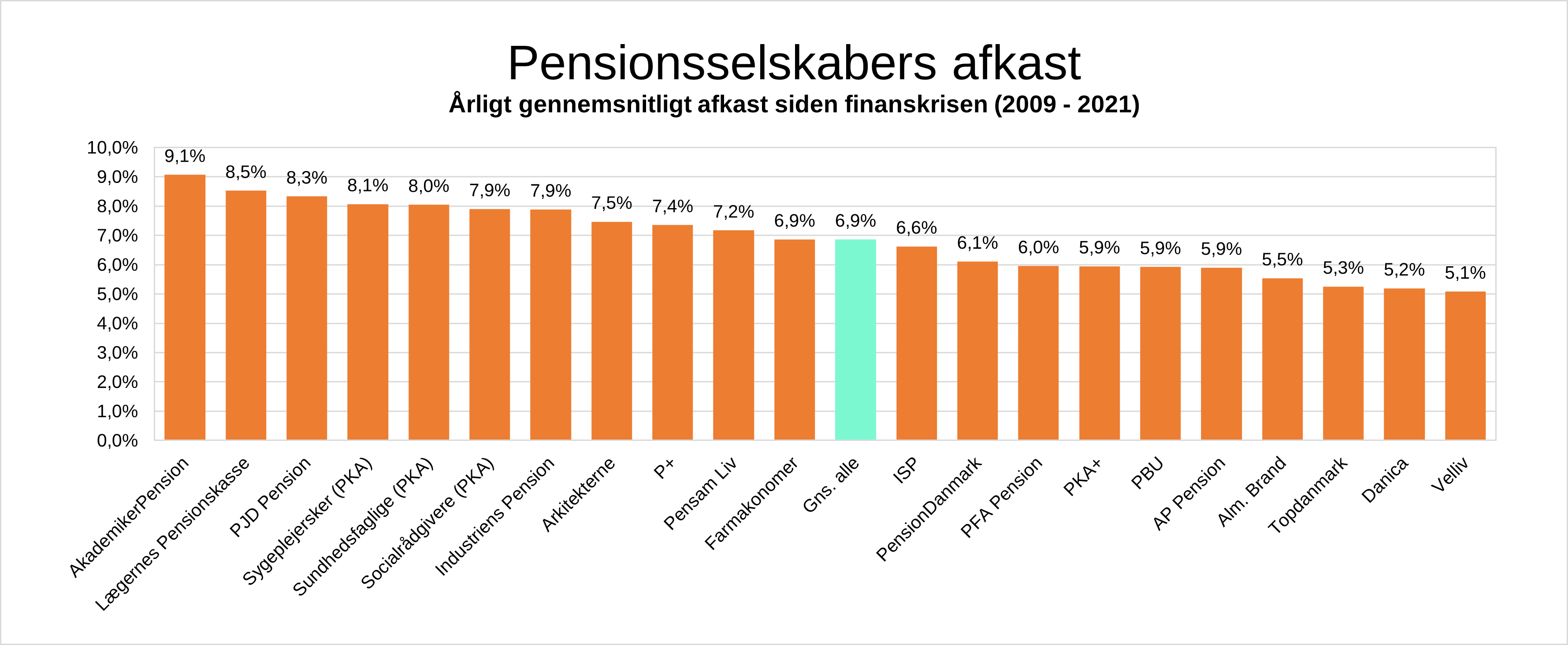
https://akademikerpension.dk/ansvarlighed/ekskluderede-selsk...